Overview
A recent piece in Crisis Magazine alleges that the U.S. Department of Defense is deliberately recasting awe‑inspiring Unidentified Aerial Phenomena (UAP) incidents as national‑security threats. The article, titled “The Pentagon Is Rebranding Miracles as Threats,” argues that this narrative shift serves to tighten military oversight of the UAP discussion and to justify heightened surveillance and investigative resources. While the magazine’s perspective is editorial, the claim touches on ongoing policy changes that have already been documented in official Pentagon reports and congressional briefings.
Background
For the first time in decades, the Pentagon released a comprehensive UAP report in mid‑2023, acknowledging that many sightings remain unexplained and could pose safety or security concerns. The report led to the creation of the All‑Domain Anomaly Resolution Office (AARO), a joint‑service entity tasked with collecting and analyzing data on anomalous aerial objects across air, space, and maritime domains. Public reaction was a mix of curiosity, speculation, and, for some, a renewed sense of wonder at the “miraculous” nature of the phenomena.
The Pentagon’s Narrative Shift
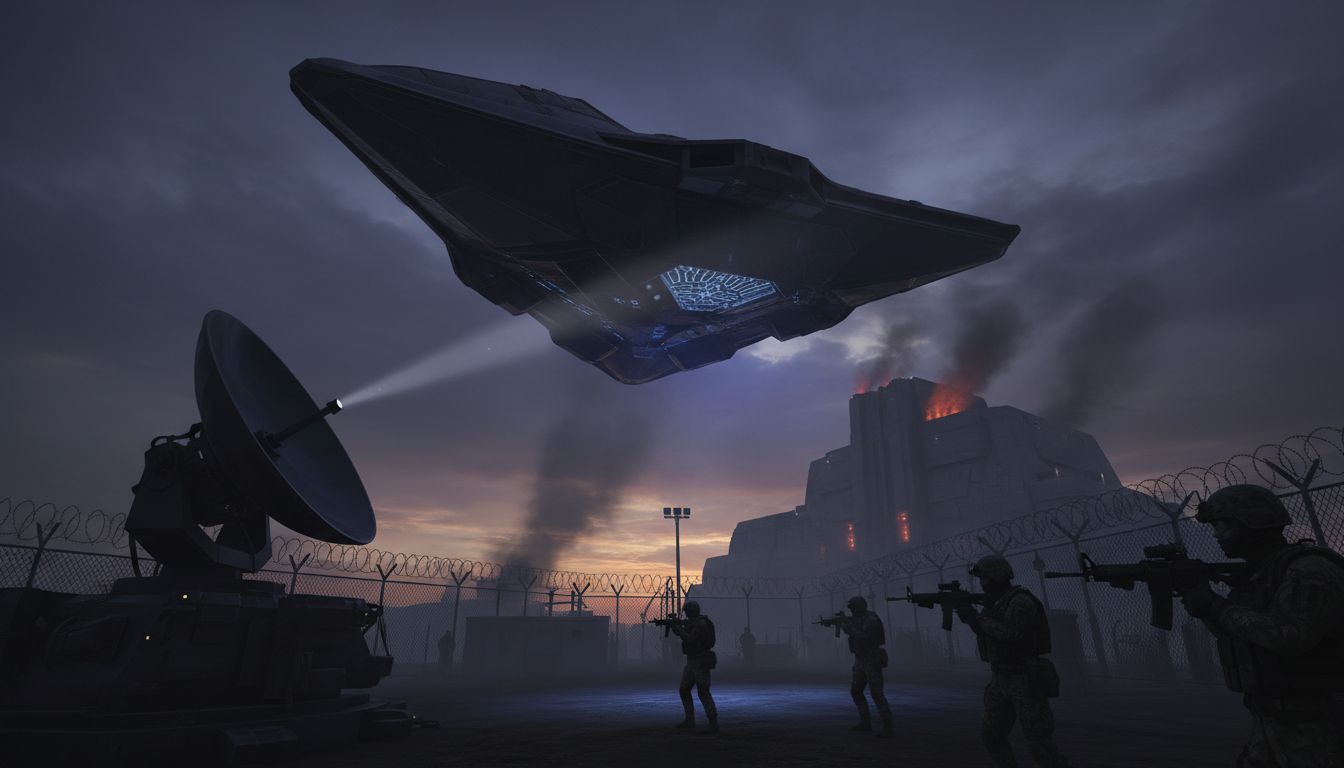
According to Crisis Magazine, the Department of Defense is now moving away from the language of wonder toward a more militarized framing. The article cites internal briefings that describe recent UAP encounters as “potential adversarial platforms” and stresses the need for “rapid threat assessment and response protocols.” One quoted passage reads:
“What was once celebrated as a glimpse into the unknown is being systematically rebranded as a threat to national security.”
The magazine suggests that this rebranding aligns with broader defense priorities, such as protecting critical infrastructure and maintaining air‑space sovereignty, especially in light of increased reports of “high‑altitude, high‑speed objects” near U.S. training ranges.
Implications for Policy and Public Discourse
If the Pentagon’s emphasis on threat perception is indeed intensifying, several practical consequences may follow. First, budget allocations for AARO and related intelligence assets could expand, diverting funds from other research programs. Second, the classification level of many UAP files may increase, limiting civilian and scientific access to data that could otherwise advance aerospace research. Third, the narrative could influence legislative oversight, prompting Congress to demand stricter reporting requirements and possibly authorizing more aggressive interception rules.
Critics warn that framing unexplained phenomena primarily as threats may stifle open scientific inquiry and reinforce a culture of secrecy. Dr. Emily Hart, a senior researcher at the Center for Aeronautical Studies, cautioned that “while security concerns are legitimate, an exclusively threat‑oriented lens risks overlooking the potential scientific value of these observations.”
Responses from the Defense Establishment
In a recent press briefing, Pentagon spokesperson Lt. Cmdr. Jason Patel acknowledged the dual nature of the UAP challenge: “We recognize the public’s fascination with these events, but our primary responsibility is to ensure the safety of our airspace and the security of the nation.” He emphasized that AARO’s mandate includes both risk assessment and information sharing with allied agencies, aiming to balance transparency with operational security.
Outlook
The debate highlighted by Crisis Magazine underscores a tension between national‑security imperatives and the public’s desire for openness. As the Pentagon continues to refine its approach to UAPs, observers will watch for concrete policy outcomes—such as the release of further declassified reports or the establishment of civilian advisory panels. Whether the “miracles” of the skies will remain framed as threats or be allowed a broader scientific discourse remains an open question, but the conversation is now firmly on the public agenda.


