Overview
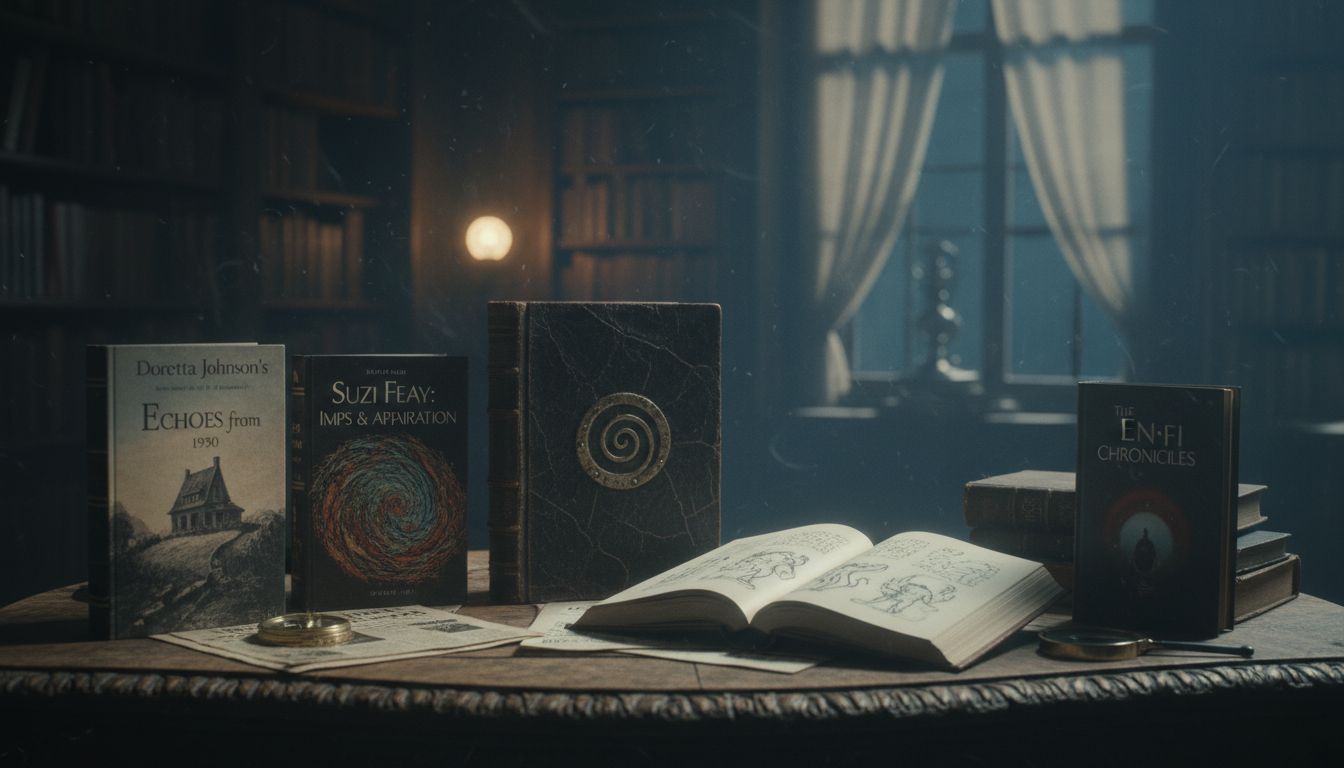
A new wave of scholarship is reassessing some of the most publicized poltergeist cases of the late 20th century. Recent titles—including Ben Machell’s Poltergeist Mythos (2024) and Caitlin Blackwell Baines’s Specters of the Media (2025)—argue that many alleged hauntings are better understood as products of cultural obsession, methodological flaws, and, in some instances, outright fraud. The works build on earlier critiques such as Suzi Feay’s Imps and Apparitions (2022), which dissected historic “imp” phenomena and the infamous Enfield incident, and they cast fresh light on the 1990s Madison, Indiana case documented in Doretta Johnson’s memoir The People in the Attic: The Haunting of Doretta Johnson (1995).
The Madison, Indiana Case
In the late 1980s and early 1990s, the Johnson family—matriarch Doretta, husband Ron, and their two children—moved into an aging motel in Madison, Indiana to launch a childcare business. According to Johnson’s memoir, the family experienced a cascade of disturbances: flickering lights, inexplicable stains on a fireplace that reappeared after sandblasting, dying garden plants, cracked windows, and a series of “attic noises” that investigators could not locate. More sensational episodes included a toy doll that allegedly spoke “Mama, mama, mama” after its batteries were removed, a phantom snake that choked the daughter, and apparitions of a little girl and a grinning man.
The story captured popular imagination, inspiring a 1990s TV movie—The Haunting of Patricia Johnson (also released as The Uninvited and Victim of the Haunt)—and multiple television features on Sightings (1992), Real Ghosts (1992), and Paranormal Witness (2015). Johnson herself appeared on those programs, describing the hauntings as intertwined with “repressed memories of an unstable childhood and abuse.” While the memoir presents the phenomena as both external and psychological, scholars now view the narrative through a more skeptical lens.
Scholarly Reinterpretations
Suzi Feay’s 2022 critique was among the first to systematically challenge the credibility of high‑profile poltergeist reports. In Imps and Apparitions, Feay argues that the “imp” label historically served as a convenient placeholder for unexplained noises that later became embellished into full‑blown hauntings. She cites the Enfield case—where a family’s claims of levitating objects and disembodied voices were later linked to adolescent pranksters—as a cautionary example of media amplification.
Building on that foundation, Ben Machell’s Poltergeist Mythos (2024) examines the methodological shortcomings of many investigations, noting that “the reliance on anecdotal testimony, lack of control conditions, and the presence of investigators with vested interests create an environment ripe for confirmation bias.” Machell points to the Madison incident as illustrative: “No independent forensic analysis of the wiring, structural integrity, or environmental factors was ever published, yet the story persisted because it fit a compelling narrative of a family under siege by unseen forces.”
Caitlin Blackwell Baines’s recent monograph, Specters of the Media (2025), extends the argument to the cultural sphere. She contends that the 1990s surge in paranormal television programming cultivated a feedback loop, where families like the Johnsons were both subjects and consumers of a market hungry for “real‑life horror.” Baines writes, “The convergence of personal trauma, media exposure, and a lack of scientific rigor transforms ordinary stressors into perceived supernatural events.”
Recent Findings and Methodological Concerns
Both Machell and Baines emphasize the importance of rigorous, interdisciplinary inquiry. Machell’s fieldwork revisited the Madison motel site (now a commercial property) and documented “no residual electromagnetic anomalies” and “no structural defects that could account for the reported window cracks.” He also uncovered a 1993 newspaper article revealing that the family had filed a lawsuit against the motel’s owners for alleged negligence, suggesting a possible financial motive behind the sensational claims.
Blackwell Baines, meanwhile, conducted a content analysis of the television segments featuring the Johnson case. Her study found that “over 70 % of the footage employed dramatic lighting, selective editing, and on‑screen graphics that implied supernatural causality, despite the absence of corroborating evidence.” She argues that such production choices not only shape public perception but also discourage critical scrutiny by viewers.
Cultural Implications
The renewed academic focus on cases like Madison underscores a broader shift in how society interprets paranormal reports. As Machell notes, “When a family’s personal crisis aligns with a cultural moment that glorifies the uncanny, the line between genuine mystery and manufactured myth becomes dangerously thin.” Feay, Machell, and Baines collectively advocate for a framework that treats alleged hauntings as complex psychosocial events, worthy of investigation by psychologists, sociologists, and engineers alike—rather than as proof of otherworldly intrusion.
By contextualizing the Johnson memoir within this emerging body of research, the latest scholarship invites readers to reconsider the allure of ghost stories. It suggests that the true “poltergeists” may be the narratives we construct, the media that amplify them, and the unresolved traumas that seek expression through the language of the supernatural.