Overview
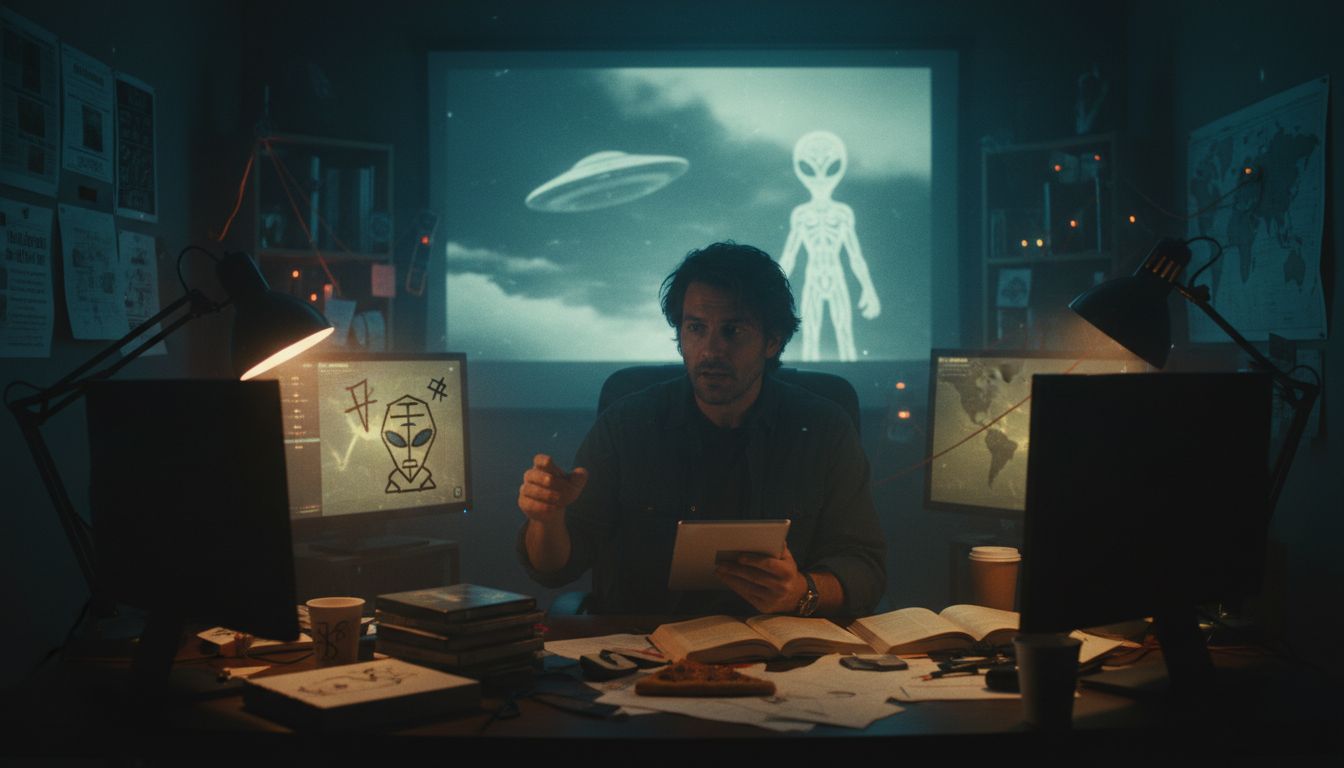
A documentary that was produced and distributed without any official government or studio backing has entered the public sphere, asserting that world governments have deliberately concealed evidence of extraterrestrial life. The film, titled The Age of Disclosure, premiered on a niche streaming platform earlier this week and quickly attracted attention on social media, where its provocative claim—“the public has been lied to”—has been shared thousands of times. The Guardian’s investigation reveals that the documentary was assembled by a small collective of independent filmmakers, former intelligence analysts, and self‑identified whistleblowers who claim to have accessed classified material on Unidentified Aerial Phenomena (UAP).
Production and Funding
The creators, who chose to remain largely anonymous, describe the project as a “covertly funded” effort, financed through a combination of private donations and a crowdfunding campaign that raised over £150,000 in two months. Lead producer Maya Patel, a former documentary researcher, told The Guardian that the team “operated under a veil of secrecy to avoid interference from agencies that have historically suppressed information on UAPs.” The film’s editorial board includes Dr. Luis Ortega, a former Pentagon analyst who left the Department of Defense in 2023 after expressing frustration with what he called “systemic stone‑walling of credible data.”
Core Claims and Presented Evidence
The Age of Disclosure is structured around three central arguments:
- Systematic Deception – The film alleges that multiple administrations, from the Obama era to the present, have signed non‑disclosure agreements with contractors and scientists involved in UAP research, effectively criminalizing the sharing of findings.
- Physical Evidence – Segments feature what the filmmakers describe as “de‑classified footage” of anomalous aerial objects captured by Navy pilots, as well as “hand‑held thermal imaging” of a metallic craft recovered from a remote desert site in Nevada in 2022. The documentary includes close‑up analysis by aerospace engineer Dr. Karen Liu, who points out that “the propulsion signatures do not conform to any known conventional technology.”
- Policy Suppression – Interviews with former officials suggest that a “policy of denial” was instituted to prevent public panic and protect national security interests, a stance echoed in a leaked 2021 memo that reportedly instructed the Office of the Director of National Intelligence to “limit any public release of UAP data to strictly scientific circles.”
While the film presents these materials as proof of extraterrestrial visitation, it also acknowledges that definitive conclusions remain elusive, emphasizing that the “absence of a clear explanation is itself a red flag.”
Official and Expert Reactions
Government agencies have not issued formal statements specifically addressing the documentary, but a spokesperson for the Department of Defense reiterated the department’s ongoing “commitment to transparency,” citing the 2023 establishment of the All‑Domain Anomaly Resolution Office (AARO). “We continue to evaluate all credible reports of aerial phenomena, and we encourage responsible reporting,” the spokesperson said.
Academic experts have offered a measured critique. Professor Elena Martínez of the University of Cambridge’s Department of Physics called the film “an interesting piece of investigative journalism” but warned that “the leap from anomalous sensor data to extraterrestrial origin is scientifically unwarranted without peer‑reviewed analysis.” Similarly, former CIA officer Richard Hale stressed that “while there are certainly unexplained sightings, attributing them to alien technology without corroborating evidence risks undermining legitimate intelligence work.”
Context Within the UAP Landscape
The documentary arrives at a moment of heightened public interest in UAPs. In June 2024, the U.S. Senate passed the “UAP Transparency Act,” mandating quarterly reports to Congress on unexplained aerial incidents. Earlier this year, the Pentagon released a de‑classified dossier containing 144 videos of “unidentified aerial phenomena,” prompting renewed calls for openness.
The Age of Disclosure taps into these developments, positioning itself as a catalyst for what its creators hope will be “the next wave of official acknowledgment.” Whether the film will influence policy remains uncertain, but its rapid viral spread underscores a growing appetite for answers.
Bottom line: While the documentary presents compelling footage and insider testimony, mainstream scientific and governmental bodies continue to call for rigorous, peer‑reviewed investigation before accepting any extraterrestrial interpretation. The conversation it ignites reflects an evolving landscape where public demand for transparency meets the cautious rigor of established institutions.


