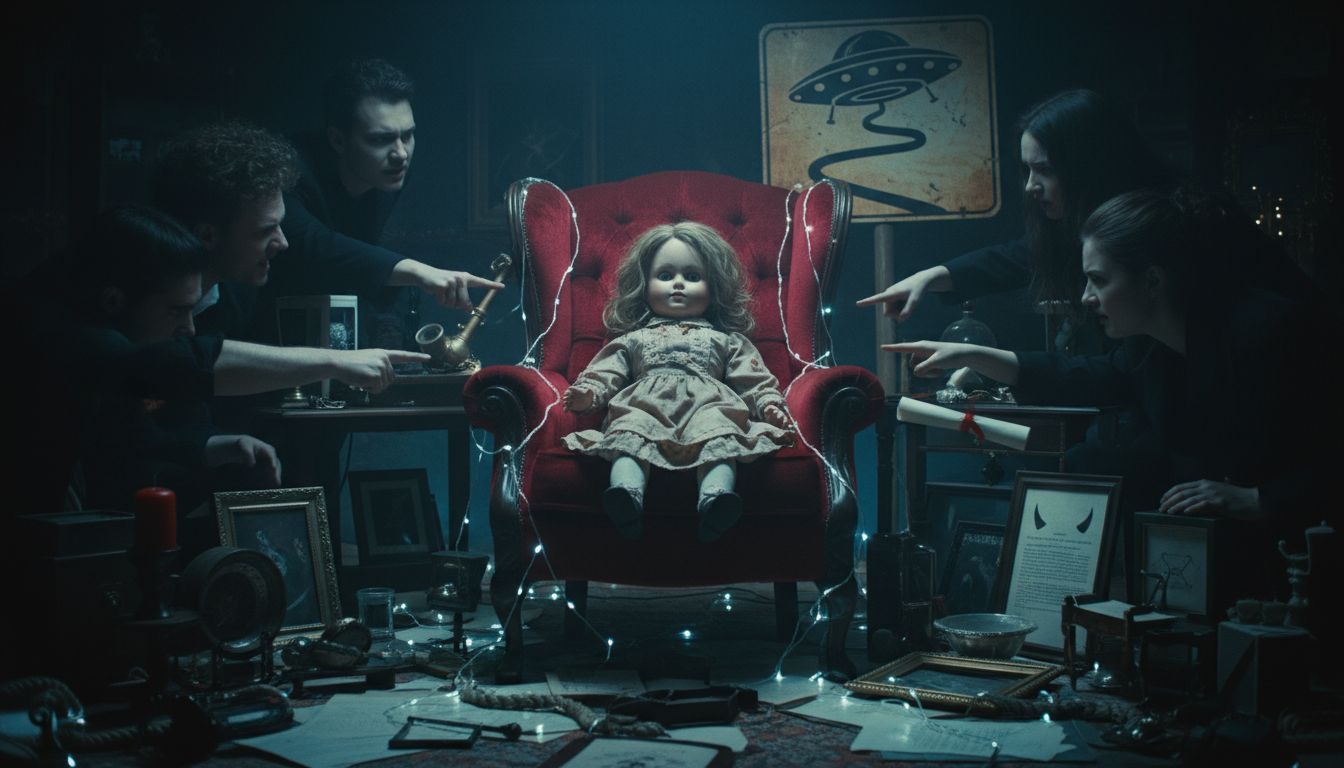
Annabelle, the three‑foot‑tall Raggedy Ann doll that has become a fixture of modern horror cinema, is now traveling the United States in a climate‑controlled cabinet on the “Devils on the Run” tour. The tour, organized by the New England Society for Psychic Research (NESPR)—the organization the late Ed and Lorraine Warren founded in 1952—brings the doll to a series of pop‑up “Occult Museum” conventions in venues ranging from a former West Virginia penitentiary to a convention center in Rock Island, Illinois. Ticket‑buyers pay roughly fifty dollars, in addition to the standard convention fee, to stand a few feet from the doll, whose strawberry‑lace hair and permanent smile have been described by paranormal influencer Haley Michelle as “electrifying, like encountering a renowned celebrity.” The tour’s itinerary also showcases other artifacts claimed to be haunted, such as a “conjuring mirror” and a “Shadow Doll” that allegedly infiltrates dreams.
The public fascination with Annabelle is inseparable from the success of The Conjuring franchise, which has turned the doll into a cultural icon. Since the first film in 2013, the series—including three Annabelle spin‑offs—has generated more than $2.8 billion worldwide, with the most recent entry, The Conjuring: Last Rites, already approaching $500 million at the box office. Those figures have turned the doll from a curiosity into a lucrative piece of intellectual property, a development that has ignited a bitter legal dispute among the Warren family and former members of NESPR.
At the heart of the conflict is a lawsuit filed in a Massachusetts federal court by Ed and Lorraine Warren’s grandson, Chris McKinnell, who alleges that NESPR is profiting from Annabelle without proper authorization or compensation to the Warren estate. McKinnell’s complaint cites a 2022 licensing agreement that granted the society limited rights to display the doll at educational events, not to commercialize it on a national tour. NESPR, represented by attorney Wade Kirby, counters that the agreement was amended in 2023 to allow broader public exhibitions, and that all proceeds are used to fund the society’s research and preservation efforts. The filing also accuses former NESPR members of “exploiting a family tragedy” for personal gain, a charge that has prompted heated exchanges on social media and at recent conventions.
Members of the Warren family, including the late Ed’s daughter, Andrea Warren, have publicly expressed dismay at the tour’s “carnival‑like” atmosphere. In an interview with The Washington Post, Andrea said, “My parents devoted their lives to investigating genuine cases of harm. Turning Annabelle into a roadside attraction feels like a betrayal of that mission.” Conversely, NESPR’s director, Dan Rivera, argues that the tour serves an educational purpose, allowing the public to confront “the reality of paranormal phenomena” under controlled conditions. He points to the presence of a priest and a team of handlers who maintain the doll in a sealed, climate‑controlled box—an effort he says is intended to prevent any alleged “field of influence” from affecting visitors.
The controversy has taken a somber turn following the recent death of one of Annabelle’s handlers, identified only as the box’s original builder. According to police reports, the handler suffered a fatal heart attack while loading the cabinet onto the tour van in Pennsylvania. NESPR released a statement describing the incident as “a tragic loss for our community,” and promised to review safety protocols for future events. The incident has added a layer of poignancy to the ongoing debate, as both sides invoke the doll’s alleged malevolence to justify their positions.
As the tour continues toward its next stop in Rock Island, the legal battle is poised to move from the courtroom to public opinion. Industry analysts note that the outcome could set a precedent for how “cursed” artifacts are managed when they intersect with commercial entertainment. For now, Annabelle remains perched upright in her midnight‑black sheet, eyes fixed on the road ahead, while the families and organizations that claim stewardship over her legacy argue over who, if anyone, has the right to profit from a piece of modern folklore.


