Overview
Along Norway’s rugged coastline, where the sea has long been both a source of sustenance and a cause of loss, the Sea Draug endures as one of the region’s most haunting folkloric figures. Described in coastal tradition as the ghost of drowned fishermen and other souls lost to the water, the sea draug reflects the dangers of life on the north Atlantic and the deep cultural memory of communities that depended on the sea for survival. In villages where storms, currents, and winter darkness could claim lives without warning, stories of the draug offered a way to explain death at sea and to warn the living of the ocean’s power.
Origins in Scandinavian Folklore
The word draug has older roots in Scandinavian tradition and originally referred more broadly to a ghost or dead spirit. According to the source material, the term predates the Viking Age and appears across the Nordic world, though its meaning shifted over time and from place to place. Importantly, the sea draug is not the same as the draugr of the Viking sagas, which was typically understood as a corporeal grave-ghost or mound-dweller. In Norwegian coastal folklore, the sea draug became more closely tied to the waters themselves, especially in the western and northern coastal regions where fishing communities faced a high toll from drownings and maritime accidents.
A Ghost Shaped by Maritime Danger
Later folklore increasingly narrowed the sea draug into the figure of a dead fisherman who had drifted at sea and was not buried in Christian soil. That detail underscores an important theme in the tradition: proper burial, faith, and the uncertainty of death at sea were deeply intertwined in popular belief. The source notes that the figure gained prominence in part through the folkloric writing of Jonas Lie in the 1870s, 1880s, and 1890s, which drew on superstitions from Northern Norway. Over time, the term draug in Norway came to be used mainly for a spirit of the sea, while in other Nordic contexts it retained older meanings associated with the dead and the grave.
Descriptions and Omens
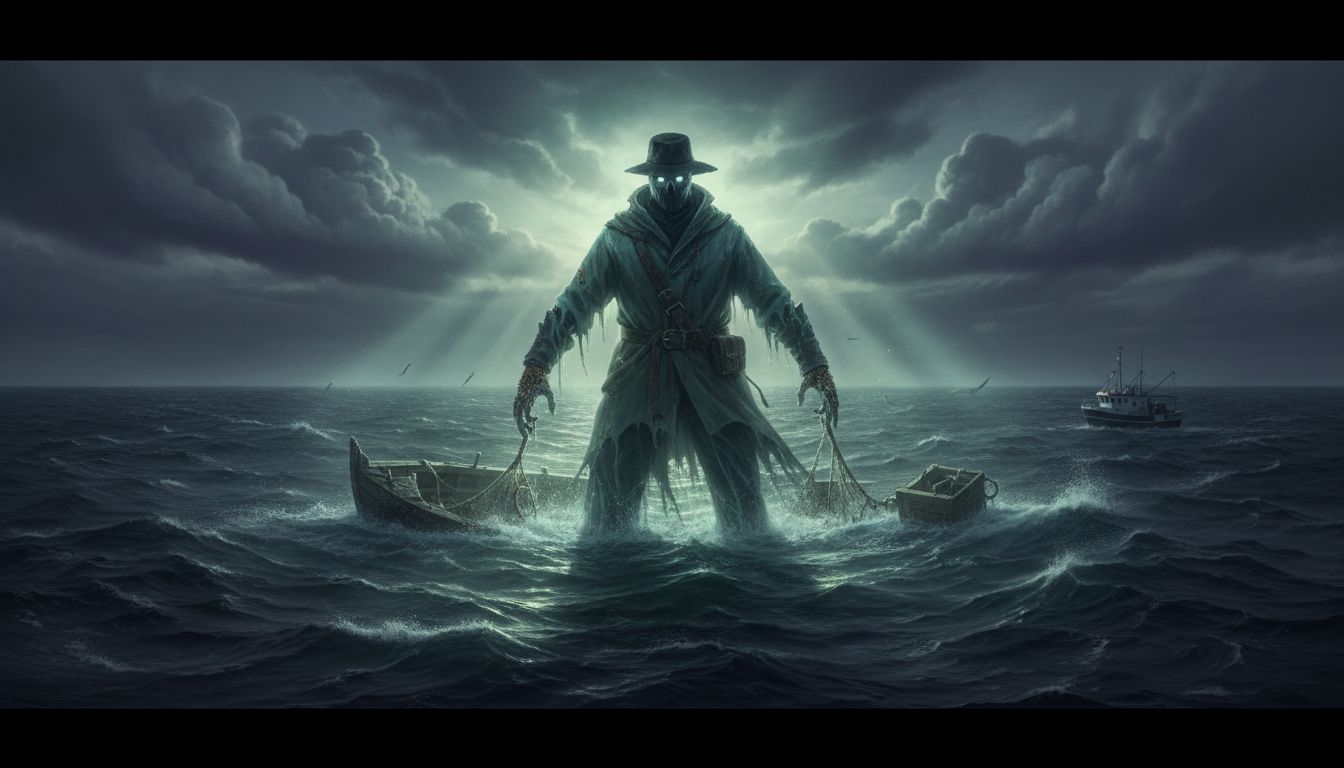
Accounts of the sea draug typically paint a chilling image. It is often said to appear like a fisherman still dressed for work, wearing oilskins or soaked sea clothes that cling to a bloated body. Its skin is described as pale and water-swollen, and its eyes may glow faintly, as if catching a moonlit shimmer on kelp. Seaweed is frequently imagined tangled in its beard or hair, moving as though it still belongs beneath the waves. In many stories, however, the draug is not seen directly at all. Instead, its presence is signaled by sounds such as the creak of oars or the slap of waves, turning ordinary maritime noise into an omen of danger.
Cultural Legacy
The sea draug remains significant not simply as a monster story, but as a cultural expression of fear, grief, and respect for the ocean. Artists and folklorists helped preserve the image, including Theodor Kittelsen, whose illustrations captured the eerie overlap between sea spirit, drowned man, and troll-like figure. In that sense, the draug is more than a ghost story: it is a reminder of how coastal societies understood mortality, uncertainty, and the thin boundary between the living and the dead. Even today, the legend continues to stand as a bleak but enduring symbol of the sea’s unforgiving nature.