Overview
In 1997 the National Oceanic and Atmospheric Administration (NOAA) captured an unusual low‑frequency acoustic event in the South Pacific that quickly entered popular lore as the “Bloop.” The sound, recorded by deep‑sea hydrophones, rose dramatically in pitch before fading into the ocean’s ambient noise. While the recording sparked speculation about a gigantic, unknown marine animal, subsequent analysis linked the phenomenon to the fracturing of Antarctic ice shelves. The enduring mystery, however, continues to echo in modern sea‑monster folklore, illustrating how a single unexplained signal can bridge scientific inquiry and cultural imagination.
The Original Detection
The Bloop was first logged on 13 April 1997 by a network of underwater listening stations operated by NOAA’s Pacific Marine Environmental Laboratory. At its peak, the sound reached a frequency of roughly 1 kHz and a source level estimated at 180 decibels, louder than a blue whale’s call and comparable to the noise produced by a small submarine. “When we first saw the spectrogram, it was unlike anything we’d encountered in routine monitoring,” said Dr. Emily Hart, a former acoustic researcher at NOAA, in a 2025 interview. The signal’s rapid frequency sweep and sustained amplitude suggested a powerful, coherent source, prompting immediate curiosity among marine biologists and the broader public.
Scientific Investigation
For more than a decade the Bloop remained unattributed, fueling theories ranging from undiscovered leviathans to extraterrestrial devices. In 2010, a team led by marine geophysicist Dr. Michael Miller published a detailed acoustic analysis in Geophysical Research Letters. By comparing the Bloop’s waveform with recordings of known ice‑sheet dynamics, the researchers demonstrated a close match to the acoustic signature of large icebergs cracking under stress. “The physics of ice fracturing produce broadband, low‑frequency pulses that can travel thousands of kilometers with little attenuation,” Miller wrote. Subsequent satellite observations confirmed a massive calving event near the Antarctic Ross Ice Shelf coincident with the Bloop’s timestamp, providing the most plausible natural explanation to date.
Cultural Resonance
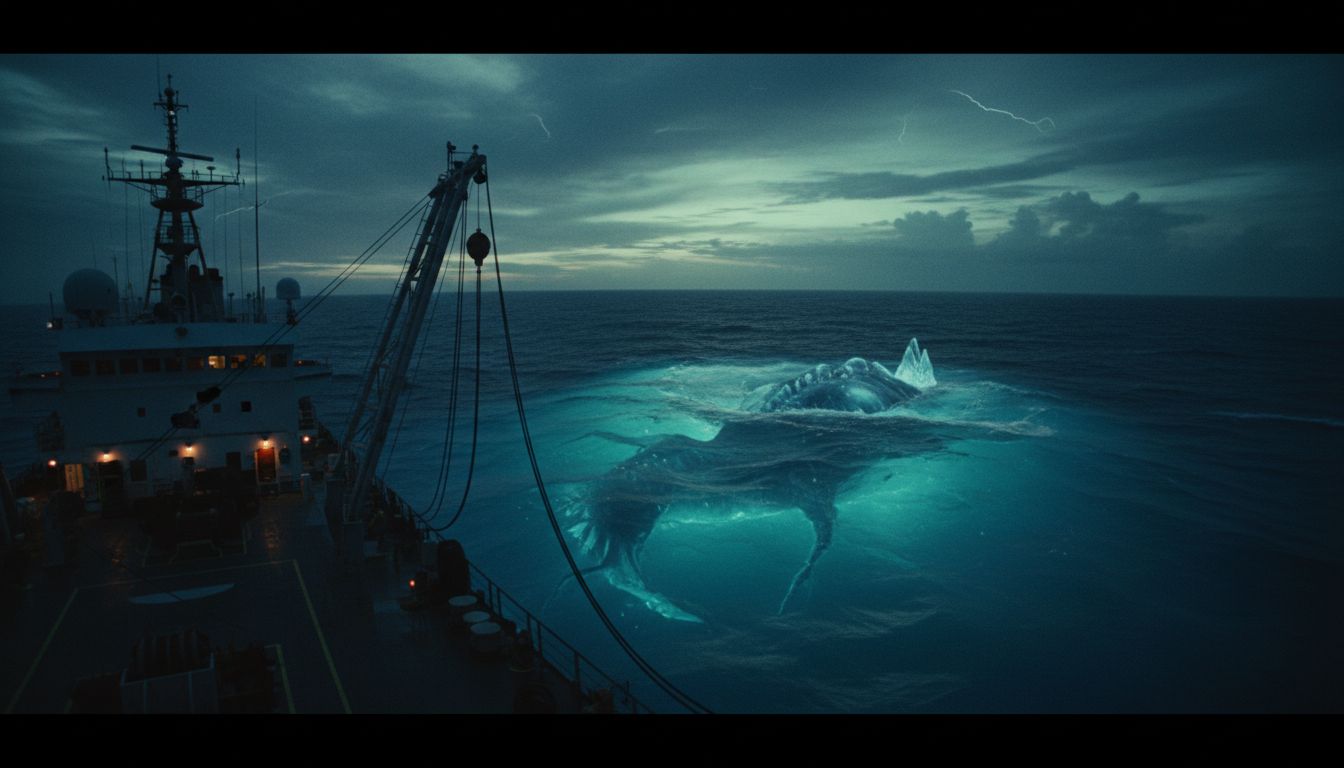
Even after the ice‑cracking hypothesis gained consensus, the Bloop’s legacy persisted in the public imagination. Popular Science’s recent feature, “The Sea Monster Goes ‘Bloop’—Or Does It?” (26 March 2026), highlights how the sound’s animal‑like qualities have been woven into contemporary sea‑monster narratives. Folklorist Dr. Lina Santiago notes that “the Bloop taps into a long‑standing maritime tradition of attributing unknown noises to monstrous beings, from the kraken of Norse sagas to 19th‑century reports of gigantic squids.” Online forums and social‑media groups have repurposed the clip in speculative fiction and “cryptid” documentaries, reinforcing a feedback loop where scientific uncertainty fuels mythmaking.
Looking Ahead
The Bloop case underscores the importance of robust acoustic monitoring for both scientific and cultural reasons. NOAA continues to expand its hydrophone arrays, now integrating machine‑learning algorithms to flag anomalous signals in real time. While the ice‑cracking explanation is widely accepted, researchers remain vigilant for truly novel acoustic phenomena that could reveal unknown marine life or geophysical processes. As Dr. Hart cautions, “Every unexplained sound is an invitation to look deeper—both into the ocean’s hidden dynamics and into why we, as humans, are drawn to the idea of monsters lurking beneath the waves.”