Overview
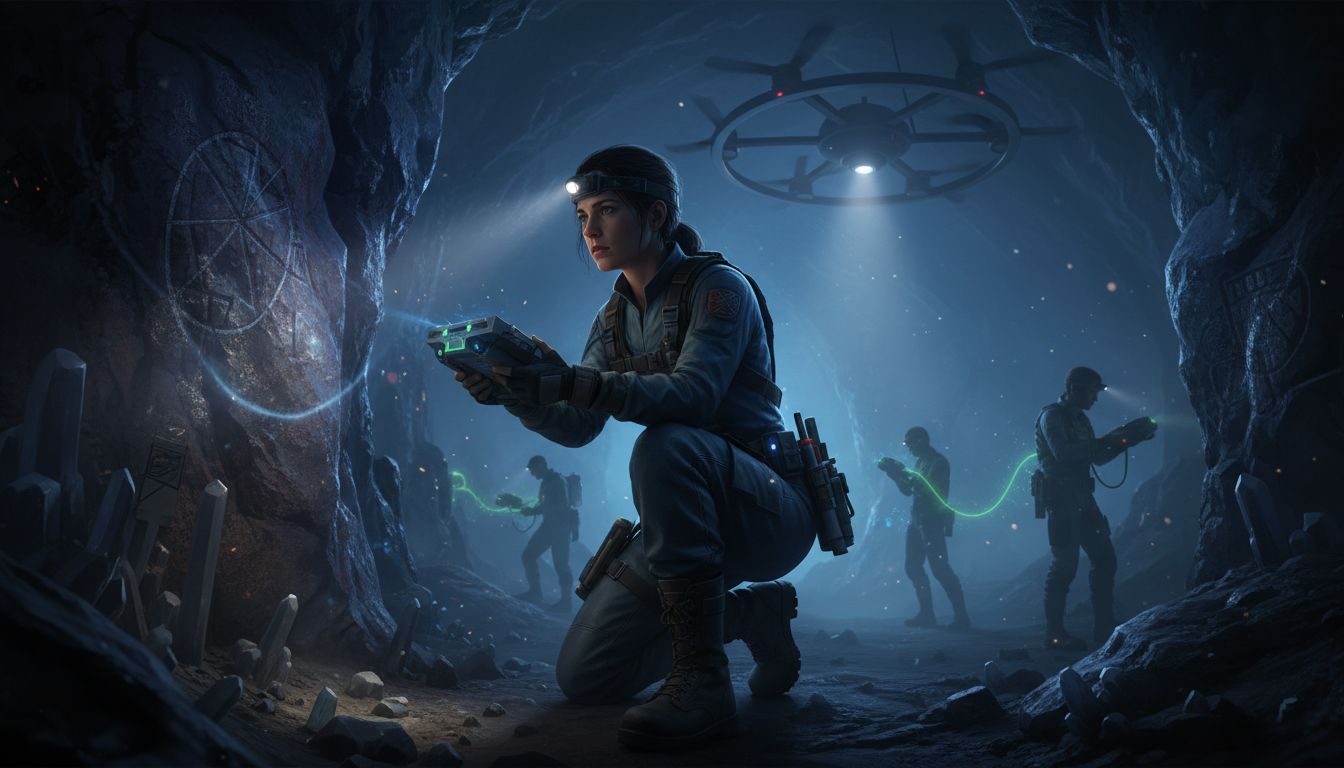
Researchers are moving beyond anecdotal sightings and turning the search for extraterrestrial technology into a rigorously scientific enterprise. A recent Wired feature (Jan. 19, 2026) highlights the work of astrobiologist Dr. Beatriz Villarroel, whose team is developing protocols to identify and verify “alien artifacts” that might be embedded in Earth’s geological record or recovered from interstellar objects passing through the solar system. The article, echoed in the Liberation Times, marks a shift from speculative folklore to data‑driven inquiry, emphasizing reproducible methods, peer‑reviewed analysis, and interdisciplinary collaboration.
A New Scientific Framework
Villarroel’s approach builds on the discovery of the first confirmed interstellar visitors—‘Oumuamua in 2017 and comet 2I/Borisov in 2019—by expanding the search to physical remnants rather than fleeting visual reports. Her group proposes a three‑tiered protocol: (1) cataloguing anomalous materials found in high‑altitude ice cores, deep‑sea sediments, and meteorite collections; (2) subjecting samples to advanced spectroscopy, isotopic analysis, and nanostructural imaging to rule out terrestrial origins; and (3) establishing an open‑access database for independent verification. “If an object truly bears an extraterrestrial signature, it should leave a trace that survives the harsh conditions of Earth’s environment,” Villarroel told Wired. The framework aims to eliminate confirmation bias by demanding that any candidate artifact meet the same standards applied to terrestrial exotic materials.
Voices from the Debate
The scientific pivot has sparked lively discussion among both skeptics and proponents. In a recent civil dialogue hosted by the Center for Inquiry, Michael Shermer, founder of The Skeptics Society, referenced his long‑standing bet with Harvard astronomer Avi Loeb—that no verifiable evidence of alien technology will emerge within the next decade. “My position is not that aliens don’t exist, but that extraordinary claims require extraordinary evidence, and we haven’t seen that yet,” Shermer said. Across the table, documentary filmmaker James Fox, known for his investigative series on UFOs, hinted at an upcoming field expedition that could deliver the first peer‑reviewed data on a purported crash site in the Atacama Desert. “We’re assembling a team of geologists, materials scientists, and independent auditors to examine the site under strict protocols,” Fox disclosed, adding that results will be released publicly within six months.
Hardest Cases Under Scrutiny
The conversation also revisited the “hardest” UFO cases—those with multiple sensor recordings, radar corroboration, and credible eyewitnesses. Shermer argued that many of these incidents lack preserved physical evidence, making them unsuitable for the new artifact‑focused methodology. Fox countered that some sites, such as the 2021 “Lake Huron” event, have yielded metallic fragments that were never fully analyzed. “If we can retrieve and test those samples with modern techniques, we may finally bridge the gap between sighting reports and material proof,” Fox asserted. Both participants agreed that transparent, reproducible testing is essential, regardless of prior belief.
Looking Ahead
The emerging consensus is that the search for alien technology will hinge on interdisciplinary rigor and open data sharing. Villarroel’s team plans to pilot their protocol at a recently identified anomalous deposit in Antarctica’s East Antarctic Ice Sheet, where preliminary scans revealed unusual magnetic signatures. Meanwhile, the anticipated Fox‑led expedition may provide the first independent, peer‑reviewed dataset on a contested crash site, potentially setting a benchmark for future investigations. As Shermer reminded the audience, “Science advances by testing ideas, not by defending them.” Whether the next decade will see the first confirmed alien artifact or reaffirm the skeptics’ bet remains an open question—one that the new scientific framework is now equipped to answer.


