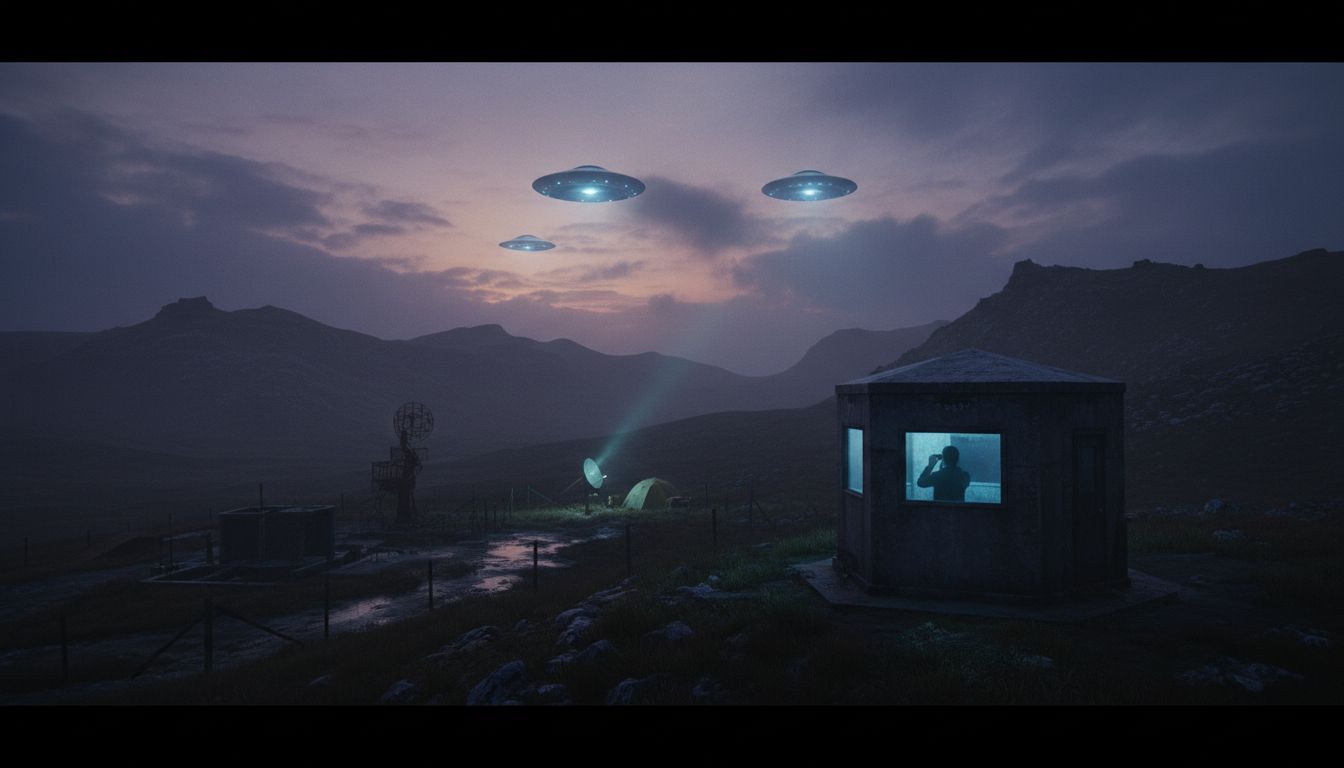
Overview
In June 2013 the UK National Archives released a batch of 25 previously classified Ministry of Defence (MoD) documents that detail the government’s long‑running UFO research programme. The files, often referred to as Britain’s “X‑Files,” span several decades of sightings, investigations and internal assessments. While the most famous incident – the 1980 Rendlesham Forest encounter – is included, the declassified material also reveals a handful of lesser‑known cases that remain officially unexplained. The release sparked renewed interest among researchers and prompted Sky History’s new series Britain’s X‑Files to examine what the documents actually contain.
Why the MoD’s UFO Desk Closed
The MoD’s dedicated UFO desk was established in 1997, complete with a public hotline that received roughly 150 reports annually in the 2000s. By November 2009 the desk and its hotline were shut down. The 2013 files indicate that the decision was driven by a combination of budgetary constraints and a strategic shift: the MoD concluded that most reports could be explained by conventional aviation or atmospheric phenomena, and that further dedicated resources offered limited intelligence value. A senior MoD officer, quoted in the released briefing, stated, “The cost‑benefit analysis no longer justified a separate unit; routine analysis could be absorbed by existing intelligence channels.”
Highlighted Cases
Among the declassified records are three particularly puzzling incidents:
The 1979 “Bristol Lights” – Multiple radar operators at a civil‑air traffic control centre logged a series of high‑altitude, fast‑moving contacts that vanished from radar within seconds. Visual witnesses on the ground described a “silvery disc” hovering over the Avon Gorge. The MoD’s assessment noted “no identifiable aircraft or known atmospheric anomaly” and left the case open.
The 1992 “Hawthorn Ridge” sighting – A farmer near Hawthorn Ridge reported a cluster of bright, pulsating lights that moved in a coordinated formation before disappearing over the horizon. Photographs taken with a 35 mm camera showed a faint, elongated shape. The file records an internal memo that the phenomenon “does not conform to any known aircraft manoeuvre or meteorological event.”
The 2005 “North Sea Radar Anomaly” – NATO radar stations off the east coast recorded a series of unidentified returns lasting 12 seconds, coinciding with a civilian vessel’s crew reporting “a sudden, intense glow” on the water’s surface. The MoD concluded the radar signatures were “inconsistent with conventional aircraft, missiles or weather balloons,” and the incident remains classified as “unexplained.”
Each case includes a mix of radar data, eyewitness statements, and, where available, photographic evidence. The reports consistently emphasize the lack of a definitive conventional explanation, rather than asserting an extraterrestrial origin.
Assessment and Context
The released documents place the UFO phenomenon within a broader security and scientific framework. Analysts were tasked with determining whether unidentified aerial phenomena (UAP) posed a threat to national airspace or could reveal advanced technology from foreign powers. In most instances, the MoD’s conclusion was that the sightings did not represent a credible security risk. However, the files also reveal a degree of institutional caution: several briefings advise “continued monitoring” and recommend that “future sightings be logged with full technical detail to aid pattern analysis.”
The 2013 release aligns with a global trend of governments becoming more transparent about UAP investigations. The United States, for example, has recently declassified its own set of reports, prompting comparative studies. Scholars such as Dr. Jenny Randles, former head of the UK’s UFO research unit, have noted that the British files “provide a rare, methodical look at how a modern defence ministry treats anomalous observations—neither dismissing them outright nor jumping to sensational conclusions.”
Ongoing Inquiry
Since the 2013 declassification, civilian researchers and academic groups have revisited the files, cross‑referencing them with other international datasets. The Sky History series Britain’s X‑Files has brought these cases to a wider audience, encouraging public discourse while maintaining journalistic restraint. No new official investigations have been announced by the MoD, but the National Archives continues to accept Freedom of Information requests related to UAP. As the archives expand their digital catalogue, historians anticipate that additional files—potentially covering the Cold War era—may further illuminate how governments have historically responded to the unknown skies above Britain.
Bottom line: The 2013 UK UFO files do not provide definitive answers, but they do illustrate a systematic, evidence‑based approach to unexplained aerial phenomena. By documenting radar anomalies, eyewitness accounts and the MoD’s analytical procedures, the records offer a valuable, non‑sensational resource for anyone seeking to understand Britain’s complex relationship with the skies—and the mysteries that sometimes linger there.


