Overview
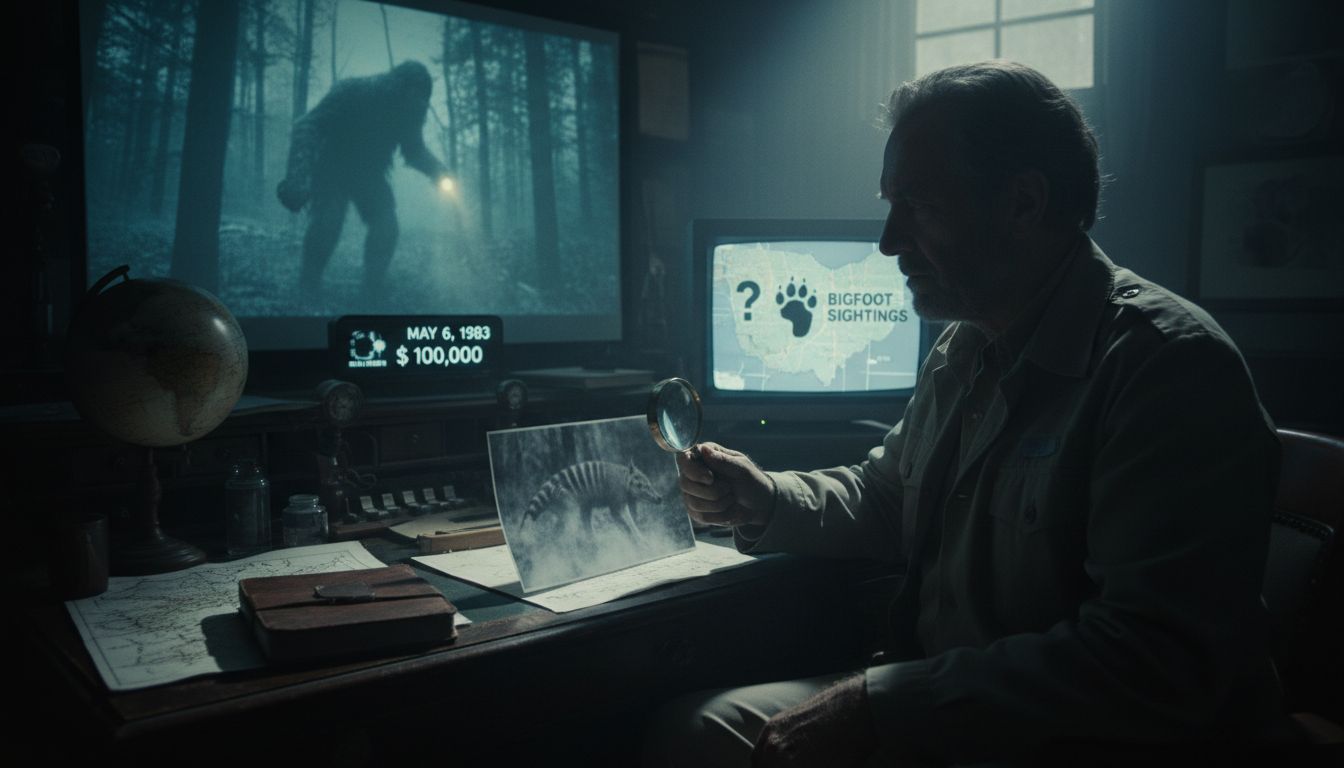
The media world marked the passing of Ted Turner on May 6, 2026, remembering him not only as the visionary founder of CNN but also as a longtime patron of the cryptozoology community. Turner’s most publicized foray into the field came in 1983, when he pledged $100,000 to anyone who could provide verifiable proof that the thylacine, commonly known as the Tasmanian tiger, was still alive despite being declared extinct in 1936. More than four decades later, CNN’s recent segment on alleged Bigfoot sightings in Ohio has rekindled discussion of Turner’s legacy of giving fringe phenomena a mainstream platform.
The 1983 Thylacine Challenge
Turner’s offer was announced during a televised interview on The Tonight Show and later circulated in newspaper ads across the United States. The incentive was simple: a fully documented, scientifically credible specimen—skin, skull, or DNA—would earn the reward. At the time, Turner described the challenge as “a test of humanity’s curiosity and a reminder that nature can still surprise us.” Although no claimant ever met the stringent criteria, the prize spurred a wave of expeditions to Tasmania and mainland Australia, some of which produced high‑resolution photographs and alleged footprints that remain debated in cryptozoological circles. The episode cemented Turner’s reputation as a benefactor willing to fund unconventional research, a stance that contrasted sharply with his otherwise corporate image.
CNN’s Recent Bigfoot Coverage
On March 28, 2026, CNN aired a prime‑time segment titled “Mystery in the Midwest: Ohio’s Bigfoot Phenomenon,” featuring interviews with local residents, a wildlife biologist, and a former law‑enforcement officer who claimed to have examined large, unidentified footprints. The report highlighted surveillance footage from a rural highway and referenced a 2024 study that used environmental DNA (eDNA) sampling to detect unknown mammalian DNA in the area. While the network stopped short of declaring the creature real, the coverage mirrored Turner’s earlier willingness to bring cryptid stories into mainstream discourse. CNN’s senior producer, Mara Patel, told reporters, “We aim to present the facts as they stand, give voice to the witnesses, and let viewers draw their own conclusions—just as Ted would have wanted.”
Legacy and Impact on Cryptid Dialogue
Turner’s financial incentive and CNN’s editorial choices illustrate a broader pattern: the institutionalization of cryptid narratives within reputable media channels. Scholars such as Dr. Eleanor Whitaker, professor of folklore at the University of Utah, note that “when a figure of Turner’s stature backs a claim, it forces the scientific community to engage rather than dismiss outright.” The thylacine challenge, despite its failure to produce a specimen, generated a modest increase in funding for wildlife surveys in Tasmania and inspired a generation of amateur naturalists to document elusive species. Similarly, the Ohio Bigfoot segment has prompted local universities to apply for grants to study eDNA methods, blurring the line between fringe curiosity and legitimate scientific inquiry.
Perspectives from the Field
Not all reactions are favorable. The Australian Department of the Environment’s spokesperson, Liam O’Connor, cautioned that “monetary rewards can attract hoaxes and divert resources from critical conservation work.” Yet proponents argue that the publicity can be a net positive. A recent poll by the Pew Research Center found that 62 % of respondents view mainstream coverage of cryptids as “entertaining but informative,” suggesting a public appetite for balanced reporting. As the debate continues, Turner’s original gesture—offering a tangible stake in the unknown—remains a touchstone for how media, science, and the public negotiate the mysteries that linger at the edge of known biology.


