Overview
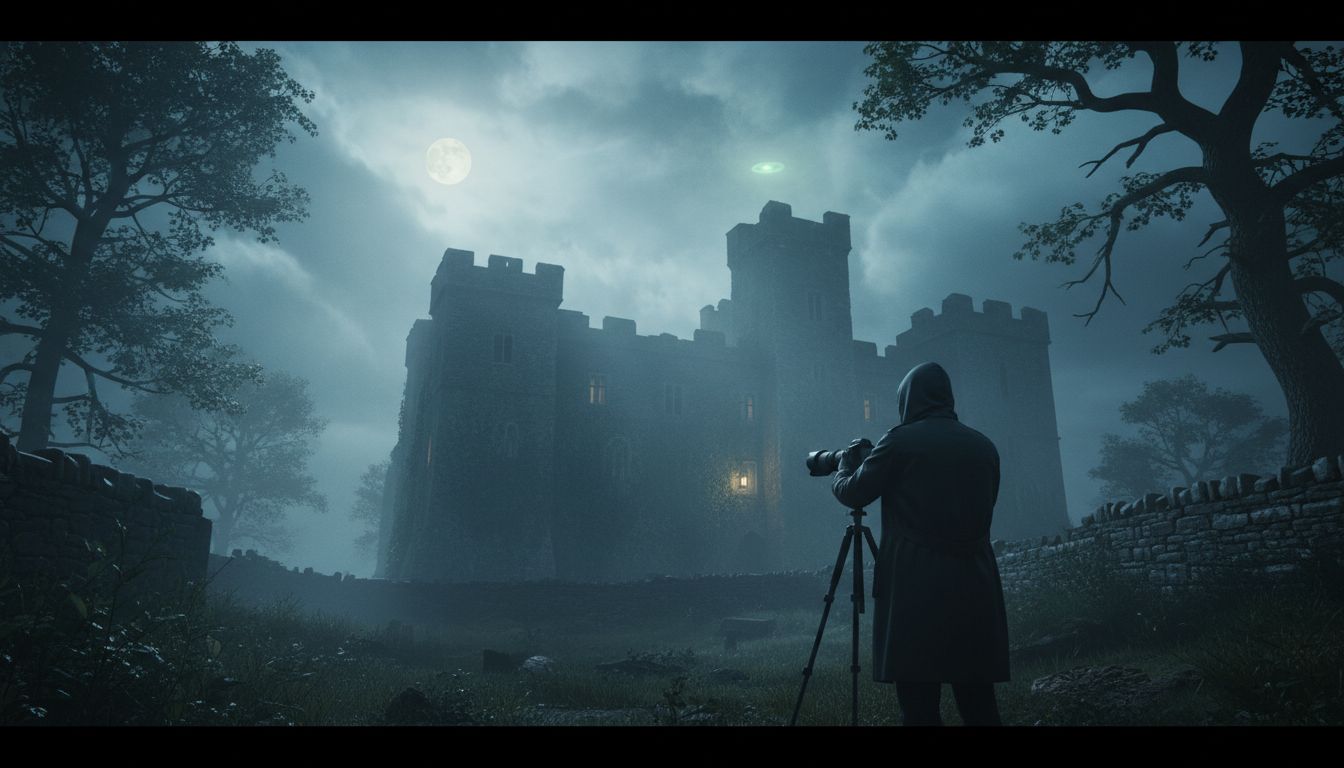
Chillingham Castle, a 12th‑century stronghold perched on the Northumberland coast, has become one of Britain’s most publicized “haunted” attractions. Since opening its medieval chambers to overnight guests, the castle claims more than 100 distinct ghost sightings—including apparitions of a former lady in white, a monk, and a soldier in 17th‑century armor. The experience is marketed through the castle’s official website and featured on the paranormal radio program Coast to Coast AM, drawing both thrill‑seekers and investigators from around the world.
Historical Context
Built around 1150 by the de Bertram family, Chillingham has a violent past marked by feuds, executions, and a notorious 1660s siege that left the castle partially ruined. Records indicate that the last resident, Sir John Miller, died in 1905, after which the property fell into disrepair before being restored in the 1970s by the current owners, the Miller‑Bennett family. “The stone walls have witnessed centuries of bloodshed and betrayal,” says local historian Dr. Eleanor Harper, “which naturally fuels folklore and, eventually, ghost stories.”
Guest Experience
Visitors who book the “Ghost Night” package stay in the castle’s original tower rooms, each equipped with period furnishings and a night‑time “paranormal briefing.” According to the castle’s director, Mark Bennett, “We provide a safe, historically accurate environment while letting guests decide what they believe.” Guest logs, posted on the castle’s website, recount hearing footsteps on empty corridors, feeling sudden drops in temperature, and seeing fleeting silhouettes. One reviewer, Amelia K., wrote, “I woke to a cold hand on my shoulder—when I turned, there was nothing but the stone wall.”
Scientific and Skeptical Viewpoint
Paranormal researchers acknowledge the volume of anecdotal reports but caution against drawing firm conclusions. Dr. Simon Kelley, a psychologist specializing in sleep phenomena, notes that “sleep paralysis, hypnagogic hallucinations, and the power of suggestion can create vivid, convincing experiences, especially in an environment designed to be eerie.” Technical investigations have also identified camera artifacts—such as lens flares and motion blur—that can be misinterpreted as spectral forms. “Many of the images circulated online are the result of low‑light photography, not evidence of entities,” says skeptic author and investigator James Larkin.
Balancing Heritage and Hauntings
Chillingham Castle’s dual identity as a historic monument and a commercial haunt raises questions about preservation and authenticity. The National Trust, which oversees several nearby sites, has praised the castle’s restoration work but urges that “interpretation of history should not be eclipsed by sensational claims.” The owners maintain that the ghost narrative attracts tourism that funds ongoing maintenance of the centuries‑old structure. As Mark Bennett puts it, “Our goal is to let people walk through history—whether they hear a whisper of the past or simply enjoy a night in a genuine medieval castle.”
Conclusion
Whether the sightings at Chillingham Castle are manifestations of unresolved trauma, atmospheric quirks, or genuine paranormal activity remains unresolved. What is clear, however, is that the castle offers a unique blend of historical immersion and experiential tourism, inviting guests to confront both the tangible remnants of England’s medieval past and the intangible allure of the unknown. As interest grows, the dialogue between historians, psychologists, and paranormal enthusiasts will likely continue to shape how sites like Chillingham are perceived—and visited—by future generations.


