Overview
A new wave of research is reshaping how scientists think about “psychic” abilities. In a recent interview, Dean Radin, a senior scientist at the Institute of Noetic Sciences, cited preliminary genetic data suggesting that traits often labeled as psychic may be widely distributed in the human genome, with only a small fraction of people lacking the relevant “psychic genes.” At the same time, neuroscientists are reporting reproducible evidence that brains can synchronize their activity during real‑time conversation, a phenomenon known as neural coupling. While the media sometimes frames such findings as evidence of extraordinary telepathy, researchers stress that the observed synchrony represents a low‑key, measurable form of information sharing that fits comfortably within accepted models of brain function.
Genetic Findings
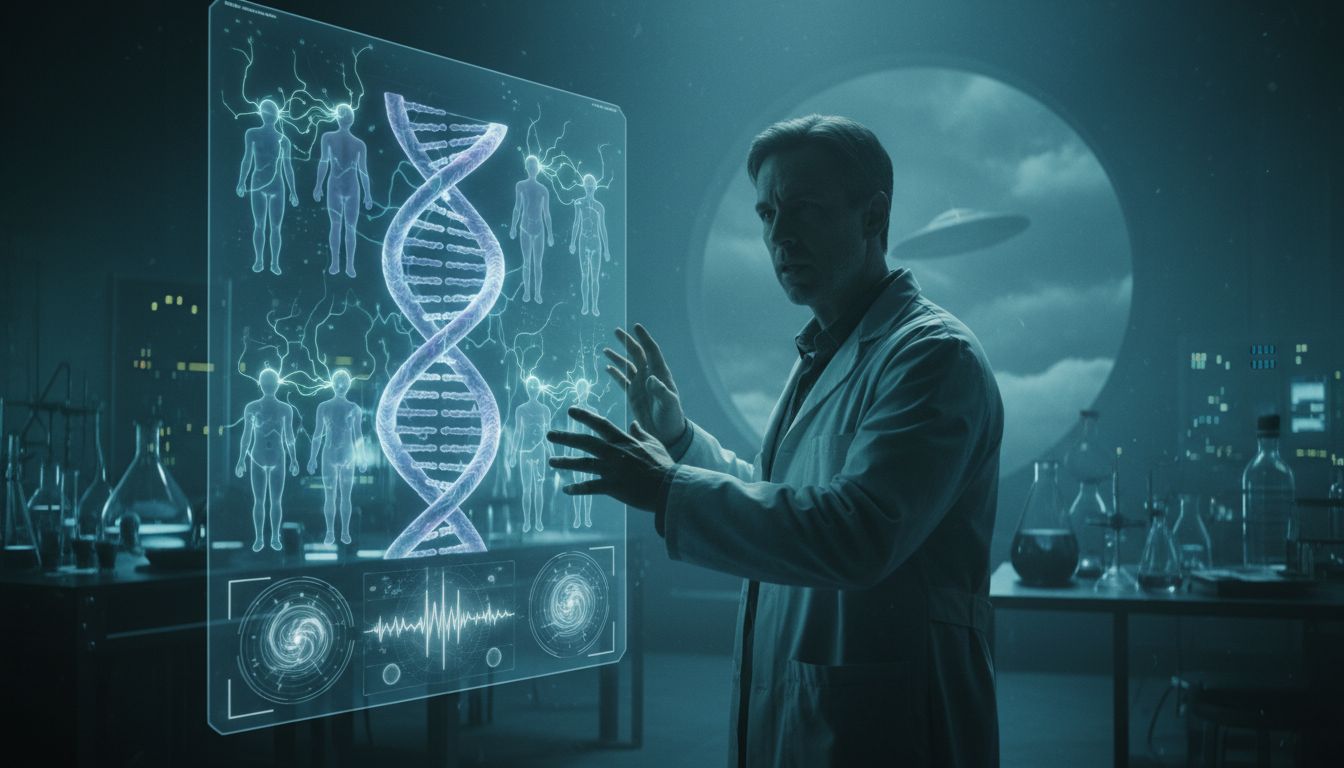
The genetic study referenced by Radin was conducted by a collaborative team from several universities, analyzing DNA samples from more than 5,000 volunteers who also completed standardized tests of intuitive perception, pattern recognition, and spontaneous imagery. Preliminary results identified four loci that showed a modest but statistically significant correlation with higher scores on these tasks. Radin explained, “What’s striking is that the alleles associated with stronger intuitive performance appear in roughly 85 % of the population. In other words, the absence of these variants is the exception, not the rule.” The researchers cautioned that the effect sizes are small and that environmental factors—such as meditation practice, cultural beliefs, and education—still play a crucial role in shaping any latent ability.
Neural Coupling Research
Parallel work in cognitive neuroscience has documented how two people’s brains can become coupled during dialogue. Using functional magnetic resonance imaging (fMRI) and hyperscanning electroencephalography (EEG), teams led by Dr. Michele Gazzaniga at the University of California, Berkeley, and Dr. Jasmin Lee at the Max Planck Institute demonstrated that speaker and listener neural activity aligns in language‑related regions within seconds of each other. The synchronization is strongest when the conversation is emotionally salient or when participants share a common goal. “This is not mind‑reading in the sci‑fi sense,” Dr. Lee said in a press briefing, “but it does show that our brains are wired to share information directly, reducing the need for explicit verbal encoding.” The findings have been replicated across cultures and age groups, reinforcing the view that neural coupling is a fundamental aspect of human communication.
Expert Commentary
While the emerging data are intriguing, many scholars urge caution. Evolutionary biologist Dr. Sarah Patel of Oxford University noted, “Linking a handful of genetic markers to something as complex as ‘psychic ability’ risks oversimplification. Genes set potentials, but they do not dictate performance.” Similarly, cognitive psychologist Dr. Luis Hernández of the University of Madrid warned that confirmation bias can inflate subjective reports of intuition, especially when participants are aware of the study’s focus. Both experts agree that the term “psychic” carries cultural baggage and that scientists should frame the results in neutral language—such as “intuitive cognition” or “implicit perception”—to avoid misinterpretation.
Implications and Future Directions
If further studies confirm that a large majority of people carry genetic variants linked to heightened intuitive processing, the implication could be a shift in how education and mental‑health programs are designed. Training that leverages these innate capacities—through mindfulness, pattern‑recognition exercises, or collaborative problem‑solving—might enhance learning outcomes and interpersonal understanding. On the neural side, the growing body of work on brain‑to‑brain synchrony is already influencing brain‑computer interface development, with prototypes that use real‑time coupling to improve remote teamwork and assistive communication for individuals with speech impairments. However, both lines of research remain in early stages, and rigorous replication, larger sample sizes, and interdisciplinary scrutiny will be essential before any definitive claims about “psychic” powers can be made. For now, the science points to a subtle, biologically grounded connectivity among humans, far more ordinary—and perhaps more profound—than the sensational headlines suggest.