Overview
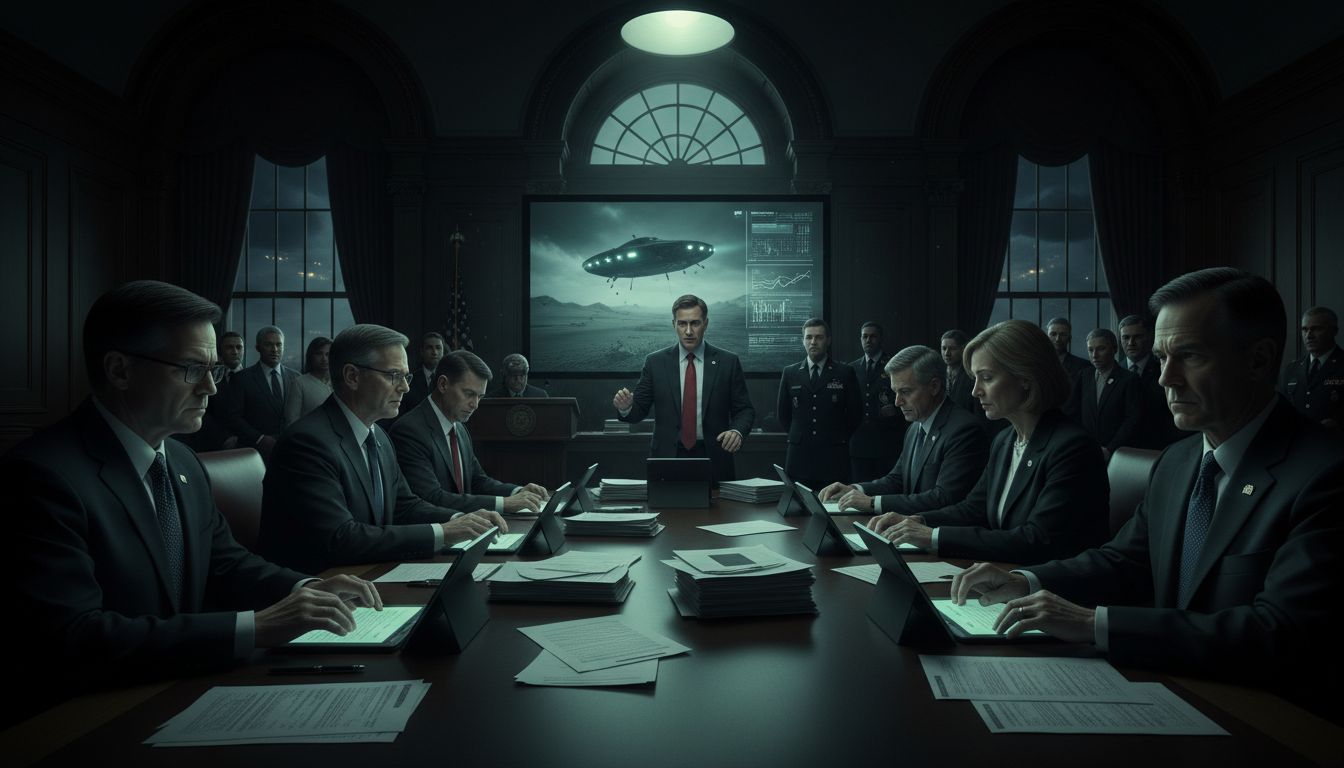
Congressional leaders are confronting a renewed wave of Unidentified Aerial Phenomena (UAP) disclosures that could reshape the national security conversation. House Majority Leader Steve Scalise recently attended a classified briefing on UAPs, describing it as “eye‑opening” while emphasizing that many aspects of the phenomena remain unexplained. At the same time, Dr. Steven Greer, a longtime advocate for UFO transparency, is set to present new whistleblower testimony at a National Press Club event on May 8. Journalist Cristina Gomez framed the current debate as a clash between two competing narratives: one that casts UAPs as “demonic” or supernatural, and another that treats them as advanced, possibly covert, human technology.
Political Context
The briefing attended by Scalise, confirmed by Congressman Eric Burlison, underscores the growing willingness of senior lawmakers to engage with UAP data that was previously hidden behind classification barriers. While Scalise declined to reveal specifics, he noted that the information was “not unsettling” yet highlighted gaps that still puzzle senior officials. Vice President JD Vance has publicly described UAPs in terms that many observers interpret as “demonic,” a characterization that Dr. Greer argues is a deliberate effort to steer public perception away from scientific inquiry. The partisan landscape is equally charged: Democrats have pushed for clearer language in the National Defense Authorization Act (NDAA) to mandate reporting, while some Republicans resist what they view as premature disclosure that could compromise intelligence sources.
Disclosure Claims
In a recent interview with Michael Sandler, Dr. Greer made several substantive allegations. He asserted that about 80 % of UFO sightings are actually man‑made craft employing anti‑gravity propulsion technologies that were allegedly mastered by covert programs in the 1950s. According to Greer, major aerospace contractors have deliberately suppressed these breakthroughs to protect the global energy sector. He also suggested that the “demonic” framing is part of a psychological‑warfare campaign initiated by the CIA during the Cold War, designed to condition the public for a staged “alien” event. Greer’s upcoming press conference is billed as a 25‑year follow‑up to the 2001 Disclosure Project, promising that “active whistleblowers will speak publicly about operational secret programs.” While these claims have yet to be independently verified, they have amplified calls for congressional oversight and transparent reporting mechanisms.
Eyewitness Testimony
The update also highlighted a 2020 maritime sighting reported by Captain Kate McCue of the cruise ship Celebrity Edge. McCue described a “giant black jellyfish‑shaped object” moving silently above the vessel at roughly 10–15 mph before descending into the water. She noted the absence of engine noise and the object’s apparent immunity to wind, characteristics that align with other “high‑strangeness” reports from pilots and sailors. Although anecdotal, such accounts are routinely cataloged by the Department of Defense’s UAP Task Force and contribute to the broader data set that policymakers are now reviewing.
Outlook
The convergence of classified briefings, high‑profile advocacy, and eyewitness reports suggests that the U.S. capital is at a pivotal moment in the UAP debate. Officials like Secretary of Defense Pete Hegseth (referred to in the video as “Secretary of War”) are reportedly examining classified information, while activists push for a scientific, technology‑focused narrative. As the May 8 National Press Club event approaches, observers anticipate that any substantive testimony could pressure lawmakers to codify more rigorous reporting requirements in future NDAA language. Whether the forthcoming disclosures will substantiate Greer’s claims or simply add new data points remains uncertain, but the bipartisan scramble for transparency indicates that the “UFO moment” many have awaited is moving from speculation toward formal legislative scrutiny.


