Overview
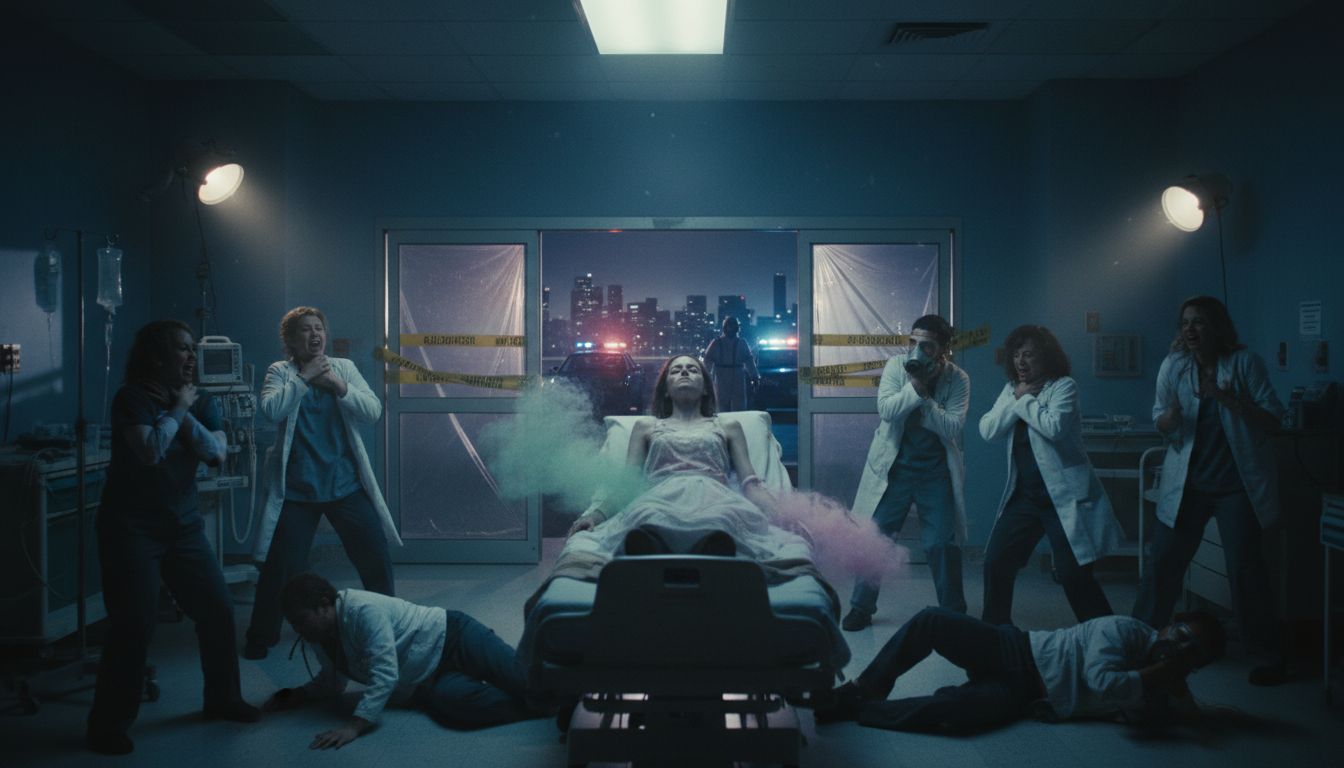
On February 19, 1994, Gloria Ramirez arrived at Riverside General Hospital in California suffering from late‑stage cervical cancer and severe heart palpitations. Within minutes of drawing her blood, a cascade of symptoms struck the emergency‑room staff: a nurse fainted after detecting an ammonia odor, a resident collapsed upon seeing yellow‑brown crystals in the sample, and a respiratory therapist soon followed. In total, 23 hospital employees became ill, five required hospitalization and one spent two weeks in intensive care. Ramirez herself died 45 minutes after admission from kidney failure, but the mysterious toxic reaction of her blood has continued to puzzle investigators for three decades.
The Incident and Initial Theories
Early investigators dismissed the episode as “mass hysteria,” noting that most of the affected staff had normal blood work and that the symptoms appeared only after contact with the patient’s blood. However, the case grew more perplexing when a physician who was hospitalized later developed hepatitis and avascular necrosis of the knees—conditions that do not fit a purely psychological explanation. The episode was later documented in Forensic Science International and entered forensic textbooks as “the most scientific explanation to date,” though no definitive cause has ever been proven.
Lawrence Livermore’s Chemical Hypothesis
Scientists at Lawrence Livermore National Laboratory proposed that Ramirez had been self‑medicating with dimethyl sulfoxide (DMSO), a common over‑the‑counter pain reliever. According to the hypothesis, oxygen from the paramedic’s mask oxidized DMSO to dimethyl sulfone, which then crystallized in the bloodstream. When emergency staff applied electric shocks during defibrillation, the crystals could have been converted into dimethyl sulfate, a highly toxic compound capable of producing the observed respiratory distress. Chemists remain skeptical, pointing out that the human body’s temperature is generally insufficient to drive such a reaction without a catalyst. Nonetheless, the theory remains the most detailed chemical explanation available, and it continues to be cited in forensic curricula.
New Findings on Brain Imaging: A Parallel Mystery
While the Ramirez case remains unresolved, a separate line of research emerging from Germany is challenging long‑standing assumptions about functional brain imaging. Researchers have reported that up to 40 % of MRI signals traditionally interpreted as markers of neuronal activity may instead reflect variations in oxygen consumption rather than blood flow. The study, published in a leading neuroimaging journal, suggests that the brain’s metabolic demands could drive many of the hemodynamic changes detected by functional MRI (fMRI), calling into question the reliability of blood‑oxygen‑level‑dependent (BOLD) signals as direct proxies for neural firing. Lead author Dr. Anja Müller noted, “Our data indicate that metabolic fluctuations can masquerade as neuronal activation, meaning that some fMRI findings may need to be re‑examined.”
Implications and Ongoing Questions
Both the Ramirez incident and the German MRI findings underscore how complex biochemical and physiological processes can confound clinical observations. For emergency medicine, the case reinforces the need for rigorous protocols when handling unknown contaminants, even from patients with seemingly unrelated conditions. In neuroscience, the new MRI data may prompt a reevaluation of decades of research that relied on BOLD signals to map brain function, potentially reshaping our understanding of cognition and disease. As scientists continue to investigate these mysteries, the medical community is reminded that unexplained phenomena often drive the most significant advances in safety and knowledge.