Overview
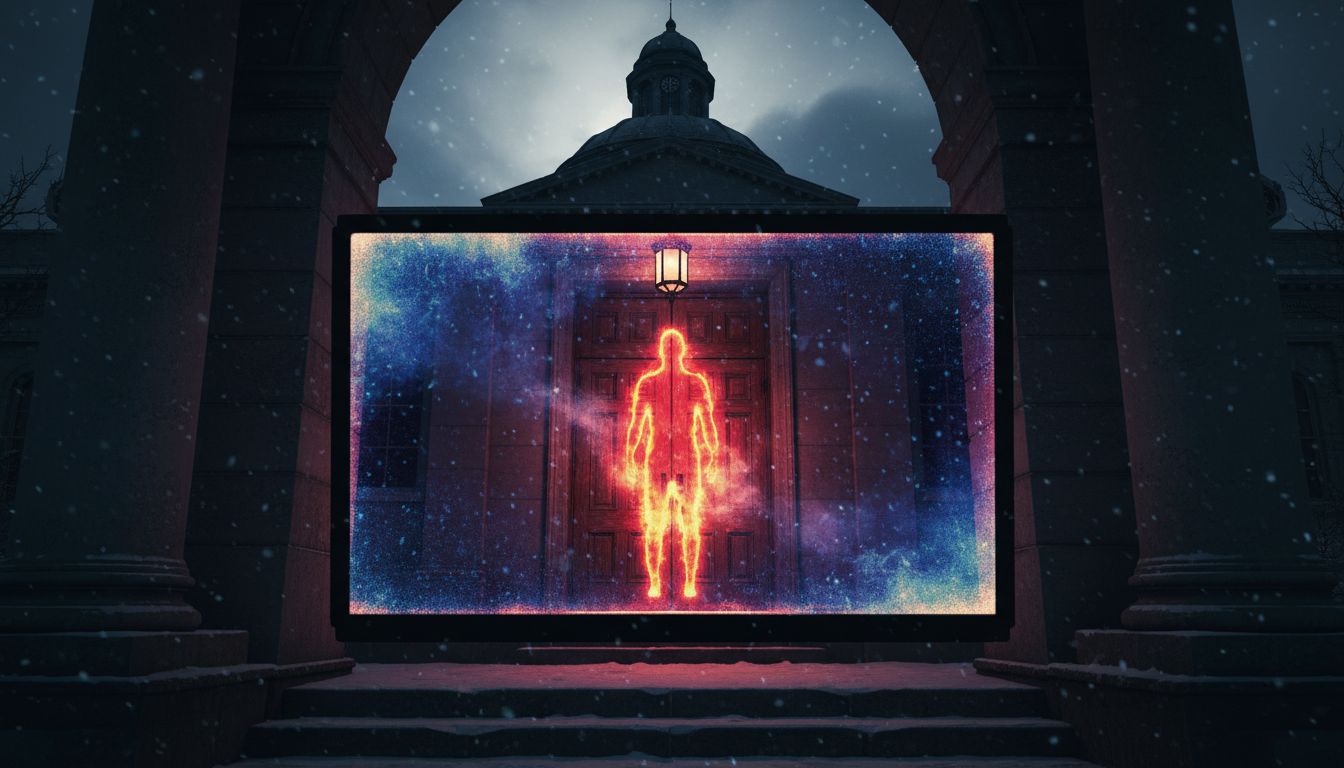
A recent segment on the syndicated radio program Coast to Coast AM featured a short video taken by a thermal‑imaging camera installed at the front entrance of a county courthouse in Ohio. The footage shows a distinct heat signature appearing momentarily in the doorway even though staff members confirmed that no one was present at the time of recording. The clip has sparked online discussion about whether the anomaly could be the result of “residual energy,” a technical glitch, or something more elusive. The segment was presented alongside unrelated paranormal reports, including a series of unexplained deaths in an Indian village and a purported ghost photograph taken after a car crash in Honduras.
The Ohio Courthouse Incident
The thermal camera, a standard security device that detects infrared radiation, was positioned to monitor foot traffic through the courthouse’s main doors. According to the program’s description, the camera recorded a brief, localized increase in temperature that lasted less than a second. Courthouse officials who operate the system said that the building was empty at the time, and no maintenance personnel were on site. “We have no record of anyone being in the lobby during that interval,” a spokesperson for the county clerk’s office told the show’s producers. The footage, which runs for roughly eight seconds, shows the heat signature as a bright, fuzzy oval that appears to hover just inside the doorway before dissipating.
Expert Commentary
To provide context, the program consulted Dr. Elena Ramirez, a professor of applied physics at Ohio State University who specializes in infrared imaging. Dr. Ramirez explained that thermal cameras can register transient temperature changes caused by a variety of mundane factors, such as reflected sunlight, sudden air currents, or even the brief heating of a camera’s own sensor. “What looks like a ‘ghost’ on a thermal monitor is often an artifact of the equipment,” she said. “Without corroborating evidence—like visual confirmation or multiple sensor readings—it’s premature to attribute the anomaly to any supernatural cause.”
Paranormal investigator Mark Wilson, who contributed to the segment, offered an alternative perspective. Wilson noted that some researchers in the field of psychical studies consider “residual energy”—the idea that a location can retain a subtle imprint of past events—to be a plausible explanation for unexplained thermal readings. “While the scientific community remains skeptical, there are documented cases where repeated thermal anomalies align with historic reports of activity,” Wilson said. He emphasized that the Ohio incident, taken in isolation, does not meet the rigorous standards required for verification.
Related Reports in the Broadcast
The courthouse clip was part of a broader “paranormal roundup” that also covered two other stories. The first involved a remote village in the Indian state of Madhya Pradesh, where several residents died under circumstances that locals described as “cursed.” The second featured a photograph taken by a passerby after a fatal car crash in Honduras; the image appears to show a faint, human‑like silhouette near the wreckage. Coast to Coast AM’s host highlighted these items as “unexplained phenomena that merit further investigation,” but the program did not present any scientific analysis for them. By bundling the Ohio footage with these unrelated accounts, the show encouraged listeners to consider the possibility of a common underlying mystery, though no direct connection has been established.
Conclusion
The thermal camera anomaly at the Ohio courthouse remains an unresolved technical observation. While the footage is intriguing, experts stress that without additional data—such as corroborating video, environmental logs, or repeatable measurements—there is insufficient evidence to support a paranormal interpretation. The episode illustrates the challenges faced by both investigators and skeptics when isolated incidents are presented alongside unrelated, sensational stories. As the discussion continues online, the incident serves as a reminder of the importance of rigorous verification in the age of easily shared visual media.


