Overview
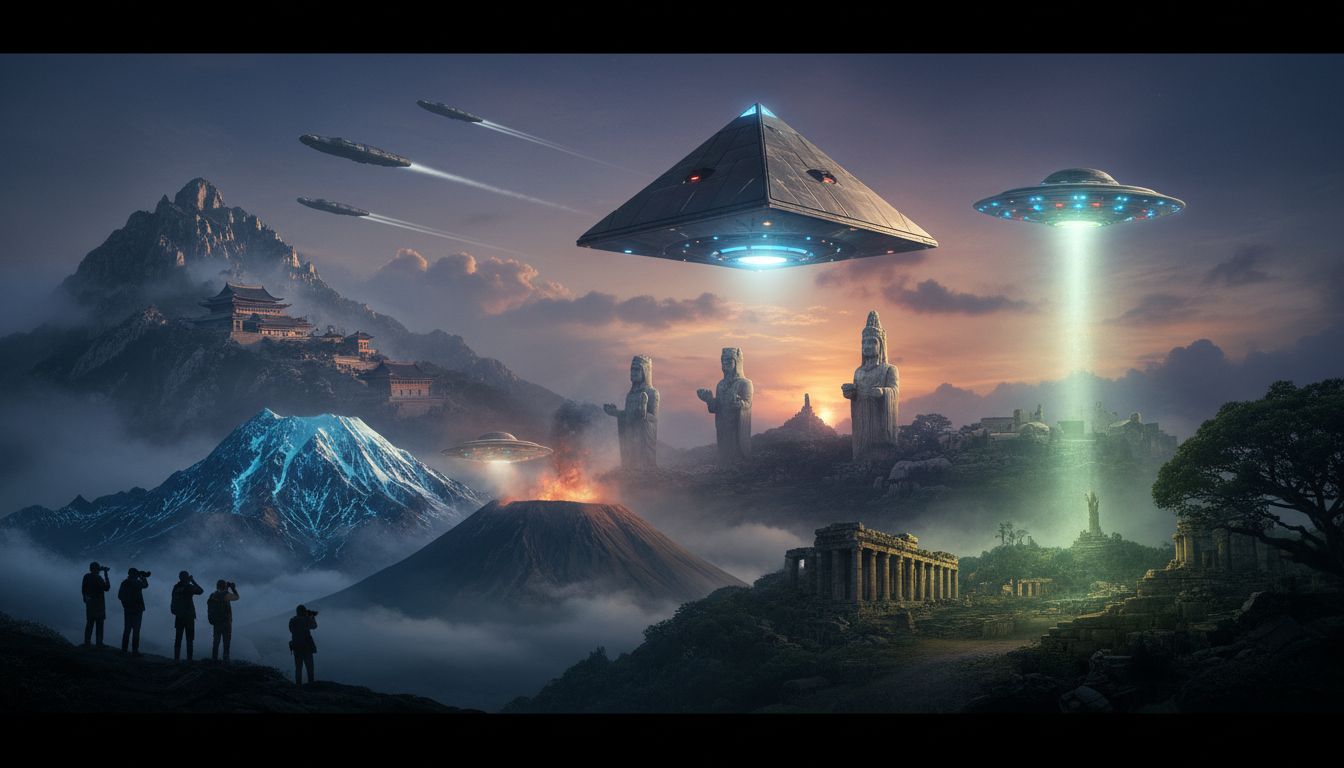
A newly released video by independent researcher Praveen Mohan examines the bas‑reliefs of Cambodia’s 11th‑century Baphuon temple, suggesting the stonework encodes “records of extraterrestrial activity, extinct prehistoric animals, and ancient medical practices.” Mohan’s interpretation joins a broader set of claims that link disparate ancient sites—from Mount Shasta to Mt Nemrut—to alleged UFO or alien craft, citing former pilots, archaeologists, and a U.S. congressman. The video has quickly circulated among UFO‑enthusiast circles, prompting both intrigue and criticism from mainstream scholars.
Claims Presented in the Video
Mohan points to several carvings he believes depict non‑human entities. He describes a figure with “sharp teeth and a pointed face” probing a human’s ear, likening it to the cinematic “Predator” and to modern reports of alien “probing.” He also highlights a massive boar that, in his view, resembles the extinct Entelodont—a creature that vanished millions of years ago—arguing that such an accurate depiction would require knowledge beyond the temple’s accepted 1,000‑year age. Additional reliefs show humanoid beings with reptilian, deer, or rat features, which Mohan interprets as “reptilian and hybrid beings” interacting with humans.
Beyond these alleged alien motifs, the video connects a carving of a flying human head and arrows to the Mahabharata episode of Jayadratha and Arjuna, illustrating a cultural bridge between ancient Indian epics and Khmer art. Mohan further claims the temple illustrates sophisticated techniques, such as hunters using herb‑laced bird feed to induce fainting—a practice he says persists among remote Indian tribes—and depictions of Ayurvedic doctors, suggesting the Baphuon and nearby Neak Pean functioned as early hospitals.
Context and Supporting Voices
Mohan’s narrative is bolstered by remarks from other UFO researchers. Chris Lehto, a former pilot turned investigator, is quoted as saying, “When you see these carvings, the patterns are too consistent with modern abduction imagery to be coincidence.” Cristina Gomez, a self‑identified archaeologist, adds, “The presence of extinct fauna in stone raises legitimate questions about our dating methods.” In the political arena, Congressman Eric Burlison (R‑OK) has recently urged the Pentagon to “re‑examine all historical sites for potential evidence of advanced technologies,” echoing the video’s call for a broader investigative lens.
Scholarly Assessment
Professional archaeologists and historians, however, caution against conflating artistic symbolism with literal documentation. Dr. Sopheak Rith, a senior researcher at the Royal University of Fine Arts in Phnom Penh, notes that Khmer bas‑reliefs often employ mythic creatures and exaggerated forms to convey religious concepts rather than factual zoology. “The so‑called ‘Entelodont’ could simply be a stylized boar, a common motif in Khmer iconography,” she explains. Likewise, the “alien probing” scene aligns with traditional depictions of demons or spirits interacting with mortals, a theme prevalent across Southeast Asian art. Peer‑reviewed literature on the Baphuon has not identified any credible evidence of extraterrestrial influence, and carbon‑dating and epigraphic analysis continue to place the structure firmly within the Angkorian period.
Balanced Perspective
While the video’s vivid visual tour and its synthesis of myth, archaeology, and contemporary UFO lore capture public imagination, the lack of verifiable data limits its scientific merit. The claims illustrate a growing trend of re‑interpreting ancient art through a modern extraterrestrial lens—a practice that can both stimulate public interest in heritage and risk undermining scholarly consensus. As Mohan concludes, “Ancient temples are encyclopedias in stone,” urging viewers to “look beyond mainstream explanations.” Whether such curiosity