Overview
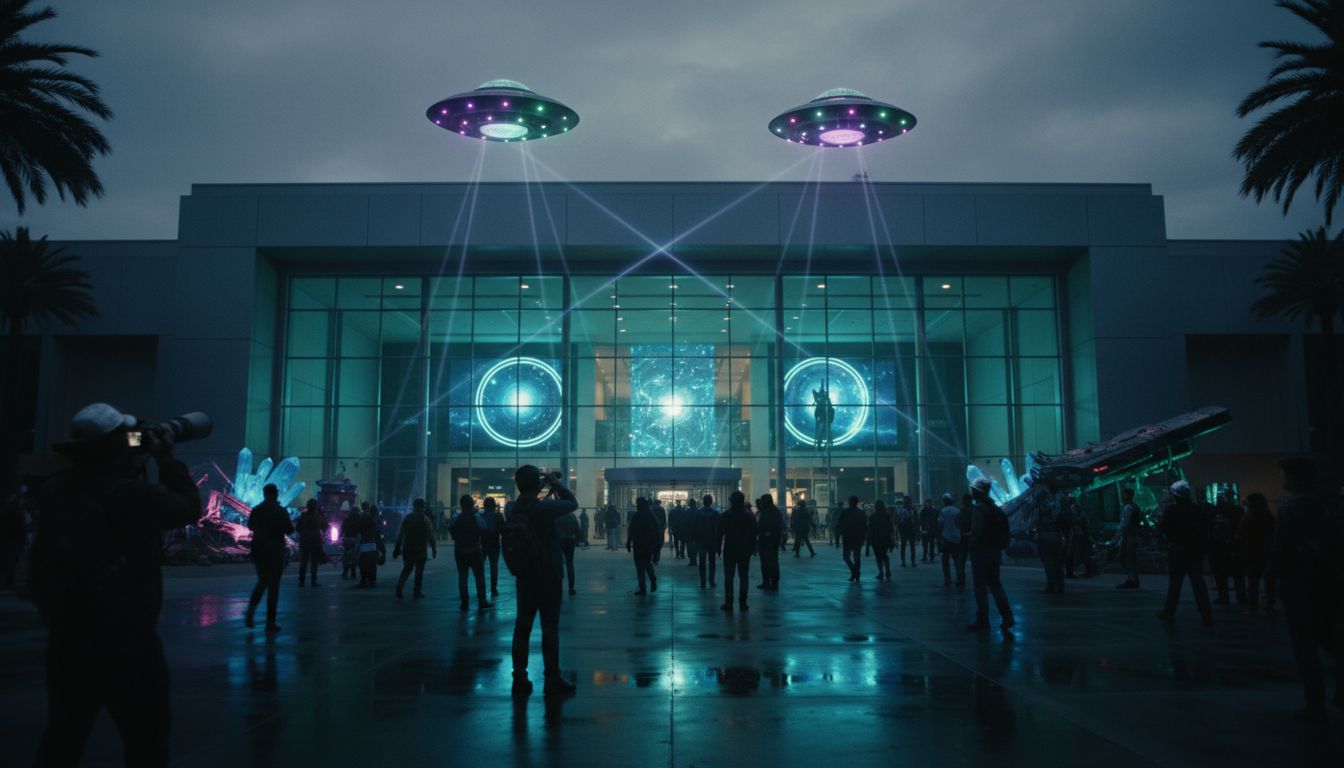
Pasadena’s Convention Center welcomed AlienCon’s second edition this weekend, drawing a crowd of UFO enthusiasts, sci‑fi fans, and curious locals. The three‑day gathering, held May 22‑24, built on the momentum of last year’s inaugural event, offering a blend of scientific discussion, pop‑culture celebration, and hands‑on exhibits. Organizers promoted the convention as “a place where serious UAP research meets fan‑driven imagination,” a tagline that resonated with the roughly 1,200 attendees who filled the exhibit hall and breakout rooms.
Programming Highlights
The schedule featured more than 30 panels, ranging from “The Science of Unidentified Aerial Phenomena” to “Extraterrestrials in Film & Literature.” A keynote address by Dr. Maya Patel, senior researcher at the National Institute for Aeronautics, examined the latest declassified data released by the U.S. Office of the Director of National Intelligence, noting that “the frequency of credible sightings has not diminished, and the need for transparent analysis remains critical.”
Exhibit spaces showcased models of alleged alien technology, a VR simulation of a 2024 Navy encounter, and a retro collection of 1950s sci‑fi memorabilia. A “UAP Research Lab” booth, hosted by the nonprofit UFOlogy Alliance, offered visitors access to a searchable database of sightings, encouraging citizen scientists to contribute new reports.
Expert Perspectives
Beyond the headline speakers, the convention attracted academics from the emerging field of UAP studies. Professor Liam O’Connor of Caltech’s Department of Astrophysics cautioned against “jumping to extraterrestrial conclusions” while acknowledging that “the data gaps highlighted in recent government reports merit rigorous, peer‑reviewed investigation.”
In a panel titled “Policy, Transparency, and the Public,” former Pentagon analyst Ellen Ramirez discussed the implications of the 2023 UAP Task Force findings, stressing that “institutional openness can help separate myth from measurable phenomena.” Her remarks were echoed by several attendees who expressed appreciation for the balance of speculative fun and evidence‑based dialogue.
Community Response
Local reaction was mixed but enthusiastic. Long‑time Pasadena resident Javier Morales told reporters, “I came for the alien costumes, but I left with a better understanding of what scientists actually know.” Meanwhile, a group of high‑school teachers organized a field trip, noting that the event provided “real‑world examples of how scientific inquiry can be applied to unconventional topics.”
Critics, however, warned that the convention’s playful branding could blur the line between entertainment and credible research. The Pasadena City Council’s cultural affairs liaison, Councilmember Priya Desai, emphasized that “while we celebrate community events, we also encourage organizers to clearly differentiate speculative content from vetted scientific findings.”
Looking Ahead
AlienCon’s organizers announced plans for a larger venue in 2027, aiming to attract international speakers and expand the research symposium component. Ticket sales for the next year opened within hours of the closing ceremony, indicating sustained public interest.
As the conversation around UAPs continues to evolve—spurred by recent congressional hearings and the establishment of a permanent Office of UAP Research—events like AlienCon serve as a bridge between the scientific community and the public imagination. Whether for the latest sightings, the thrill of speculative storytelling, or the chance to meet researchers on the front lines, the convention’s return underscores Pasadena’s growing role as a hub for thoughtful, interdisciplinary dialogue on the unknown.