Overview
In early May, the U.S. government made a sizable batch of previously classified material public through the newly created Presidential Unsealing and Reporting System for UAP Encounters (PURSUE). The release, prompted by a 2022 directive from former President Donald Trump for greater transparency on Unidentified Anomalous Phenomena (UAP), includes hundreds of files—military incident reports, intelligence assessments, astronaut mission documents, and historic sighting records dating back to the 1940s. While officials framed the move as a step toward “maximum transparency,” the content has reignited congressional interest and public debate about whether the government has been withholding evidence of non‑human technology.
The Apollo 17 Photograph
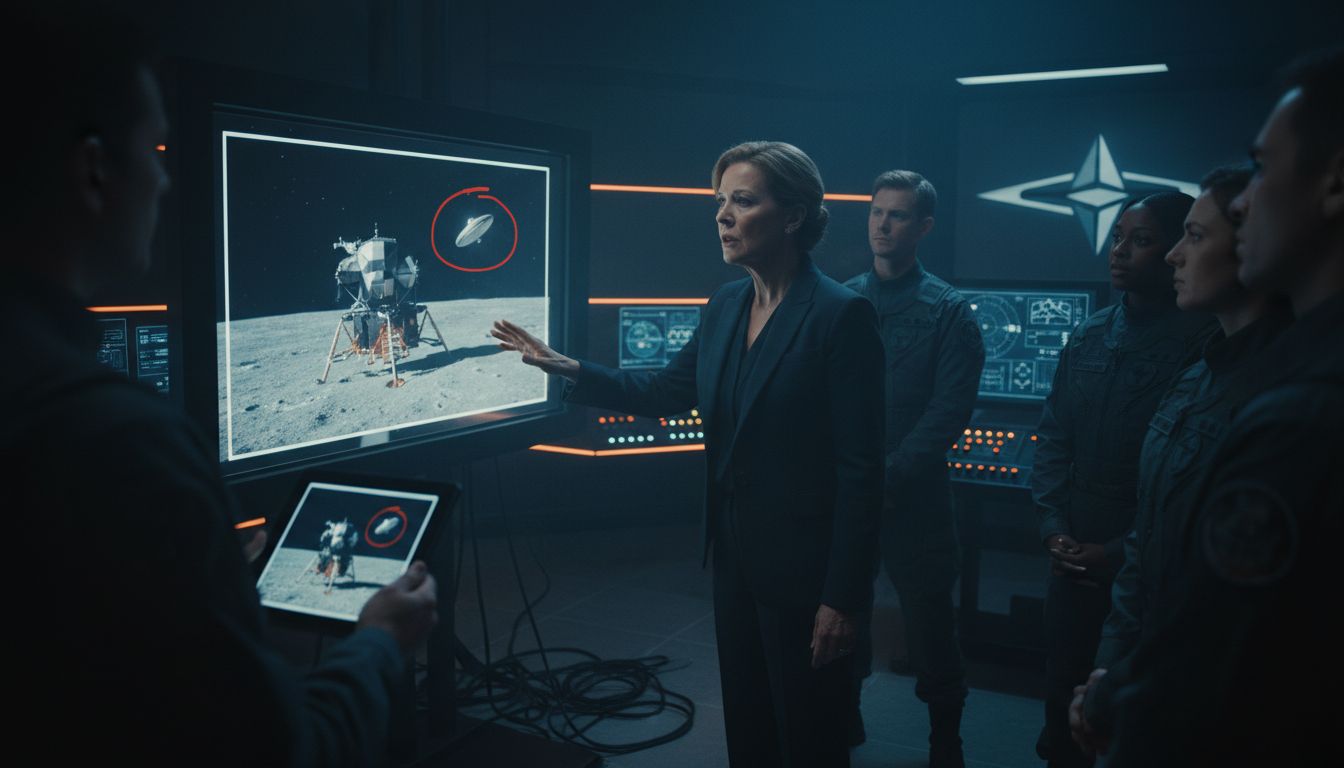
Among the newly unsealed items, documentary filmmaker Dan Farah highlighted a single image from the 1972 Apollo 17 mission as “the most significant evidence” of UAP activity released to date. The photograph, taken by astronaut Eugene A. Cernan while on the lunar surface, shows an anomalous bright object hovering near the horizon of the Moon. The picture had been classified for five decades, listed in NASA’s internal archives as “unexplained aerial phenomenon.” Farah, director of the Prime Video documentary The Age of Disclosure, described the image as “pretty extraordinary” and said it offers “concrete, visual proof that something was out there that we could not identify.” NASA has not yet issued an official comment on the photo’s authenticity or its interpretation.
Legislative and Executive Reactions
The release has drawn swift responses from both parties in Washington. Senate Minority Leader Chuck Schumer tweeted that “UFO disclosure has been a distant object—unidentified and unexplained. That’s starting to change,” while former Senator Marco Rubio, who appears in Farah’s documentary, called the new material “a pivotal moment for national security and scientific inquiry.” According to Farah, the documentary’s premiere helped catalyze the declassification, noting that “within three months the film’s release straight up led to President Trump taking a legitimate historic, unprecedented action to declassify evidence that the U.S. government has of UAP and non‑human intelligent life.” The administration, however, continues to emphasize that the documents do not confirm extraterrestrial origins, merely acknowledging that some encounters remain unexplained.
Impact of The Age of Disclosure
The Age of Disclosure has become Prime Video’s most‑watched documentary, featuring interviews with 34 senior officials from the legislative, military, and intelligence communities. Farah argues that the film “opened a lot of eyes, not only in the public but inside government,” and that it underscores an alleged “80‑year cover‑up of the existence of non‑human intelligent life.” Critics have warned that the documentary’s narrative may blur the line between verified data and speculation, but its influence on public discourse is undeniable. The film’s emphasis on a “high‑stakes secret Cold War race” to reverse‑engineer alleged non‑human technology adds a geopolitical dimension that lawmakers are now compelled to address in hearings and budget requests.
Looking Ahead
Government officials indicate that the PURSUE portal will continue to receive additional submissions over the coming months, with the Department of Defense promising “regular updates” as more files are reviewed. Congressional committees, including the Senate Armed Services Committee, have scheduled hearings to examine the newly released material and to assess any potential threats to national security. Meanwhile, scientists at NASA and independent research groups have requested access to the Apollo 17 image for independent analysis, citing the need for rigorous verification before drawing conclusions. As the evidence pool expands, the balance between transparency, scientific scrutiny, and national‑security concerns will shape the next phase of the U.S. government’s approach to UAP phenomena.


