Overview
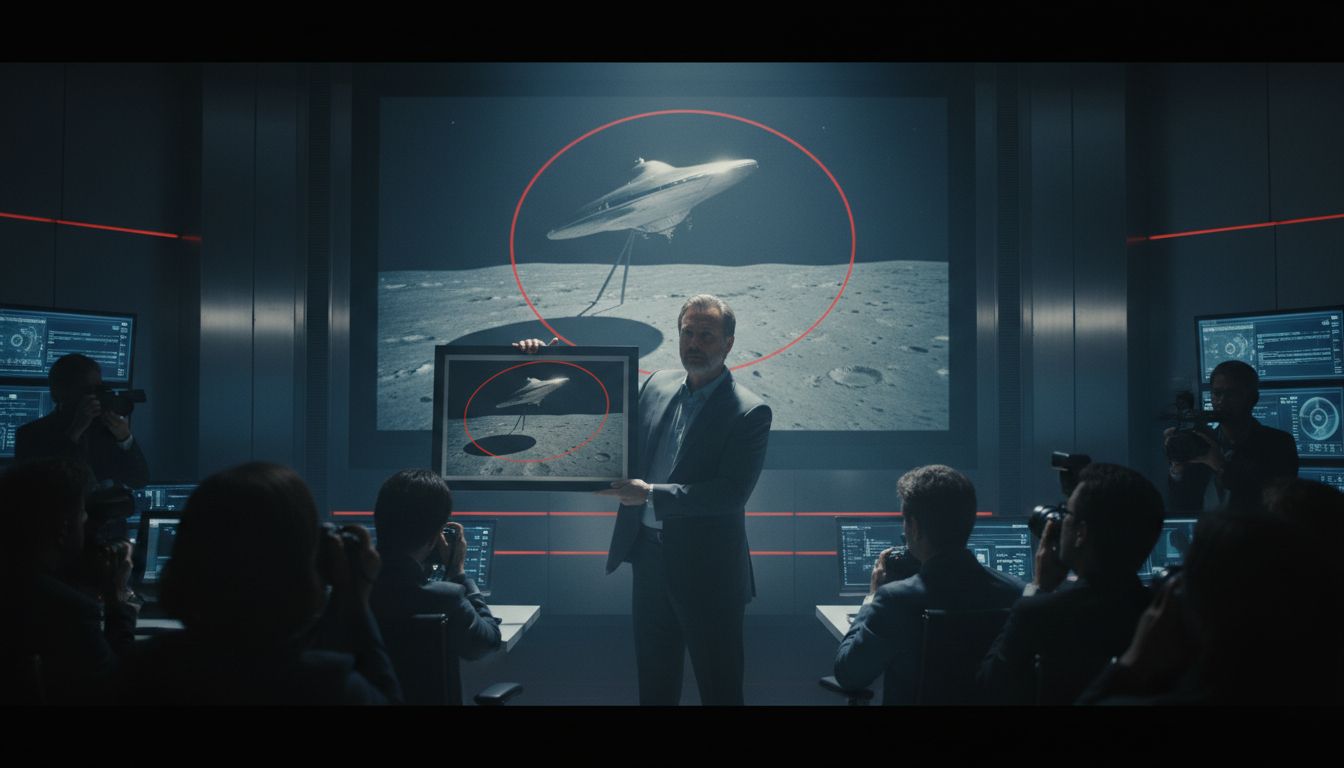
A previously classified photograph taken during NASA’s 1972 Apollo 17 mission has been released through the U.S. government’s new Presidential Unsealing and Reporting System for UAP Encounters (PURSUE). The image, which shows an unidentified aerial phenomenon (UAP) captured from lunar orbit, is being highlighted by documentary filmmaker Dan Farah, director of the Prime Video series Age of Disclosure. Farah calls the photo “the most significant new UAP release” since the recent wave of declassifications prompted by a 2025 directive for transparency. The unsealing adds to a broader set of documents—including military incident reports, intelligence memos, and astronaut logs—that were made public on May 8, 2026.
The Apollo 17 Photo
The newly released frame shows a bright, disc‑shaped object hovering near the Moon’s far side, illuminated against the stark lunar surface. While NASA’s official archives list the image as part of routine mission photography, the accompanying metadata released through PURSUE notes an “unidentified anomalous visual signature” observed by the crew’s command module pilot. Astronauts Eugene Cernan and Harrison Schmitt have not publicly commented on the sighting, and NASA’s current statement describes the object as “currently unexplained pending further analysis.” Farah, who produced Ready Player One before turning to UAP research, says the photo “offers concrete visual evidence that something was there, and it was captured by a crew trained to notice and record anomalies.”
Government Transparency Initiative
The release follows a broader push for openness initiated by former President Trump’s 2025 executive order demanding “maximum transparency” on UAP matters. Under the order, the Department of War (formerly the Department of Defense) created the PURSUE portal, which now hosts hundreds of files ranging from 1940s sightings to recent intelligence assessments. The administration frames the effort as a step toward “accountability and scientific inquiry,” not a confirmation of extraterrestrial life. Nonetheless, the sheer volume of material—now searchable by the public—has intensified scrutiny of past government secrecy and prompted calls for an independent congressional review.
Reactions from Officials and the Documentary
Political leaders on both sides of the aisle have responded. Senate Minority Leader Chuck Schumer tweeted that “UFO disclosure has been a distant object… That’s starting to change,” while Republican Senator Marco Rubio, featured in Age of Disclosure, called the new evidence “a catalyst for serious legislative oversight.” Farah told Entertainment Weekly that the documentary’s release “opened a lot of eyes, not only in the public but inside government,” and that within three months it “led to President Trump taking a legitimate historic, unprecedented action to declassify evidence.” Critics, however, caution that the documentary’s dramatic framing may amplify speculation; former Pentagon analyst Laura Miller noted that “visual anomalies are not uncommon in space photography and require rigorous scientific validation before any conclusions are drawn.”
Implications and Next Steps
The Apollo 17 image has reignited debate over how the United States handles anomalous aerospace phenomena. Scientists at the newly formed UAP Research Office have requested access to the raw telemetry and mission transcripts to conduct an independent review. If the object is determined to be a sensor glitch, debris, or a known satellite, the episode may reinforce existing protocols for reporting. Conversely, if further analysis substantiates the anomaly, it could prompt renewed funding for UAP research and potentially reshape aerospace policy. For now, the photo remains “unexplained,” and both the scientific community and policymakers are urging caution while the investigation proceeds.
Bottom line: the unsealed Apollo 17 photograph represents the most high‑profile visual UAP evidence released to date, but its ultimate significance will depend on the rigor of forthcoming analysis and the willingness of government agencies to sustain transparency beyond the current wave of disclosures.


