Overview
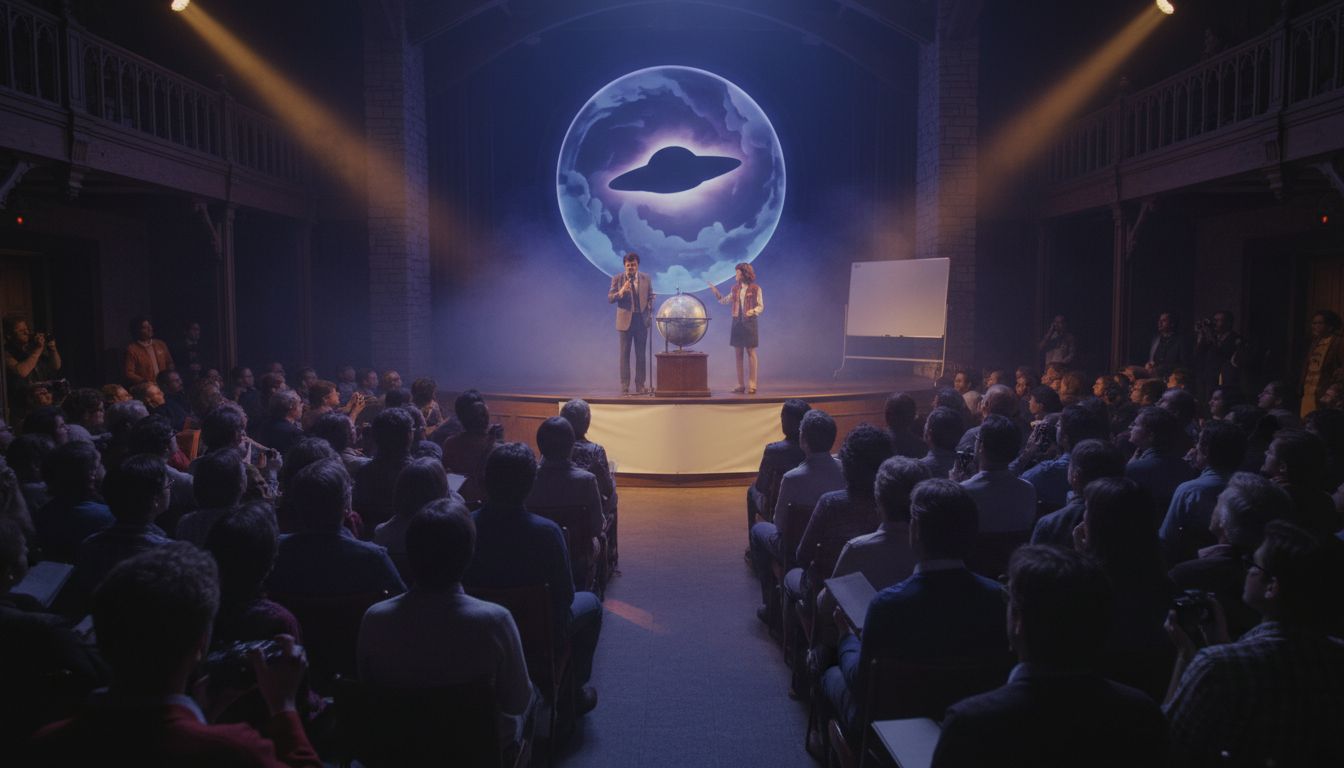
On March 25, 1988, Eureka Springs, Arkansas, hosted the inaugural Ozark Mountain UFO Conference—a gathering that marked the first organized effort to bring together regional UFO enthusiasts, academic researchers, and government‑affairs observers under one roof. Organized by a coalition of local ufologists and the Eureka Springs Chamber of Commerce, the two‑day event attracted roughly 150 participants from across the Midwest, setting a precedent for what would become an annual tradition in the Ozark region.
Organization and Attendees
The conference was spearheaded by Dr. Harold “Hal” Whitaker, a retired Air Force meteorologist who had spent the previous decade cataloguing unexplained aerial sightings in the Ozarks. In a brief interview archived by the Arkansas Historical Society, Whitaker explained, “We wanted a forum where serious investigators could exchange data without the sensationalism that often clouds public perception.” The roster included a mix of amateur sky‑watchers, representatives from the Mutual UFO Network (MUFON), a few retired military pilots, and a handful of academics from the University of Arkansas who were studying atmospheric phenomena. Notably, Linda Carr, then‑director of the Arkansas State Archives, attended to discuss the historical record of UFO reports in the state, emphasizing the need for systematic documentation.
Program Highlights
The conference schedule featured three keynote presentations, a series of panel discussions, and a poster session showcasing recent sighting reports. Dr. James L. Hargrove, a professor of atmospheric physics, delivered the opening address titled “Distinguishing Natural Phenomena from Unidentified Aerial Phenomena,” outlining methodological standards for data collection. A panel titled “Government Transparency and the UFO Question” included former Pentagon analyst Robert “Bob” Gaines, who cautioned against speculation, stating, “Our goal is to separate classified aerospace projects from genuine unknowns through rigorous inquiry.” Evening workshops allowed attendees to examine radar logs, night‑vision footage, and eyewitness testimonies, fostering a collaborative environment that emphasized scientific rigor over anecdotal speculation.
Impact and Legacy
While the 1988 gathering was modest in size, its influence rippled through the Ozark community and beyond. Local newspapers reported a noticeable uptick in public interest, prompting the Eureka Springs city council to allocate funds for a permanent “UFO Observation Center” that opened in 1990. The conference also inspired the formation of the Ozark Mountain UFO Research Group (OMURG), which has since contributed data to national databases used by the All‑Domain Anomaly Resolution Office (AARO). According to a 2024 retrospective published by the Arkansas Department of Heritage, the conference “served as a catalyst for regional cooperation, turning isolated reports into a coherent research agenda.”
Reflection and Future Prospects
Thirty‑eight years later, the anniversary is commemorated by K8 News as a historic milestone in regional UFO culture. Current OMURG coordinator Sarah Delgado reflected on the conference’s enduring relevance: “The spirit of that first meeting—open dialogue, methodological care, and community involvement—still guides our work today, especially as the federal government begins to declassify UFO‑related material.” As the Ozark Mountain UFO Conference approaches its 40th edition, organizers plan to incorporate emerging technologies such as AI‑driven image analysis and crowdsourced data platforms, ensuring that the event remains at the forefront of legitimate scientific investigation into unidentified aerial phenomena.


