Overview
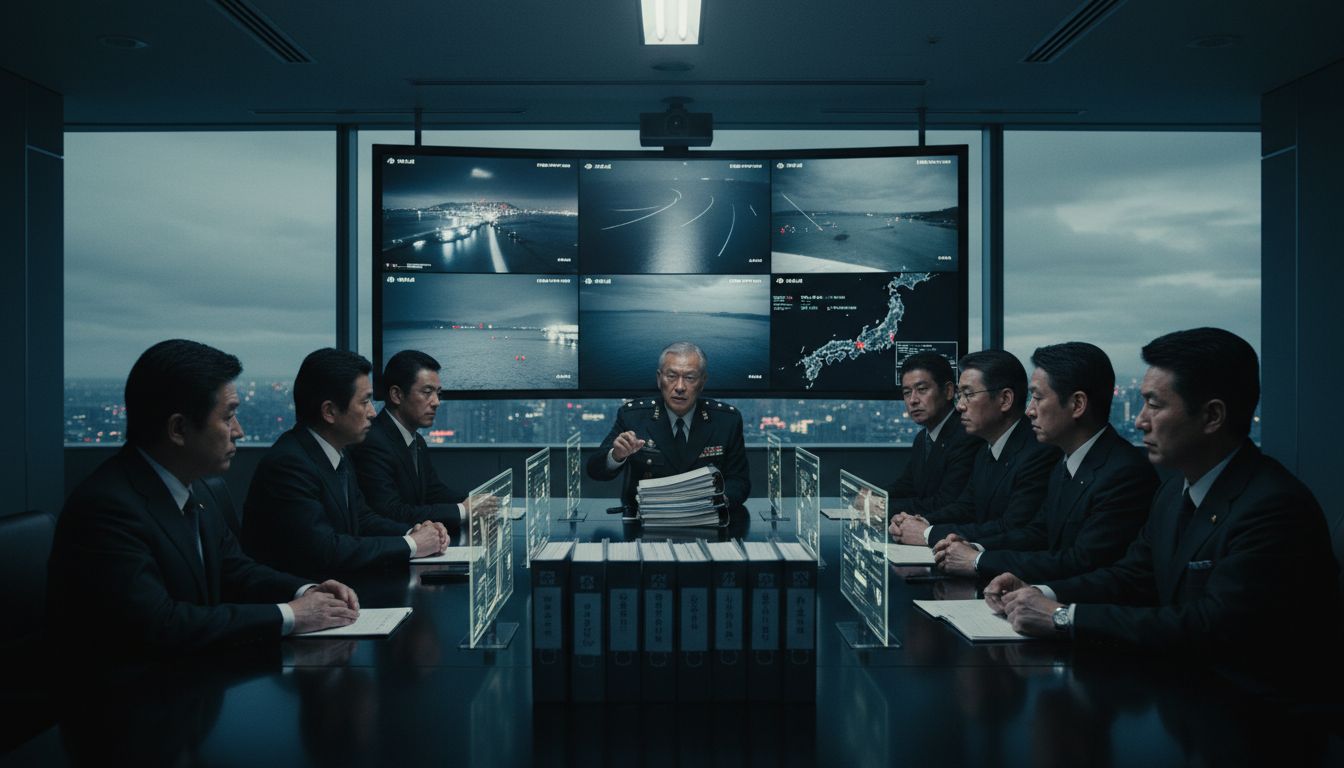
Japan’s Ministry of Defense announced on May 9, 2026 that a dedicated task force is analysing a newly released trove of Pentagon documents on unidentified aerial phenomena (UAP). The collection, part of the United States’ ongoing de‑classification effort, contains several reports of sightings that occurred within the airspace surrounding the Japanese archipelago. Officials say the review will focus on any potential national‑security implications and on improving transparency for both the public and allied partners.
Background
The United States began publishing UAP records in 2020, culminating in a comprehensive “UAP Task Force” report in 2023 and a subsequent legislative mandate for regular updates. The latest batch, made public in early May, includes 1,200 incident files, of which roughly 150 reference the Western Pacific region, with nine cases specifically noted near Japan’s territorial waters. Historically, Japan has logged its own unexplained aerial observations—most notably the 1970 “Okinawa lights” incident and a series of radar contacts over the Pacific in 2022—but has kept most details classified. The current cooperation marks the first formal joint examination of UAP data between Tokyo and Washington.
Key Findings
Preliminary analysis by the Japanese task force has identified three recurring patterns in the Pentagon files:
- High‑altitude, high‑speed maneuvers that exceed known aircraft performance, reported by U.S. Navy pilots operating from the Pacific Fleet.
- Radar‑visual discrepancies, where ground‑based radar in the vicinity of Okinawa detected objects that pilots could not see, and vice‑versa.
- Electromagnetic interference affecting onboard sensors, a phenomenon also noted in Japan’s own 2022 radar anomalies.
Defense Minister Minoru Kihara told a press briefing, “These documents provide valuable data points that complement our own observations. While we have not found conclusive evidence of hostile intent, the unusual flight characteristics warrant a careful security assessment.”
Security and Diplomatic Implications
Analysts caution that the primary concern is not extraterrestrial origin but airspace safety and potential adversary technology. Dr. Hiroshi Tanaka, a senior researcher at the National Institute for Defense Studies, noted, “If these objects represent advanced platforms—whether from a peer nation or a non‑state actor—they could challenge our detection and response protocols.” The joint review is also seen as a confidence‑building measure between the U.S. and Japan, reinforcing the U.S.–Japan Security Alliance amid rising regional tensions. Both governments have emphasized that the investigation will remain transparent while safeguarding classified intelligence.
Next Steps
The task force is expected to submit a detailed report to the Japanese Cabinet by the end of the fiscal year, outlining any recommended changes to air‑defence posture and suggesting protocols for future UAP reporting. Simultaneously, the Pentagon has pledged to share any additional relevant data with Tokyo on a continuous basis. An inter‑agency working group, comprising the Ministry of Defense, the Japan Aerospace Exploration Agency (JAXA), and civilian scientists, will convene next month to discuss standardised reporting mechanisms and public communication strategies. As Minister Kihara concluded, “Our goal is to ensure that any unidentified activity—whether domestic or foreign—does not compromise the safety of our skies or the trust of our citizens.”


