Overview
A self‑described “Nessie researcher” has released a set of three trail‑camera photographs that he believes may finally show the elusive Loch Ness Monster. The images were captured on 26 June 2025 during a two‑month monitoring run that produced 18,399 frames. At the same time, the Loch Ness Centre announced the recovery and restoration of a decades‑old monster‑hunting camera, now on public display, though that device never recorded any definitive evidence of the creature.
The Trail‑Camera Expedition
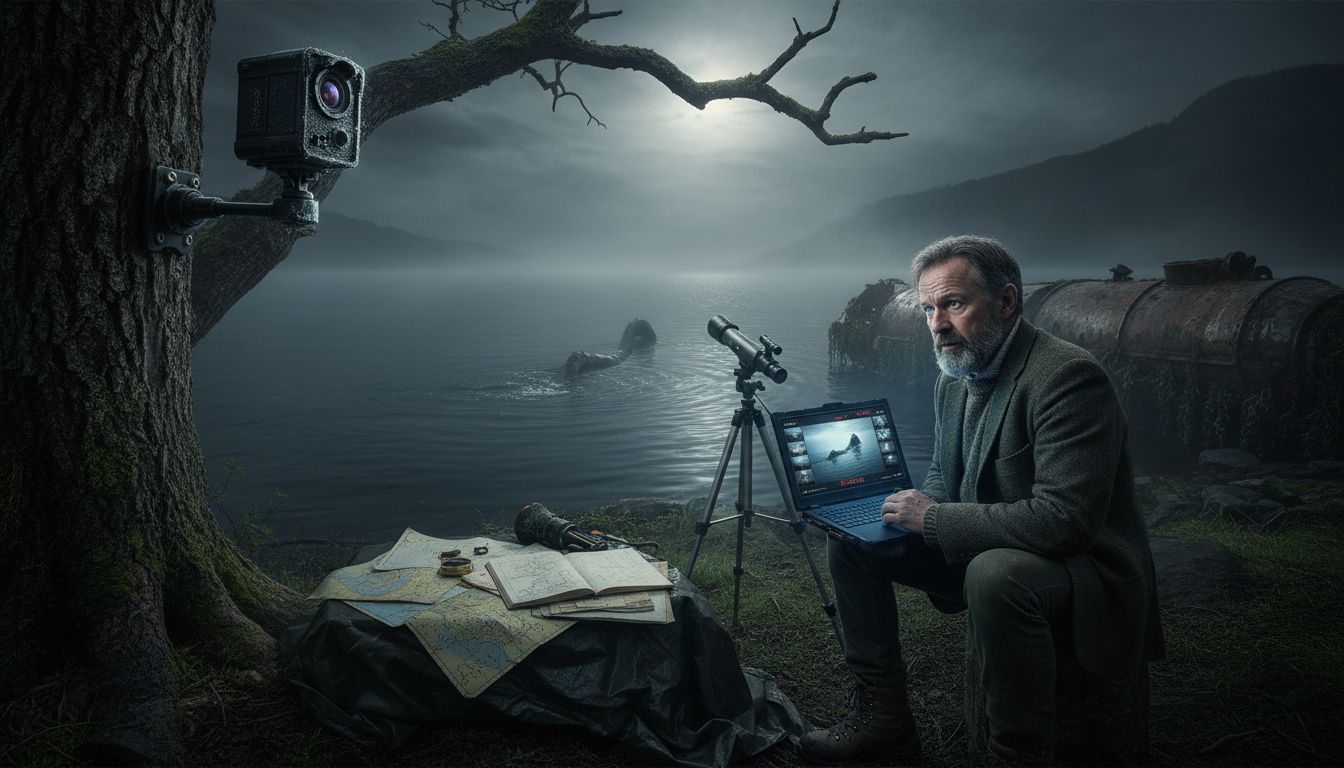
The photographer, a longtime volunteer with the Loch Ness Centre’s “Quest” surface‑watch program, installed the camera on the loch’s shore in late May 2025, shortly after the official monitoring period ended. The device was programmed to fire three shots in rapid succession when motion was detected. It remained active until 7 July, when the micro‑SD card filled. After retrieving the camera in August, the researcher began the painstaking task of reviewing every frame, a process that stretched over several weeks. “I’ve placed trail cameras at Loch Ness for more than a decade,” he told the blog, “so I knew I would see boats, kayakers, birds, mist—and occasionally something that makes you pause.”
The Potential Nessie Image
Image 13,810, taken at 06:18 GMT on Thursday 26 June 2025, shows a dark silhouette moving across a remarkably calm surface. The three sequential frames capture the object shifting position, which the researcher argues rules out a wave‑pattern illusion. He notes that the water was “as calm as it can be,” eliminating the possibility that the shape was a reflection or a ripple effect. While the outline is not crisp—mist and low light reduced visibility—the dimensions appear larger than a typical boat or animal, prompting the author to describe it as “of notable dimensions but below the threshold of one‑hundred percent certainty.”
Media Reaction and Public Response
The photographer submitted the trio of pictures to a press agency, and they were subsequently featured by the Scottish Daily Record on 7 January 2026. The newspaper’s coverage highlighted the rarity of any visual anomaly captured on a trail camera at Loch Ness, though it stopped short of declaring a definitive sighting. Online forums and social‑media comments were mixed: some users praised the effort and called for further scientific analysis, while skeptics pointed to the grainy quality and suggested alternative explanations such as a distant boat hull or a floating log. “We need rigorous, peer‑reviewed examination before we can label this as evidence,” said Dr. Elaine McAllister, a marine biologist at the University of Aberdeen, who was not involved in the original study.
Historical Camera Restoration
In a complementary development, the Loch Ness Centre announced the retrieval of a 1970s‑era monster‑hunting camera that had been lost for decades. After careful restoration, the unit is now displayed in the Centre’s exhibition hall alongside other investigative equipment. Although the vintage camera never produced conclusive images of Nessie, its presence underscores the long‑standing public fascination and the evolution of detection technology—from early infrared rigs to today’s high‑resolution trail cameras.
The new photographs have reignited debate over the existence of the Loch Ness Monster, offering a fresh data point for both enthusiasts and scientists. While the images lack the clarity required for definitive proof, they illustrate how modern, automated monitoring can capture fleeting, unexplained phenomena on one of the world’s most famous lakes. As the Loch Ness Centre continues to expand its observational toolkit, the hope among researchers is that future deployments will either substantiate or finally dispel the legend that has endured for nearly a century.