Overview
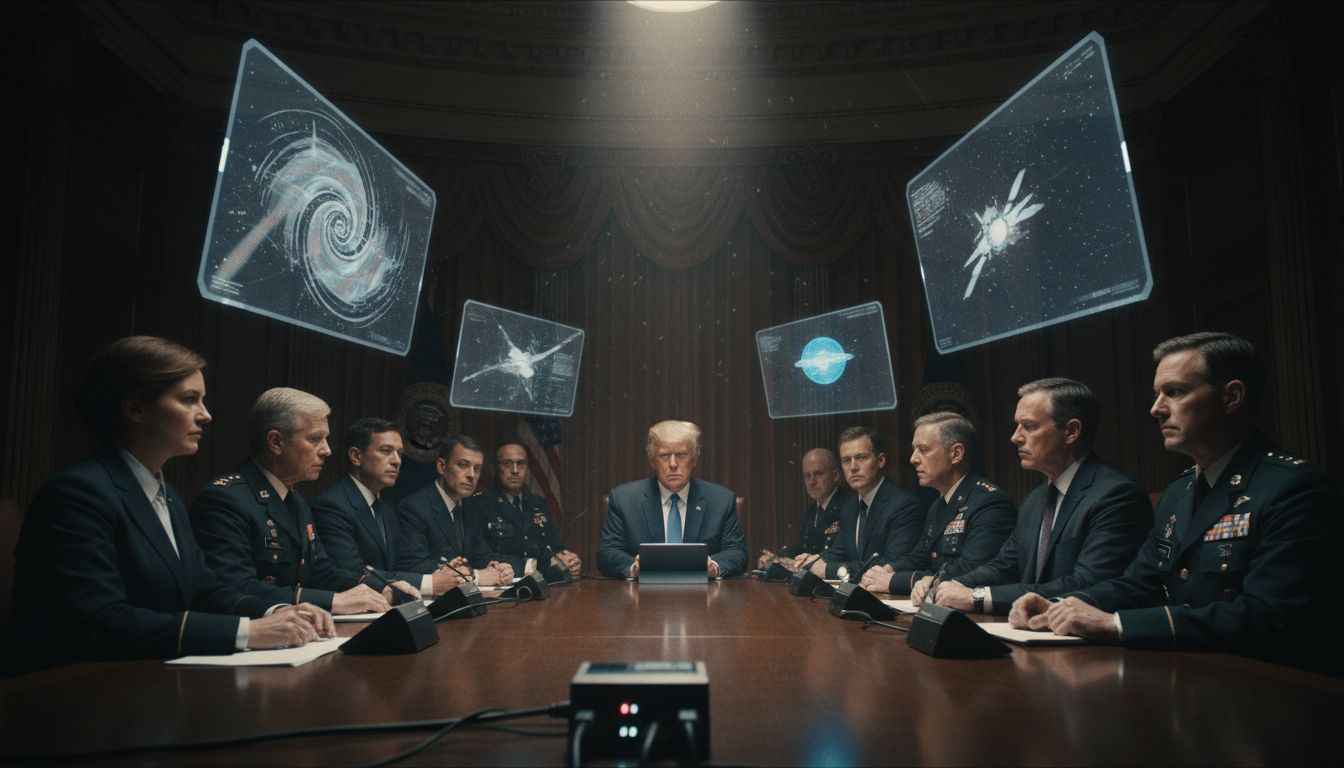
The Trump administration has created a new panel to study reports of unidentified anomalous phenomena (UAPs), signaling that the federal government remains interested in investigating unexplained sightings through a more formal, data-driven lens. The move comes as UAPs continue to attract attention from lawmakers, researchers, and the public, especially amid a broader push in recent years for greater transparency around what the government knows — and does not know — about unusual aerial reports.
The initiative, highlighted in a Fox News video carried by Yahoo, appears to be part of an ongoing effort to better understand the evidence behind the reports rather than treat them as anecdotal claims alone. While the available source material does not detail the panel’s full mandate, its creation suggests an emphasis on collecting, reviewing, and interpreting UAP data in a structured way. That approach aligns with the wider government trend toward examining sightings through scientific and intelligence frameworks instead of dismissing them outright.
Why the move matters
UAPs have become a persistent issue in Washington because of the tension between national security concerns and the limitations of available information. Military pilots, sensors, and civilian observers have all contributed to the growing catalog of reports, but the quality and completeness of the data vary widely. A panel dedicated to the subject could help standardize how reports are assessed, identify patterns, and separate credible observations from misidentifications, sensor errors, or environmental effects.
The creation of the panel also reflects the political durability of the UAP issue. Across administrations, interest in the topic has continued to grow, even as officials have struggled to provide definitive explanations for many cases. By establishing a formal group to study the reports, the administration is acknowledging that the phenomenon deserves sustained review, particularly if unexplained incidents intersect with flight safety or defense monitoring.
Scientific and public context
A notable detail from the source material is the involvement of astrophysicist Avi Loeb, who is described as an advisor to the new panel. Loeb has long argued that anomalous observations should be studied with scientific seriousness rather than cultural assumptions. His presence suggests the administration may be seeking input from outside traditional military and intelligence circles, potentially widening the lens through which UAP reports are analyzed.
That broader mix of expertise matters because the UAP discussion has evolved beyond simple speculation. Researchers now routinely argue for better instrumentation, stronger reporting standards, and clearer data-sharing procedures so that unusual sightings can be evaluated on their merits. A panel with scientific advisers could help move the conversation toward reproducible evidence, which has often been missing from public debate.
Looking ahead
For now, the administration’s creation of a UAP study panel is best understood as a signal of continued government engagement, not a declaration that extraordinary conclusions have been reached. The key question will be whether the panel produces new methods, clearer findings, or more transparency around how reports are handled. If it succeeds, it could help close the gap between scattered eyewitness accounts and verifiable analysis.
What remains clear is that UAPs are no longer a fringe topic confined to speculation. They have become a standing matter of public policy, scientific curiosity, and national security concern — and the administration’s new panel shows that the government intends to keep looking for answers.