Overview
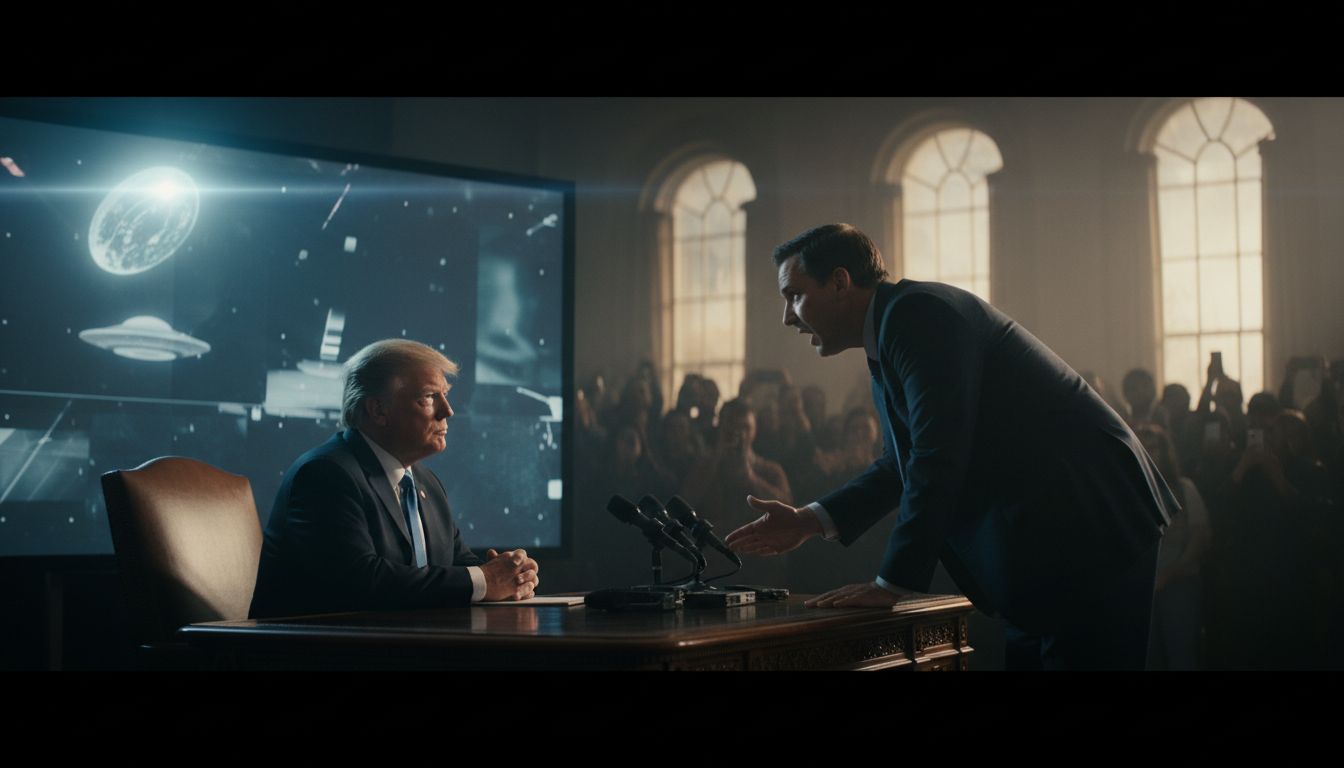
In a recent op‑ed published by NewsNation, environmental journalist and policy advocate Michael Shellenberger urged President Donald J. Trump to address the United States’ lingering “UFO” (Unidentified Aerial Phenomena, or UAP) controversy. Shellenberger argues that the president’s public clarification could resolve a series of contradictory statements from senior officials, restore credibility to the administration’s national‑security messaging, and respond to mounting public demand for transparency on the subject.
Recent Developments
The call comes amid a wave of new disclosures that have revived interest in UAPs. In June 2025, the Pentagon released three de‑classified videos captured by Navy pilots, accompanied by a brief report acknowledging that the objects displayed flight characteristics “that defy conventional explanations.” A bipartisan Senate Intelligence Committee hearing in September featured testimony from former Director of National Intelligence Avril Haines, who said the government is “still evaluating the data, but the phenomenon warrants serious scientific and security scrutiny.” At the same time, senior officials in the Department of Defense have alternately suggested that the sightings are “likely attributable to foreign adversary technology” while also warning that “some cases remain unexplained.” The mixed messaging has left both lawmakers and the public uncertain about the true nature of the threat.
Shellenberger’s Appeal
In his article, Shellenberger writes, “President Trump has a unique platform to cut through the noise and provide a clear, unified statement that either acknowledges the existence of a credible, unexplained aerial threat or definitively rules it out.” He points to the president’s previous willingness to discuss unconventional topics—citing Trump’s 2020 comment that “the government knows more about UFOs than they’re letting on”—as a basis for expecting a decisive response now. “A straightforward briefing would not only protect national security interests but also demonstrate respect for the American public’s right to know,” Shellenberger added.
Political Context
The request arrives at a politically charged moment. With the 2026 mid‑term elections on the horizon, both parties are courting voters who have expressed heightened curiosity about UAPs in recent polls. A Pew Research Center survey released last month indicated that 62 % of Americans believe the government should be more open about UFO investigations. Meanwhile, congressional leaders, including House Armed Services Committee Chairman Mike Rogers (R‑AL), have introduced legislation to mandate annual public reporting on UAP findings. Critics argue that a presidential statement could be weaponized for partisan gain, while supporters contend that clarity is essential for maintaining trust in the chain of command.
Broader Implications
Experts caution that any presidential pronouncement must be grounded in the limited evidence currently available. Dr. Jillian Reynolds, a senior researcher at the UAP Research Center, notes, “While the president can set the tone, the intelligence community still needs time to analyze sensor data, radar logs, and pilot testimonies before drawing definitive conclusions.” Nonetheless, Shellenberger’s appeal underscores a growing consensus among scholars, veterans, and former officials that the United States cannot afford a fragmented narrative on a matter that intersects national security, scientific inquiry, and public curiosity.
Looking Ahead
As the administration weighs its next steps, the pressure to speak plainly about UFOs is unlikely to subside. Whether President Trump chooses to address the issue directly in a televised briefing, a written statement, or through a formal executive order, the outcome will shape public perception of governmental transparency for years to come. For now, Shellenberger’s call serves as a reminder that in an era of rapid information flow, clear, consistent communication from the highest office remains a cornerstone of democratic accountability.


