Overview
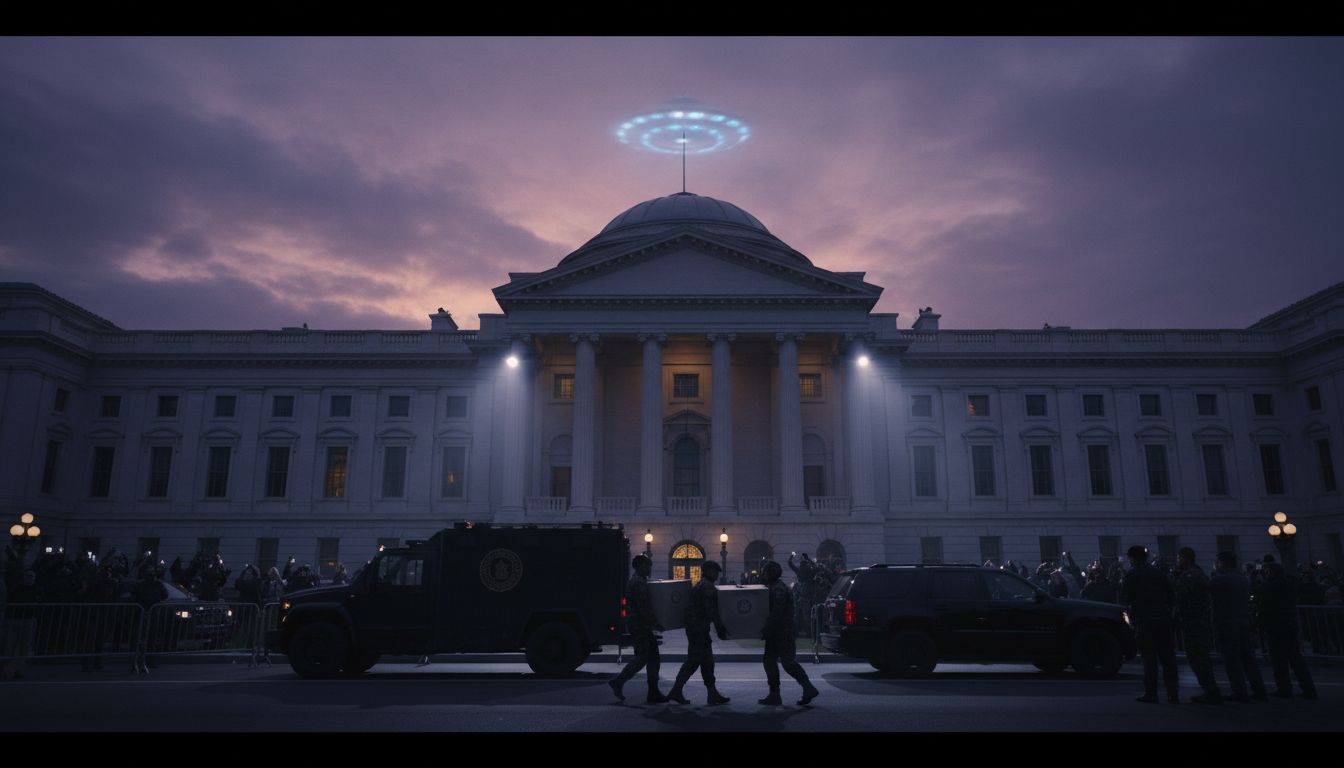
President Donald Trump announced on March 9, 2026 that he is directing the Pentagon and other federal agencies to identify and release government records concerning unidentified aerial phenomena (UAP), UFOs, and any information related to extraterrestrial life. The directive was posted on his Truth Social account and cites “tremendous interest” from the public as the impetus for the declassification effort. While the order signals a shift toward greater openness, officials stress that national‑security considerations will likely shape how much material can be made public.
Recent Catalysts
The announcement follows former President Barack Obama’s recent remarks on a podcast with Brian Tyler Cohen, where he stated that “aliens are real” but clarified he has never seen them. Obama later refined his comment in an Instagram post, explaining that statistical arguments about the size of the universe make extraterrestrial life “likely,” though he possessed no direct evidence from his time in office. Those statements reignited public debate and prompted Trump to accuse Obama of leaking “sensitive government information,” using the moment to champion transparency.
Legislative and Institutional Context
Interest in UAPs surged after the 2017 release of Navy footage showing unexplained objects, prompting Congress to hold hearings in 2022 and urging the Department of Defense to improve disclosure. In response, the Pentagon created the All‑Domain Anomaly Resolution Office (AARO) in 2022 to coordinate reporting across military and civilian agencies. AARO’s 2024 annual report logged 1,652 sightings, many of which were later identified as drones, balloons, or avian activity. Director Jon Kosloski emphasized that the office “has discovered no verifiable evidence of extraterrestrial beings, activity, or technology,” underscoring the gap between public curiosity and confirmed findings.
Expert Assessment
Astrophysicist Shelley Wright, who studies observational and experimental astronomy, cautioned that the forthcoming documents will likely be “heavily redacted” because they involve classified surveillance technologies. Wright noted that while the Trump administration may declassify older files, the redactions could limit the scientific value of the releases. “Even heavily edited, the records could provide a historical baseline for researchers,” she said, adding that any newly available data would need rigorous peer review before drawing conclusions about extraterrestrial origins.
Potential Implications
If the administration proceeds, the declassification process will have to balance transparency with operational security. Legal scholars point out that the Freedom of Information Act (FOIA) already allows for partial releases, but a presidential directive could accelerate the timeline and broaden the scope of documents reviewed. Analysts also note that releasing older files may satisfy public demand without compromising current defense capabilities. However, the lack of “verifiable evidence” reported by AARO suggests that the material may reinforce existing conclusions rather than uncover new proof of alien technology.
Outlook
The Trump administration’s order marks a notable political move in the ongoing UAP discourse, aligning with a decade‑long trajectory toward more open government handling of aerial anomalies. As agencies begin the identification and redaction process, observers will watch for the first batch of released documents to gauge both the depth of historical reporting and the impact on future policy. Whether the releases will shift public perception or simply confirm the Pentagon’s earlier statements remains to be seen, but the initiative underscores a growing expectation that government transparency on UAPs is now a mainstream issue.