Overview
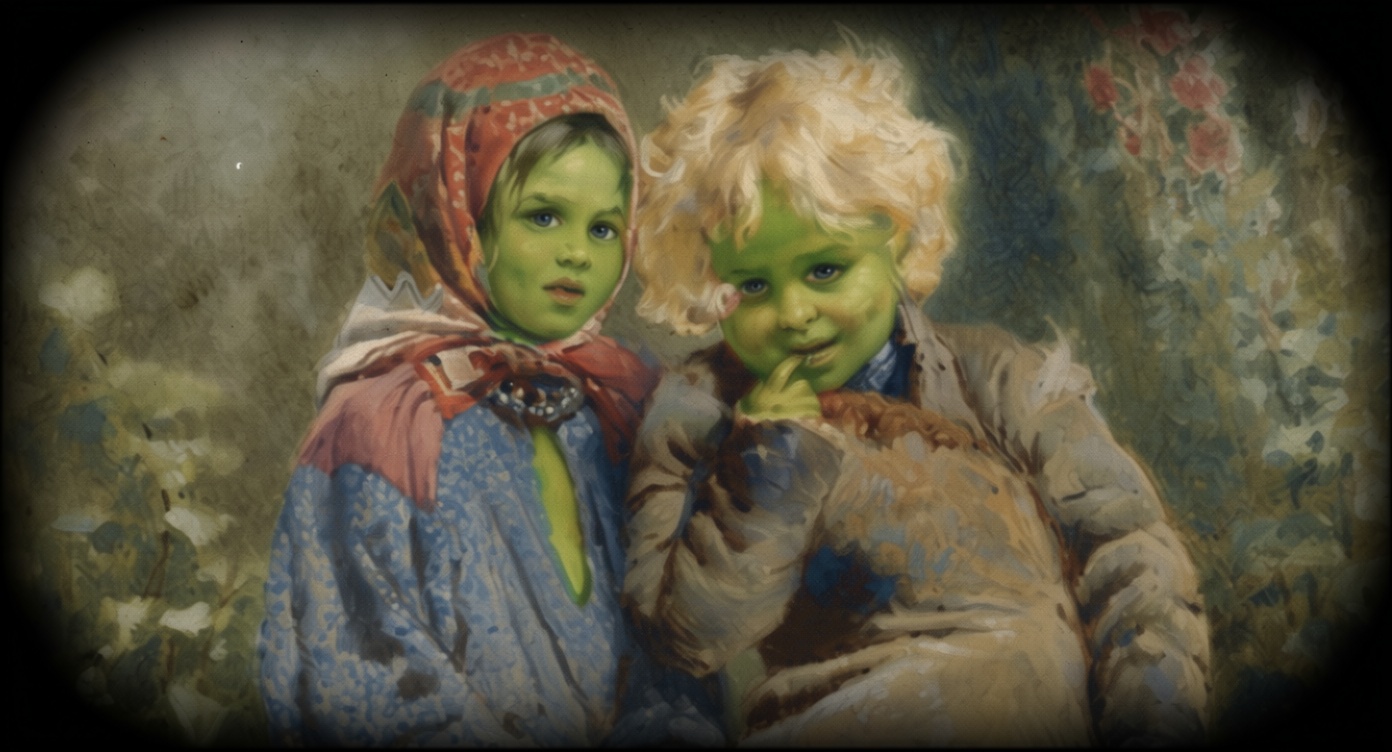
A newly framed cinematic video inspired by the medieval Woolpit, England mystery revisits one of the most enduring strange-tale traditions in British folklore: the account of two green-skinned children allegedly found in the village during the 12th century. Rather than treating the story as a straightforward historical event, the production uses a folk-rock narrative titled “This Isn’t Heaven” to explore broader themes of deception, class division, and the possibility that appearances of the miraculous may conceal something more calculated. The result is less a documentary than a mythic retelling that blends medieval imagery with science-fiction allegory.
A Myth Recast as Social Allegory
The video presents two sharply contrasted worlds. On one side is a muddy, storm-stricken Earth populated by peasants living under relentless labor and uncertainty; on the other is Metagonia, a gleaming city in the sky populated by an advanced elite. In the story, the people below initially interpret the storms and the arrival of strange airborne ships as divine or supernatural. But the narrative gradually reveals a harsher explanation: the “gods” are technologically superior rulers who harvest grain, wheat, and even people from the surface. The central refrain — “This isn’t heaven, this ain’t grace / It’s just a fortress in that space” — frames the entire piece as a warning about the power of illusion.
This structure echoes the type of interpretive lens often applied to unexplained historical accounts: that an event remembered as supernatural may instead reflect misunderstanding, manipulation, or a cultural gap too large to bridge cleanly. The video’s visual language reinforces that reading, showing surface dwellers praying beneath thunderclouds while skyborne overseers observe from marble-and-gold platforms. In that sense, the work functions as a metaphor for exploitation, with the elite disguising control as providence.
The Woolpit Connection and Fortean Interest
The medieval Woolpit story has long appealed to researchers of anomalous history and Fortean phenomena, in part because it sits at the intersection of folklore, social history, and the unknown. Traditional versions describe children with unusual green coloration who appeared in the village and reportedly spoke an unfamiliar language. Over centuries, the tale has been interpreted as everything from a folktale to a cryptic record of famine, immigration, or symbolic storytelling. Jacques Vallee, whose work often emphasizes the cultural and symbolic dimension of anomalous events, is among the figures frequently invoked in discussions like this one because the Woolpit account resists a simple explanation.
The video does not claim to solve the mystery. Instead, it treats the legend as a narrative template for hidden power and mistaken belief. That approach may appeal to viewers interested in the deeper question behind many strange reports: not simply what happened, but why people described it the way they did. By turning the Woolpit theme into a story of aerial elites and exploited villagers, the film suggests that extraordinary accounts often encode anxieties about authority, inequality, and unseen forces.
Conclusion
Ultimately, “This Isn’t Heaven” uses the medieval mystery of Woolpit as a springboard for a larger meditation on domination and deception. The lush sky cities of Metagonia, the laboring peasants, and the repeated harvesting imagery all reinforce the idea that those in power can repackage extraction as order, and suffering as destiny. For readers and viewers familiar with historical enigmas, the piece is notable not for offering a literal answer, but for showing why stories like the green children of Woolpit continue to endure: they remain flexible enough to carry both folklore and critique, mystery and meaning.