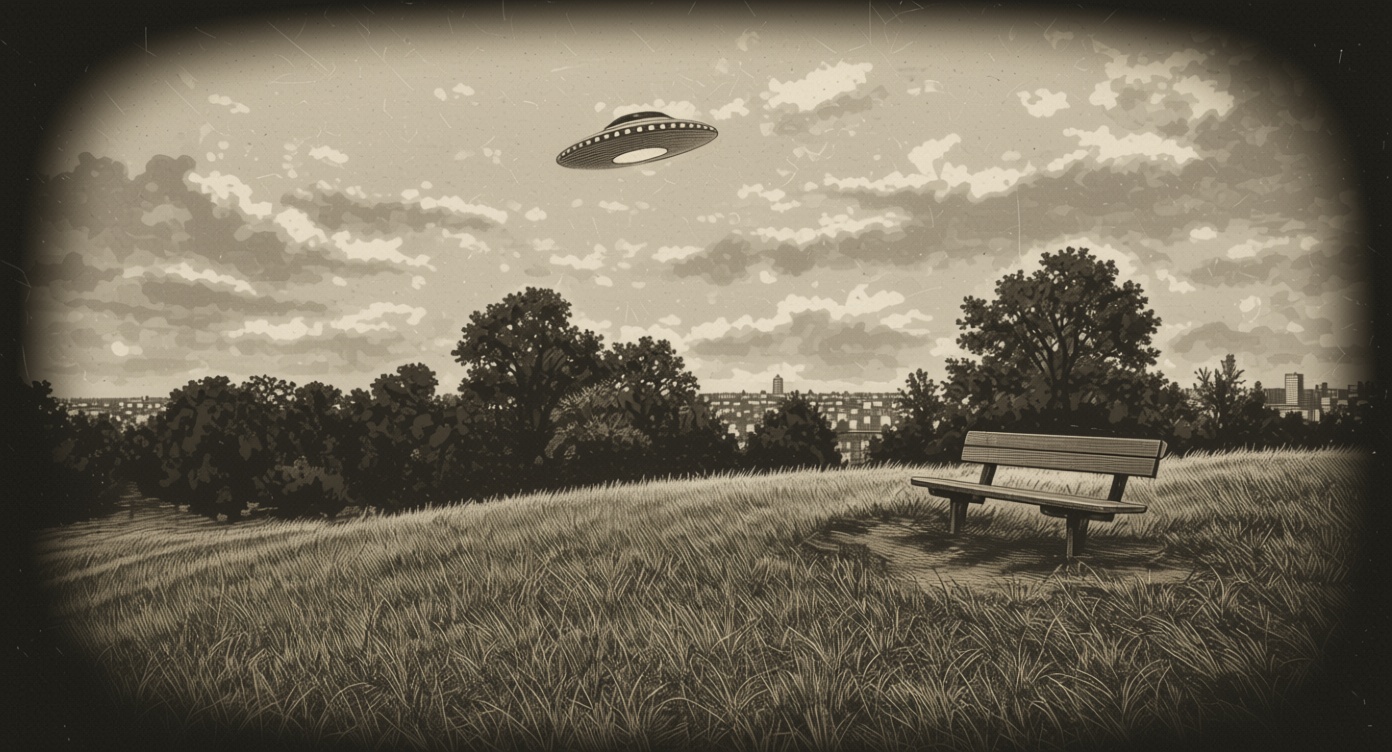
A wave of speculation on social media has linked three unrelated events – a reported “two‑moons” sighting, a series of recent UFO reports and the launch of the 3I / ATLAS communications satellite – to an alleged alien arrival scheduled for 29 October. The narrative, which has been amplified by viral posts and fringe blogs, suggests that the satellite’s fuel‑consumption patterns and a transient celestial phenomenon are coordinated signals of extraterrestrial contact. Space professionals and astronomers say the claim is unfounded and point to straightforward scientific explanations.
The “two‑moons” image that sparked the rumor appeared in photographs taken over the United Kingdom on the night of 27 October. In the pictures, a bright object near the waxing gibbous Moon created the illusion of a second lunar disc. Astronomer Dr. Sarah Whitaker of the University of Cambridge identified the culprit as a combination of atmospheric refraction and the planet Venus, which was positioned only a few degrees from the Moon at the time. “When Venus is close to the Moon it can reflect enough sunlight to appear comparable in size, especially in low‑light conditions,” Whitaker explained. “The effect is an optical illusion, not a second moon.” Similar explanations have been offered by the UK Space Agency, which noted that no astronomical event, such as a lunar eclipse or a second natural satellite, was scheduled for those dates.
The satellite in question, 3I / ATLAS, was launched on 24 October from the Guiana Space Centre aboard a Vega‑C rocket. The spacecraft, built by the Italian aerospace firm 3i, is intended to provide broadband communications services to remote regions of Africa and the Middle East. Its propulsion system uses a conventional bipropellant thruster for orbit‑raising and station‑keeping, and the launch vehicle’s fuel load was publicly disclosed in a filing with the European Space Agency. “The launch was a routine commercial mission, and all telemetry indicates the vehicle performed within expected parameters,” said Marco Bianchi, senior launch analyst at ESA. “There is no evidence of any anomalous fuel consumption or secret payload that could be linked to the UFO narrative.”
The surge in UFO sightings that coincides with the satellite launch is part of a broader trend of heightened public interest in unidentified aerial phenomena (UAP). In the past month, the UK’s Defence Ministry reported a modest increase in civilian reports, but emphasized that most could be attributed to conventional aircraft, drones, or atmospheric events. “We continue to investigate credible sightings through our established channels, but the majority are resolved with known explanations,” a spokesperson for the Ministry of Defence said. The Department of Defence’s UAP task force has not identified any evidence that would support the notion of an extraterrestrial presence targeting Earth on a specific date.
Scientists caution that tying disparate observations together without rigorous evidence can fuel misinformation. “Correlation does not imply causation,” noted Dr. Emily Rhodes, a planetary scientist at the Royal Astronomical Society. “The human brain is wired to find patterns, especially when the subject matter is emotionally charged. When you combine a striking photograph, a high‑profile satellite launch and a backlog of UFO reports, it creates a perfect storm for conspiracy theories.” She added that responsible reporting should distinguish between verified data and speculation, a principle that mainstream outlets continue to uphold.
While the idea of an alien arrival on 29 October captures the imagination, the available data – orbital parameters of 3I / ATLAS, astronomical conditions on the night of the “two‑moons” sighting, and the routine nature of recent UFO reports – all point to ordinary explanations. As the launch team prepares to commission the satellite’s communications payload later this week, experts expect the mission to proceed without incident, and the night sky to return to its familiar, solitary lunar presence.