Overview
Recent weeks have seen a noticeable uptick in reports of unidentified aerial phenomena (UAP) over Catalina Island, a coastal enclave just 22 miles off the Southern California mainland. Local pilots, marine traffic controllers, and recreational boaters have logged more than a dozen distinct sightings since early November, prompting both regional media and a handful of aerospace analysts to label the area a new “UAP hotspot.” While the majority of observations remain unexplained, a subset of commentators have ventured a provocative hypothesis: the anomalous activity could be linked to underwater alien installations near the island’s seafloor. The claim, however, is not supported by concrete evidence and remains speculative.
Recent Sightings
The latest incident, recorded on December 12 by a private seaplane pilot, involved a series of bright, disc‑shaped objects moving in a synchronized pattern at altitudes ranging from 2,000 to 4,500 feet. The pilot’s flight‑data recorder captured a 12‑second video that has since been circulated among UAP research groups. In a separate report filed with the Federal Aviation Administration (FAA) on December 19, a commercial fishing vessel off the island’s western coast reported “multiple luminous orbs hovering just above the water surface before disappearing at high speed.”
According to the Catalina Island Police Department, which has logged 18 UAP-related calls since October, most witnesses describe “silent, maneuverable lights” that do not conform to known aircraft flight characteristics. “We’ve received consistent descriptions of objects that accelerate and change direction far beyond the capabilities of conventional aircraft,” said Police Chief Maria Alvarez in a statement to local media. “Our priority is to document these incidents accurately and cooperate with any federal investigations.”
Scientific and Government Response
The surge in reports arrives against a backdrop of heightened governmental scrutiny of UAPs. In June 2024, the Office of the Director of National Intelligence released a comprehensive assessment acknowledging that many sightings remain “unexplained” and recommending further data collection. The Department of Defense’s Unidentified Aerial Phenomena Task Force (UAPTF) has opened a regional liaison office in Los Angeles, tasked with coordinating with local authorities and civilian observers.
Dr. Elena Ramirez, a professor of atmospheric physics at the University of Southern California, cautions against jumping to extraterrestrial conclusions. “Many UAP reports can be attributed to atmospheric optical effects, sensor artifacts, or classified military testing,” she explained. “Catalina’s unique microclimate—characterized by frequent temperature inversions and sea‑fog—can produce visual phenomena that appear anomalous to the naked eye.”
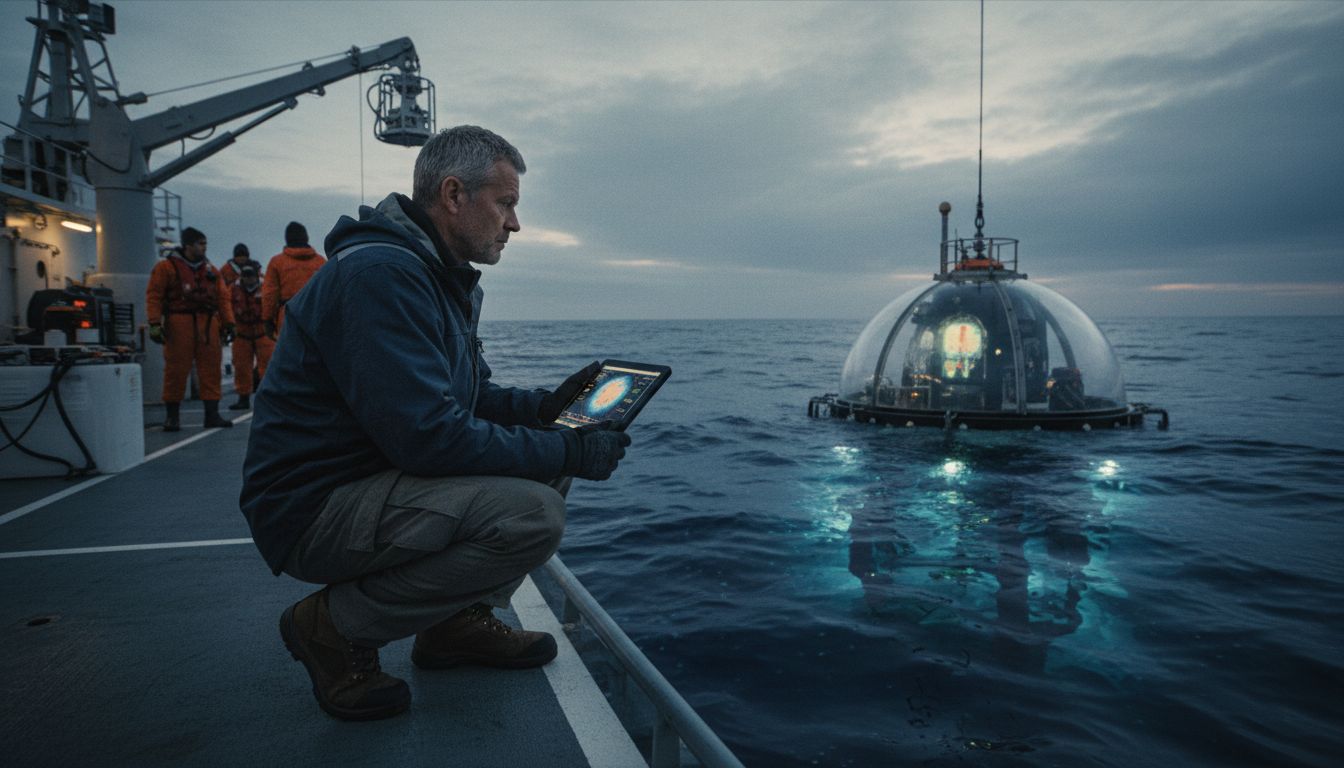
Nevertheless, a small contingent of independent researchers, such as the non‑profit organization Advanced Aerial Studies (AAS), have begun deploying underwater acoustic sensors around the island’s perimeter. Their goal is to test the more fringe hypothesis that “submerged structures could be interacting with aerial phenomena,” a claim that remains unverified.
Speculation and Public Reaction
The notion of underwater alien bases has captured the imagination of both UFO enthusiasts and the broader public. Online forums have proliferated with theories linking the sightings to “deep‑sea installations” allegedly concealed beneath Catalina’s kelp forests. While such ideas lack empirical support, they reflect a broader cultural fascination with the unknown.
“People are looking for explanations, and the idea of hidden bases is compelling,” noted sociologist Dr. Michael Chen of the Pacific Institute for Media Studies. “Historically, when faced with ambiguous sensory data, societies often construct narratives that fit existing mythologies—in this case, the ‘alien base’ trope.”
Local business owners, meanwhile, report a modest increase in tourism driven by curiosity seekers. “We’ve seen a 15 % rise in bookings for boat tours that promise a ‘UAP viewing experience,’” said Marina Lopez, manager of a popular waterfront café. “While it’s good for business, we also want to ensure visitors understand that most of these sightings are still under investigation.”
Next Steps
Authorities plan to intensify data collection over the coming months. The FAA has issued a temporary advisory encouraging pilots to report any anomalous visual or radar contacts in the Catalina Flight Corridor. Simultaneously, the UAPTF is coordinating with the Navy’s Pacific Fleet to determine whether any classified training exercises could account for the observed behaviors.
Researchers at the University of California, Santa Barbara, are slated to commence a joint aerial‑underwater survey in early February, employing lidar and sonar arrays to map the seafloor beneath the island’s most active sighting zones. “Our aim is to gather high‑resolution environmental data that can either substantiate or refute the underwater base hypothesis,” said project lead Dr. Priya Natarajan.
Until definitive evidence emerges, the Catalina Island UAP phenomenon will remain a subject of cautious scientific inquiry, balanced against a backdrop of public intrigue and speculative storytelling. The coming months promise a clearer picture—whether the explanation lies in advanced technology, atmospheric quirks, or something altogether more extraordinary.