Overview
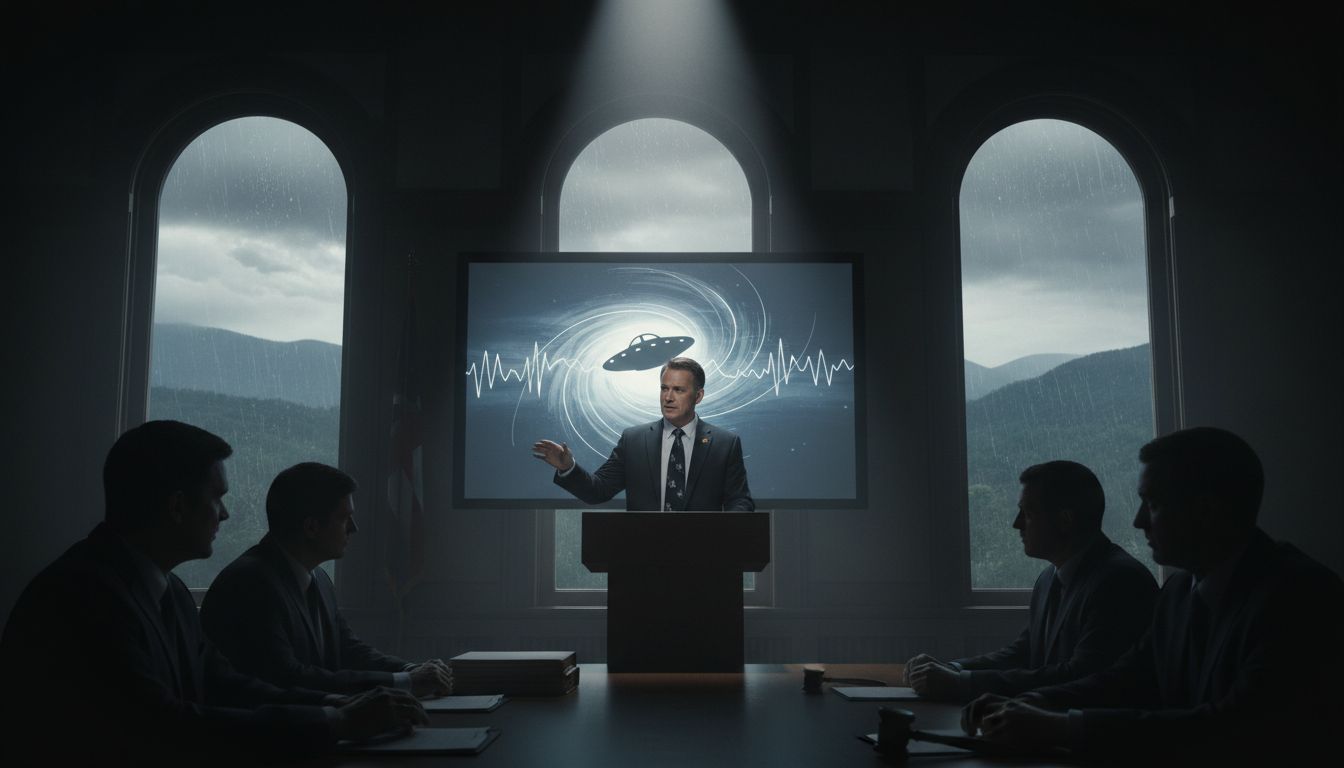
A Vermont state representative has introduced legislation calling for the creation of a dedicated UAP (Unidentified Aerial Phenomena) task force. The proposal, filed in the House of Representatives this month, seeks to formalize the collection and analysis of sighting reports within the state, respond to growing public interest, and coordinate with federal agencies that monitor aerial activity. While similar initiatives have appeared in a handful of other states, Vermont’s effort marks the first organized attempt to address UAPs at the state level in New England.
Legislative Proposal
Representative Megan O’Leary (D‑Rutland), the bill’s primary sponsor, explained that the task force would be composed of experts from the Vermont Agency of Transportation, the Department of Public Safety, and local university researchers. “Our goal is not to chase sensational stories,” O’Leary said in a recent interview, “but to ensure that any credible data about unexplained aerial events is gathered systematically, evaluated scientifically, and shared with the appropriate federal partners.”
The bill outlines three core responsibilities for the task force: (1) establishing a centralized reporting portal for citizens and pilots; (2) conducting preliminary technical assessments of each report; and (3) producing an annual public report that summarizes findings and recommends any needed policy actions. Funding would be drawn from the state’s existing public safety budget, with an initial allocation of $250,000 earmarked for staffing and technology upgrades.
Public Concern and Regional Context
Vermont has seen a modest but noticeable uptick in UAP reports over the past five years, according to data compiled by the local chapter of the Mutual UFO Network (MUFON). In 2023, the chapter logged 27 sightings within the state’s borders, ranging from lights over Lake Champlain to radar anomalies near the Green Mountain Airport. While most incidents were ultimately attributed to conventional aircraft, weather balloons, or astronomical phenomena, a small percentage remained “unexplained” after standard analysis.
Residents in rural towns such as St. Albans and Brattleboro have voiced frustration over the lack of a coordinated response. “When I see strange lights over the farm, I want to know if it’s something dangerous,” said Tom Whitaker, a dairy farmer from Bennington County. “Having a state‑run team that can look into it would give us peace of mind.”
The proposed task force also aims to address concerns raised by commercial pilots who operate out of smaller regional airports. The Federal Aviation Administration (FAA) has encouraged states to develop mechanisms for reporting and investigating anomalous aerial events, and Vermont’s initiative aligns with that guidance.
Expert and Policy Perspectives
Aviation safety analyst Dr. Laura Chen, who advises the Vermont Aeronautics Board, praised the bill’s emphasis on data integrity. “By creating a structured pipeline for reports, the state can filter out noise and focus resources on incidents that truly merit deeper investigation,” Chen noted. She added that collaboration with the Department of Defense’s UAP Office could yield valuable cross‑checking of radar and sensor data.
Conversely, some civil liberties groups have cautioned against the potential for over‑classification of information. The Vermont ACLU, in a brief statement, urged lawmakers to ensure that any data collected respects privacy rights and is subject to transparent oversight. “We support scientific inquiry, but it must not come at the expense of citizens’ constitutional protections,” the statement read.
Next Steps and Outlook
The bill is slated for committee review in the House Transportation and Energy Committee next week. If it clears the committee, it will proceed to the full House for a vote, with a companion measure expected in the Senate. Should the legislation pass, the task force could be operational by early 2025, pending the appointment of a director and the establishment of its reporting platform.
While the initiative has sparked debate, it reflects a broader trend of state governments taking a more proactive stance on UAPs after the Pentagon’s 2021 release of a preliminary assessment on the phenomenon. As Representative O’Leary concluded, “Whether these sightings turn out to be mundane or something else, the public deserves a transparent, science‑based response—and Vermont is ready to lead that effort.”


