Overview
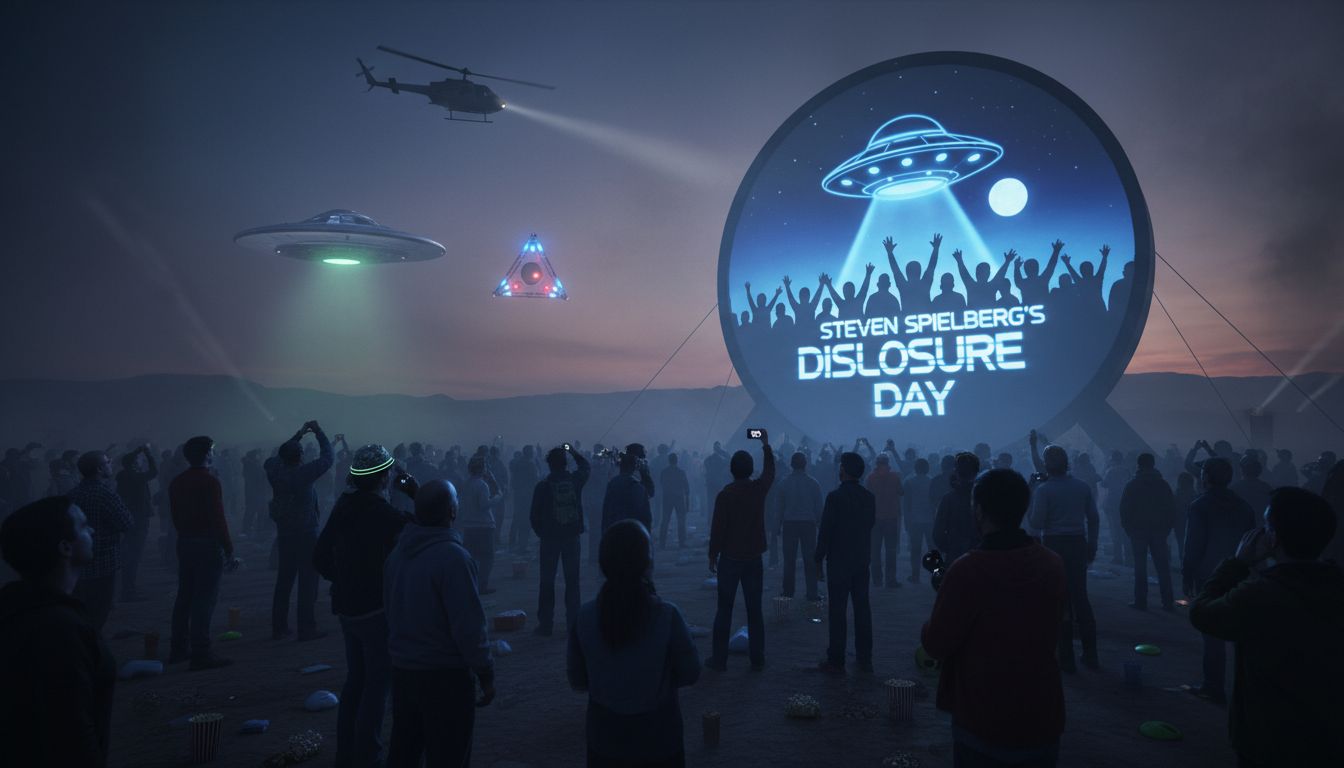
For UFO and UAP enthusiasts, the search for a genuine breakthrough has become almost ritualized: each new hearing, leaked document, or government acknowledgment is greeted as a possible turning point, only for the larger mystery to remain unresolved. According to The Wall Street Journal, that familiar cycle played out again, but this time the conversation was less about hard evidence than about a cultural flashpoint tied to Steven Spielberg’s “Disclosure Day.” The episode underscored a long-running reality in the UFO world: public excitement often surges not because definitive proof has arrived, but because the idea of disclosure itself continues to captivate a wide audience.
A Community Accustomed to Waiting
The UFO and UAP community has spent years anticipating a moment when official secrecy might give way to a fuller accounting of what governments know about unexplained aerial phenomena. That anticipation has been fueled by a steady stream of developments — congressional hearings, military encounters, and gradually expanding official language that acknowledges some events remain unexplained. Yet, as the WSJ piece suggests, the latest wave of attention did not produce the kind of earthshaking revelation many hoped for. Instead, the buzz shifted toward a broader cultural narrative, one that blends speculation, entertainment, and the enduring appeal of alien-life theories.
This pattern is familiar: when concrete answers are scarce, symbolism becomes powerful. In UFO circles, even a headline, a date, or a phrase like “Disclosure Day” can take on outsized meaning. The result is a mix of frustration and fascination, with enthusiasts searching for signs that the long-promised breakthrough may be near even when the evidence remains elusive.
Spielberg’s Enduring Influence
Steven Spielberg has long occupied a unique place in the public imagination around extraterrestrial life. His films helped define the modern visual language of alien contact, from the wonder of “Close Encounters of the Third Kind” to the emotional resonance of “E.T.” As a result, when Spielberg becomes linked to a disclosure-themed moment, the association carries weight well beyond Hollywood. It taps into a deep reservoir of cultural memory in which aliens are not just a scientific question, but a storytelling tradition that shapes how people imagine the unknown.
That helps explain why a Spielberg-related “Disclosure Day” could become the focal point of attention. In the UFO world, entertainment and inquiry have always overlapped. Films, documentaries, and television specials often influence how the public interprets ambiguous claims, while official statements are filtered through years of pop-culture conditioning. The WSJ’s framing highlights how disclosure is not only a political or scientific issue — it is also a media event.
The Persistent Appeal of Mystery
The larger takeaway is that public fascination with alien life and government secrecy remains remarkably resilient. Even in the absence of definitive proof, the topic continues to generate headlines, online debate, and intense anticipation. That endurance speaks to a deeper human impulse: people want answers to questions that have hovered at the edge of modern life for decades, and they are drawn to any moment that promises clarity.
For now, though, the story remains one of expectation rather than resolution. The latest enthusiasm around “Disclosure Day” appears to have delivered atmosphere more than revelation — a reminder that in UFO reporting, the most compelling developments are often as much about culture as they are about evidence.