Overview
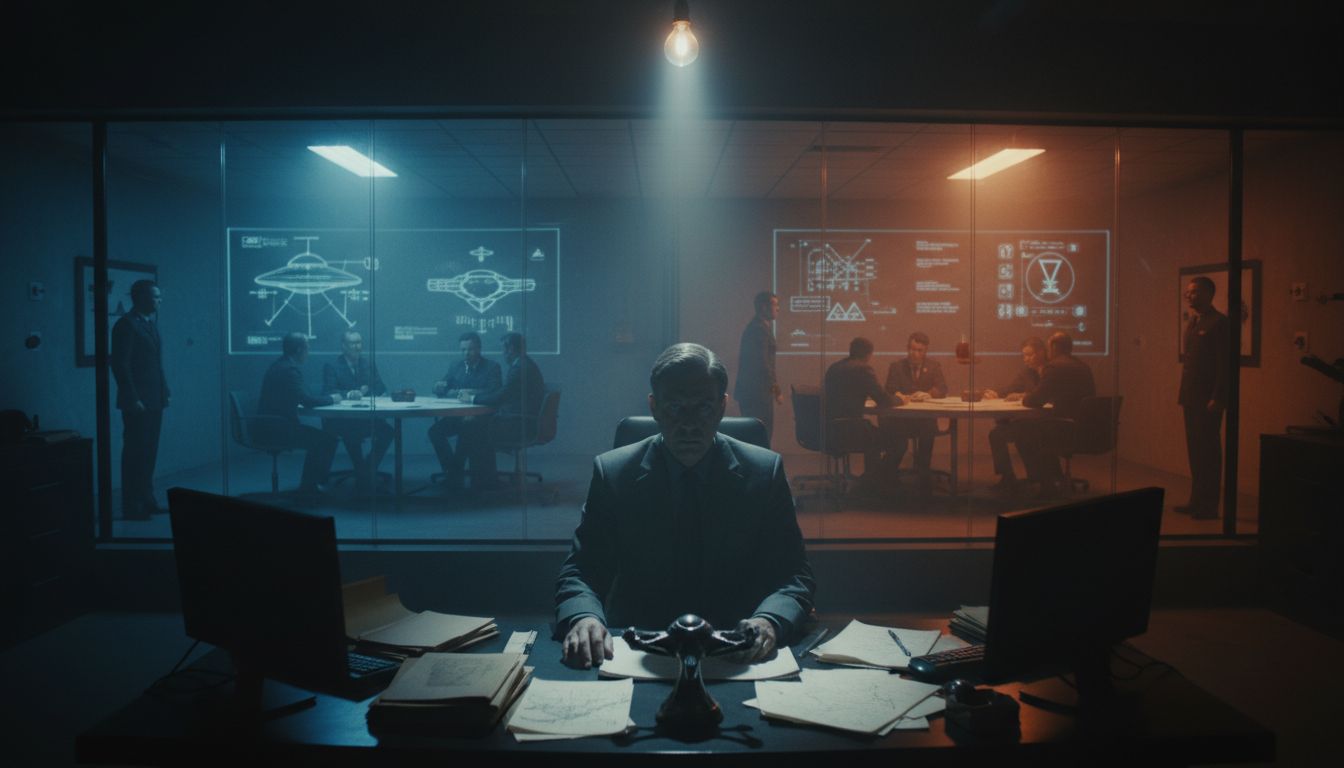
On May 30, 2026, UFO researcher and documentary filmmaker Dan Farah, director of The Age of Disclosure, appeared on Fox News’ “Jesse Watters Primetime” to describe what he called a “tug of war” inside the U.S. government over the declassification and release of classified Unidentified Aerial Phenomena (UAP) files. Farah warned that competing interests among federal agencies could determine whether the public will ever gain access to the long‑sought records, especially those that touch on national‑security concerns such as alleged UFO activity near nuclear sites.
Competing Agencies
According to Farah, the Department of Defense (DoD), the Office of the Director of National Intelligence (ODNI), and the All‑Domain Anomaly Resolution Office (AARO) are locked in a power struggle that pits transparency advocates against officials who argue that premature disclosure could jeopardize intelligence methods and national security. “There’s a genuine push‑and‑pull,” Farah said on air. “One side wants to open the books because the American people have a right to know what’s out there; the other side worries that releasing raw data could expose sources, sensors, or even compromise ongoing investigations.”
Former AARO deputy director Luis García (who asked to remain off‑record) echoed this sentiment, noting that “the sheer volume of raw sensor data we’ve collected over the past few years is unprecedented, but not everything is ready for public consumption.” García added that the DoD’s UAP Task Force has been instructed to redact material that could reveal classified radar capabilities or allied satellite footprints.
Implications for Public Disclosure
The debate has concrete implications for upcoming legislative actions. In June 2025, Congress passed the UAP Transparency Act, directing the ODNI to produce an annual report on UAP encounters and to make “all unclassified information” available to the public. However, the law also allows the President to withhold any material deemed “adversely affecting national security.” Farah warned that this loophole could be used to keep the most sensitive files sealed indefinitely.
“National‑security officials have repeatedly raised the specter of ‘UFO interference’ with nuclear weapons sites,” Farah said, referencing a series of classified briefings that have circulated among senior defense leaders. While the exact nature of those briefings remains undisclosed, the concern is that unidentified objects could potentially surveil or even threaten critical infrastructure, a scenario that would understandably trigger caution in any release strategy.
Historical Context
The current stalemate is not the first time the government has wrestled with UAP secrecy. The 1978 “Project Blue Book” concluded without a definitive explanation for many sightings, and the 1990s “Advanced Aerospace Threat Identification Program (AATIP)” operated under a veil of classified funding until its existence was revealed in 2017. More recently, the 2021 Pentagon UAP report—the first unclassified assessment in decades— acknowledged 144 incidents that could not be readily explained, sparking renewed public and congressional interest.
Farah argues that the present “tug of war” reflects a broader cultural shift: “The public’s appetite for answers has grown, especially after the 2021 report and the subsequent Senate hearings. The government can no longer hide behind blanket secrecy without facing political pressure.”
Outlook
Analysts suggest that a compromise may emerge through a redacted release that protects sensitive methods while satisfying public demand for transparency. The National Archives has already begun cataloguing declassified UAP documents, and a bipartisan group of lawmakers is drafting amendments to the UAP Transparency Act that would require a timeline for partial releases.
If the “tug of war” tips in favor of openness, the next wave of disclosures could shed light on the alleged UFO activity near nuclear facilities, a topic that has remained largely speculative. Conversely, a continued stalemate may keep the most consequential data locked away, perpetuating the mystery that has fueled both scientific inquiry and popular culture for decades.
The unfolding debate underscores a pivotal moment for UAP policy: balancing national‑security imperatives with the democratic principle of an informed citizenry. As Farah concluded, “The truth is out there, but whether it reaches the public will depend on how these agencies resolve their internal contest.”


