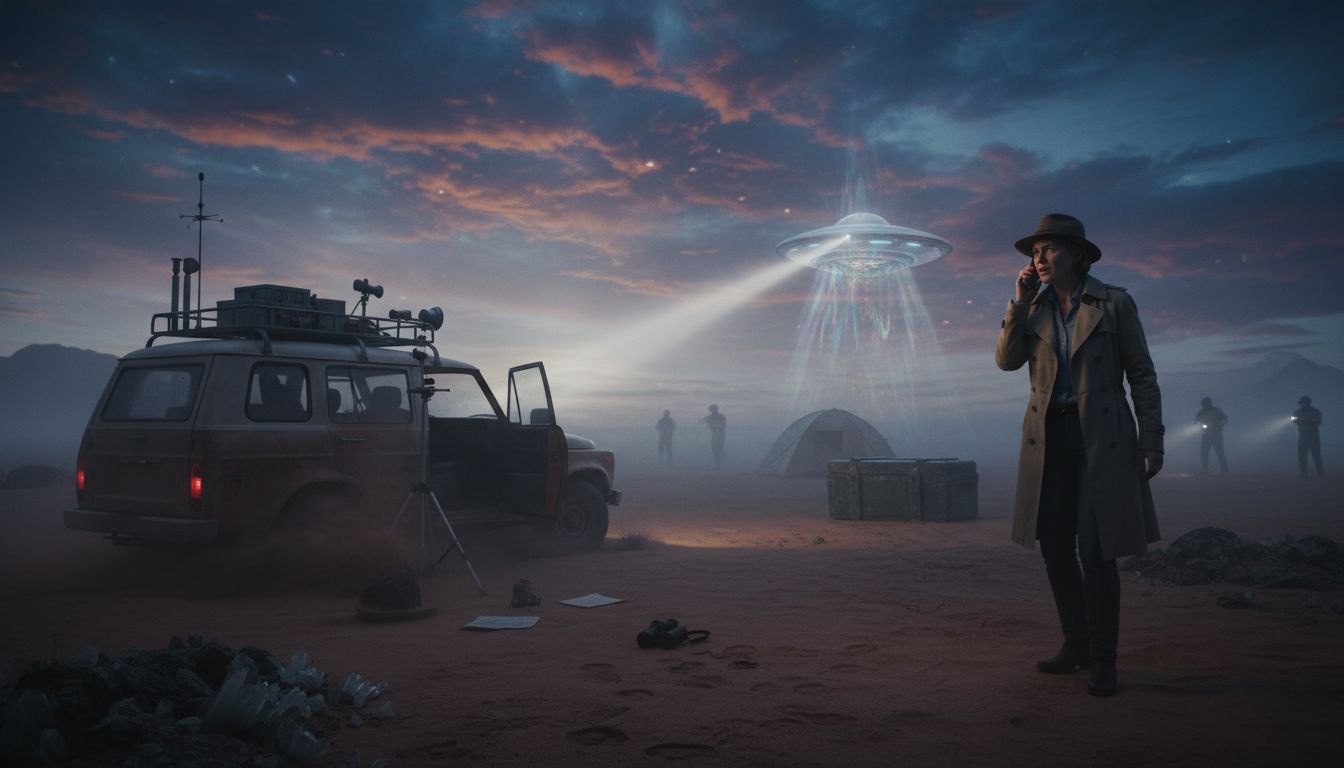
Overview
A New Mexico disappearance that has left family, colleagues, and federal investigators searching for answers involves William “Bill” McCasland, a veteran pilot and one of the most prominent civilian researchers of unidentified aerial phenomena (UAP). The incident, reported on March 8, 2026, prompted a New York Post journalist to describe it as a “grave national security crisis.” While authorities have not publicly confirmed the circumstances of McCasland’s vanishing, the case has ignited renewed debate over the handling of UAP data, potential cover‑ups, and the safety of individuals working in the field.
Who Is William McCasland?
McCasland, a former U.S. Navy pilot, founded the To The Stars Academy of Arts & Science (TTSA) in 2017 and has served as its chief of research into anomalous aerospace threats. Over the past decade he has testified before congressional committees, supplied the Pentagon’s Unidentified Aerial Phenomena Task Force with sensor footage, and authored several peer‑reviewed papers on radar signatures that defy conventional explanation. His reputation as a meticulous analyst has earned him both respect within the defense community and scrutiny from skeptics. Colleagues describe him as “the most data‑driven UAP researcher in the country,” a characterization that underscores why his sudden disappearance has drawn attention beyond personal concern.
Investigation and Official Response
Local law enforcement in Albuquerque, New Mexico, opened a missing‑person case after McCasland failed to appear at a scheduled meeting on March 4. The New Mexico State Police confirmed that a search operation involving the New Mexico Department of Public Safety, the FBI, and a UAP‑focused investigative team has been underway since the disappearance was reported. According to a spokesperson for the FBI’s Albuquerque field office, “We are coordinating with state and local agencies, and we have engaged specialists familiar with the unique challenges posed by UAP‑related investigations.” No evidence of foul play has been released, and authorities have not disclosed whether any aircraft or remote‑sensing data have been examined in connection with the case.
National Security Implications
The New York Post reporter who broke the story, citing unnamed sources within the defense establishment, warned that the incident could signal a systemic failure to protect researchers who handle classified UAP material. “When a leading expert on national‑security‑relevant phenomena disappears without trace, it raises serious questions about whether proper safeguards are in place,” the reporter wrote. Congressional staffers have reportedly requested a briefing from the Office of the Director of National Intelligence (ODNI) to assess whether the disappearance may be linked to ongoing classified UAP programs. The ODNI has not yet issued a public statement, but past briefings have emphasized that the UAP Threat Assessment Office treats any unexplained loss of personnel as a potential security breach.
Broader Context
McCasland’s case emerges amid a growing governmental focus on UAPs. In 2023, the Department of Defense released an unclassified report acknowledging that some aerial phenomena remain unexplained, prompting the establishment of the All‑Domain Anomaly Resolution Office (AARO) in 2024. Since then, several high‑profile sightings and data releases have spurred legislative hearings, yet the policy framework for protecting civilian researchers remains underdeveloped. Experts such as Dr. Jacques Vallee, a longtime UAP scholar, note that “the line between open‑source investigation and classified intelligence is blurry, and incidents like this highlight the need for clearer protocols.”
Next Steps
Family members have appealed for information, and a public tip line has been set up by the New Mexico State Police. Meanwhile, TTSA announced that it will continue its research agenda while cooperating fully with federal investigators. The department’s legal counsel emphasized that “the safety of our staff is paramount, and we are working with authorities to determine the facts.” As the search progresses, the incident is likely to influence upcoming congressional hearings on UAP policy and may accelerate calls for a dedicated UAP researcher protection program within the national security apparatus. Until concrete evidence emerges, the disappearance of William McCasland remains an unresolved mystery that underscores the complex intersection of aerospace research, secrecy, and national security.


