Overview
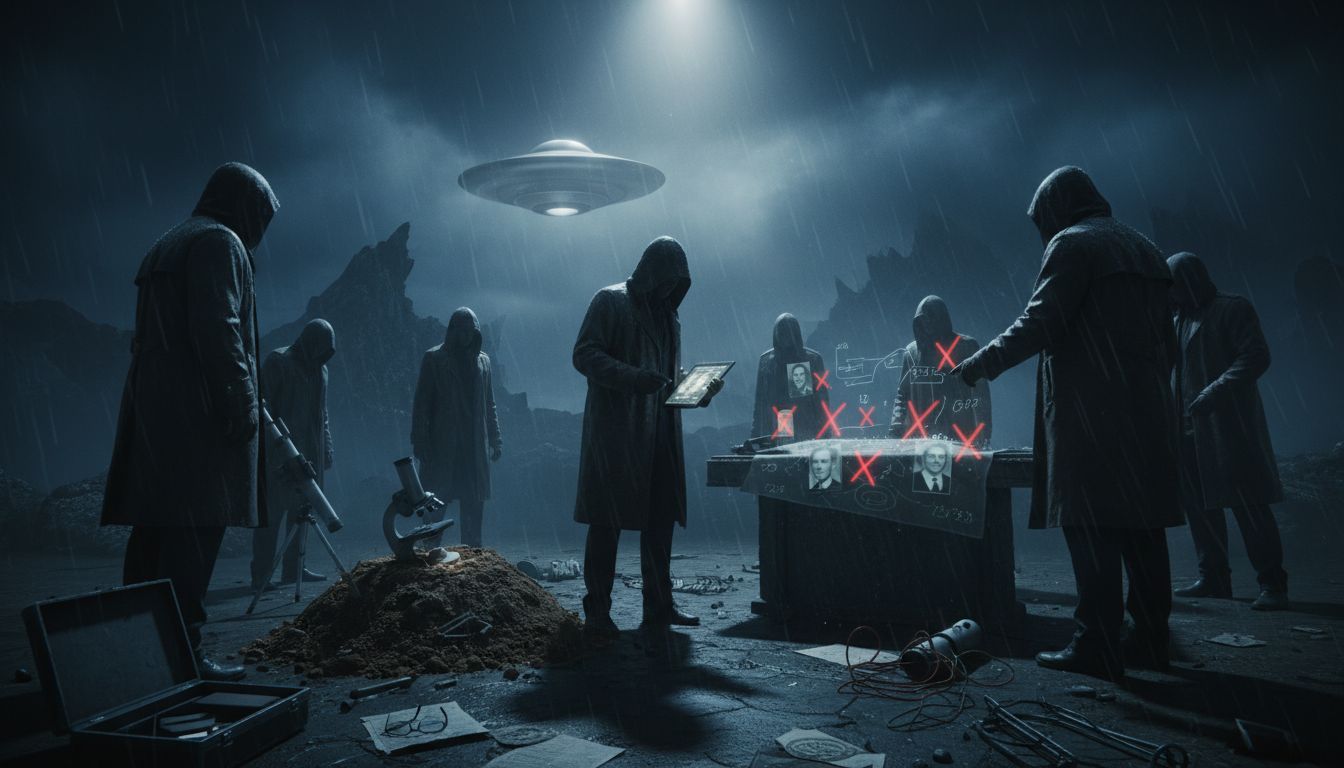
A new tally of U.S. scientists and engineers who have died under unexplained circumstances or vanished while working on aerospace, defense or unidentified aerial phenomena (UAP) research is gaining public attention. The list, compiled by independent investigators and reported by NewsNation, now includes more than two dozen names spanning the past three decades. While the majority of the cases involve natural or accidental deaths, the pattern of timing—often coinciding with classified projects or whistle‑blowing efforts—has reignited calls for greater governmental transparency and an independent audit of UAP‑related research.
Growing List of Cases
The database, first assembled in 2022, has been updated this week to add five recent entries, bringing the total to 27 documented instances. Among the newly added names is Dr. Michael David Hicks, a former Air Force research scientist who died in a single‑vehicle crash in 2024 while reportedly preparing a manuscript on anomalous radar returns. Earlier entries include Dr. Laura Chen, a NASA‑affiliated astrophysicist who disappeared during a field expedition in Nevada in 2019, and Lt. Col. James “Jim” Alvarez, a Pentagon contractor whose death in 2021 was ruled a “sudden cardiac event” despite his recent work on a classified sensor program.
The compilation draws on public death certificates, missing‑person reports, and statements from colleagues who allege that the individuals were engaged in research that intersected with the Department of Defense’s UAP Task Force or the NASA UAP research office. “When you line up the dates, you see a striking clustering around moments when these scientists were about to go public or hand over data,” said Jesse Weber, the NewsNation reporter who authored the piece.
Possible Explanations & Speculation
Experts caution against jumping to conclusions, emphasizing that correlation does not equal causation. Dr. Ellen Patel, a senior fellow at the Center for Scientific Integrity, noted, “The aerospace and defense communities are high‑risk environments. Accidents, health issues, and the stresses of classified work can lead to untimely deaths without any nefarious intent.” Nonetheless, the secrecy surrounding many of the projects—often protected under the National Security Classification Act—has fueled speculation that information suppression could be a factor. Some former insiders argue that a “culture of compartmentalization” may disincentivize whistle‑blowers, leading to personal and professional isolation that can have fatal consequences.
Calls for Transparency
The expanding list has prompted renewed pressure from congressional oversight committees and civilian advocacy groups. In a recent hearing, Representative Karen Whitfield (D‑CO) urged the Pentagon to “provide a full accounting of any personnel losses linked to UAP research” and to allow an independent, bipartisan panel to review the circumstances. The Scientific Coalition for UAP Studies (SCUAP) released a statement demanding that the Department of Defense and NASA share all relevant medical and investigative records, arguing that “open data is essential to preserving scientific integrity and public trust.”
Next Steps
While the Department of Defense has declined to comment on individual cases, it reaffirmed its commitment to “protecting the safety of all personnel involved in UAP investigations.” NASA’s Office of UAP Research, established in 2023, announced plans to publish an annual summary of its research activities, though it stopped short of promising detailed personnel histories. As the list continues to grow, journalists and watchdogs say the focus will shift from anecdotal intrigue to systematic scrutiny—examining whether procedural gaps, inadequate mental‑health support, or genuine foul play underlie these tragedies. Until such an audit is conducted, the mystery surrounding the deceased and missing scientists remains a poignant reminder of the opaque intersection between cutting‑edge research and national security.


