Overview
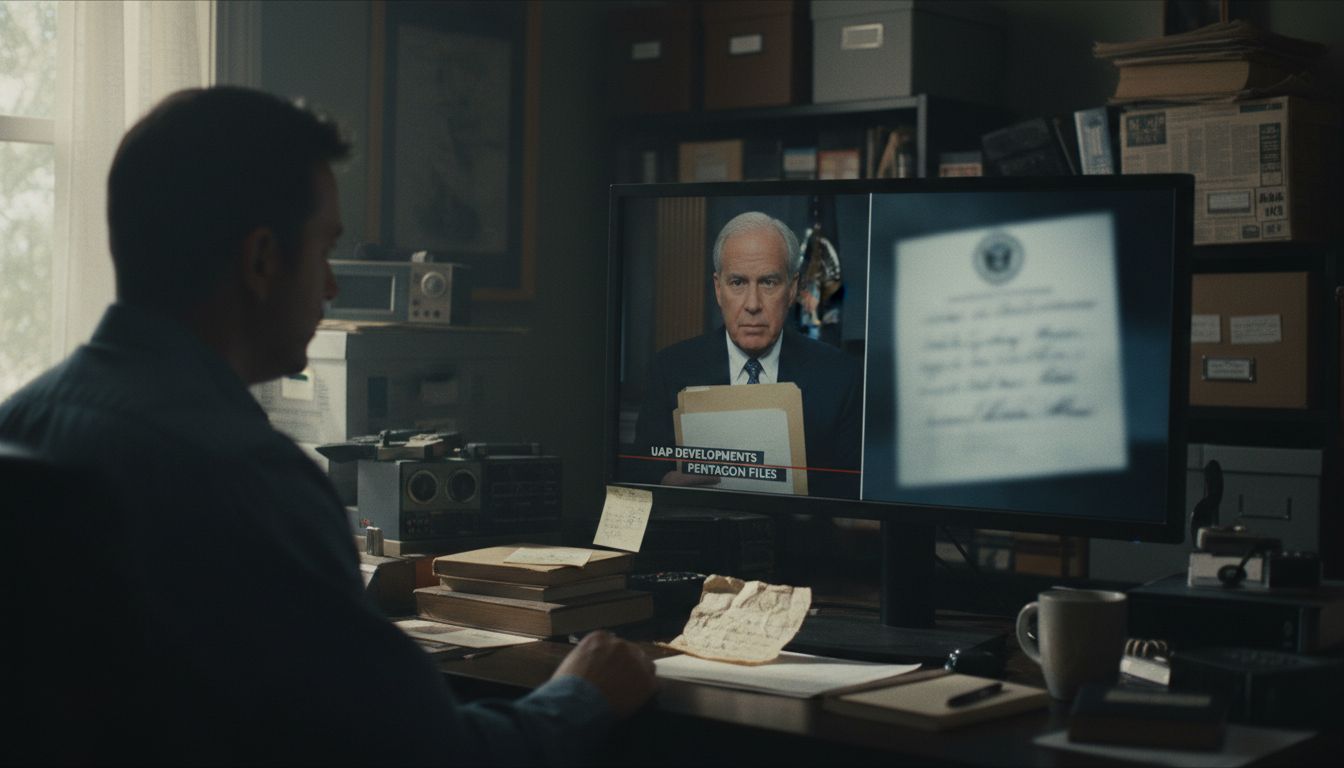
A recent video review of UAP news developments highlighted two attention-grabbing items: Dr. Phil McGraw’s reported early access to Pentagon declassified UFO files and a reported handwritten note from President Donald Trump on the subject. The broader discussion centered on an interview between Australian television host Karl Stefanovic and filmmaker Dan Farah, director and producer of The Age of Disclosure, a documentary that has quickly become one of the most talked-about entries in the growing public debate over unidentified anomalous phenomena.
Farah described the film as an attempt to bring together a wide range of voices from government, intelligence, military, and congressional circles to examine what he calls a long-running secrecy structure around UAPs. According to Farah, the documentary is not framed as speculative entertainment but as a serious investigation into whether governments have withheld information about non-human intelligence and recovered craft. While those claims remain contested, the film’s rapid rise has helped push UAPs further into mainstream political and media discourse.
Key Claims Raised in the Interview
A central theme of the interview was Farah’s assertion that there has been an “80-year active cover-up” surrounding UAPs. He argued that information has been tightly controlled by a mix of career bureaucrats and private defense contractors, with the latter group acting as a barrier to public disclosure because they are generally not subject to FOIA requests in the same way federal agencies are. Farah characterized this arrangement as a “wall” that has allowed sensitive information to remain outside public oversight.
The film also emphasizes what Farah described as a recurring pattern of UAP activity near nuclear facilities, refineries, and military sites around the world. That claim echoes longstanding concerns in the UAP field, where witnesses and investigators have repeatedly pointed to reported sightings near strategic installations dating back decades. Farah said the consistency of those reports is one reason the issue has become increasingly difficult for policymakers to dismiss.
Witness Testimony and Official Participation
Farah said one of the documentary’s aims was to provide a safer environment for officials to speak publicly, describing the project as a way for sources to come forward “arm-in-arm” rather than in isolation. He argued that this approach helps protect whistleblowers from career repercussions and personal risk. Among the most notable participants, he said, were Sen. Marco Rubio, who reportedly gave a 90-minute interview in a classified Senate hearing room, and Sen. Kirsten Gillibrand, who also appears in the film.
Another high-profile figure cited in the discussion was Jay Stratton, described by Farah as the most senior U.S. intelligence official to investigate UAPs. Farah said Stratton claimed on camera to have seen non-human beings and craft. Those statements, if accurately represented, would be among the most consequential testimonies yet presented in a mainstream documentary, though they remain allegations rather than independently verified findings.
Timeline, Political Impact, and Broader Context
Farah linked the documentary’s release on November 21 to renewed public and governmental attention, saying it became the best-selling documentary in Prime Video history within 48 hours. He also pointed to historical reference points, including a 1948 declassified Navy memo, a 1972 Apollo-era image said to show a triangular craft, and a 1996 military video of two triangular objects over a secret U.S. base. Farah argues these examples support the case for what he calls “rolling disclosure,” a process he sees as gradual rather than tied to a single release event.
The interview also touched on the documentary’s political ripple effects, including a reported February 19 directive from President Trump calling for UAP declassification. Farah suggested that the issue has helped bridge partisan divides, citing the unusual alignment of lawmakers such as Rubio and Gillibrand around calls for transparency. As the UAP debate continues to move from the margins toward official scrutiny, the review portrayed The Age of Disclosure as part of a broader shift in which extraordinary claims are being discussed with unprecedented seriousness at the highest levels of government.