Overview
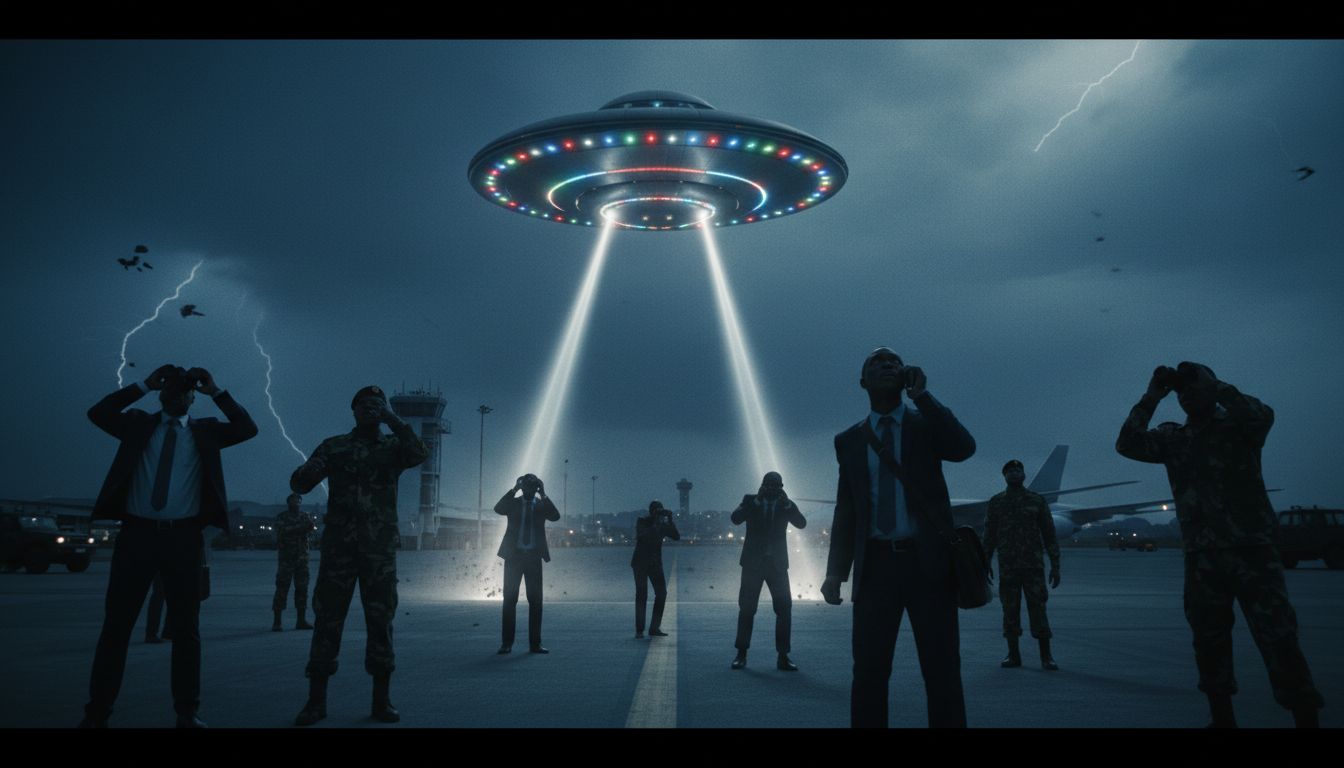
Newly released UFO files suggest that a sighting over Zimbabwe in the summer of 2008 triggered a serious response inside U.S. intelligence circles, with the CIA reportedly placing its assets in the country on “high alert.” According to the documents cited by the New York Post, the reaction followed a July 2, 2008 incident at Harare airport, where witnesses said they saw a disc-shaped object hovering overhead with rotating lights and what appeared to be beams projecting from it. The episode has now resurfaced as part of a broader conversation about how governments respond when an unidentified aerial object appears in sensitive airspace.
What the Files Say
The newly disclosed material indicates that the sighting was taken seriously enough to prompt internal discussion about whether the object could have been a foreign reconnaissance platform or something far more unusual. That uncertainty appears to have driven the precautionary posture within U.S. agencies, especially given the strategic implications of any unexplained craft operating near a major airport. While the files describe the visual features of the object in striking detail, they do not appear to provide a definitive identification, leaving the case unresolved years later.
What makes the Zimbabwe case notable is not just the sighting itself, but the apparent intelligence response it provoked. A disc-shaped object with lights and beams would naturally raise alarms in any national security context, particularly if operators feared the craft could be conducting surveillance. The files suggest that American officials were concerned enough to treat the event as potentially consequential, even as they weighed alternative explanations. No conclusion was reached, underscoring how even high-level scrutiny can fail to resolve an aerial mystery.
Broader Intelligence Context
The episode fits into a longer pattern in which unexplained aerial events are first evaluated through the lens of security, surveillance, and attribution before any discussion turns to the possibility of unconventional technology. In practice, intelligence agencies must consider whether an object is a drone, aircraft, sensor platform, or some other man-made device before entertaining more speculative interpretations. In that sense, the Zimbabwe file reflects a familiar intelligence problem: when an object cannot be quickly identified, officials are forced to plan for the worst while they search for evidence.
The release also comes amid renewed public interest in UAPs — unidentified anomalous phenomena — and how governments document them. Even without a final answer, cases like this can be important because they show how seriously defense and intelligence officials may take an unexplained event when it occurs near an airport or other sensitive site. The Zimbabwe sighting, according to the files, remained unresolved despite the apparent urgency surrounding it.
Why It Still Matters
More than a decade after the incident, the Harare airport event continues to attract attention because it sits at the intersection of national security, eyewitness reporting, and the enduring question of whether every unexplained object has a conventional explanation. The new files do not establish that the craft was extraterrestrial, nor do they confirm it was a foreign intelligence asset. Instead, they show that the uncertainty itself was enough to put U.S. officials on guard. For UAP researchers and skeptics alike, that unresolved status is the central fact: a reported object appeared, intelligence agencies reacted, and the trail apparently ended without a definitive answer.