Overview
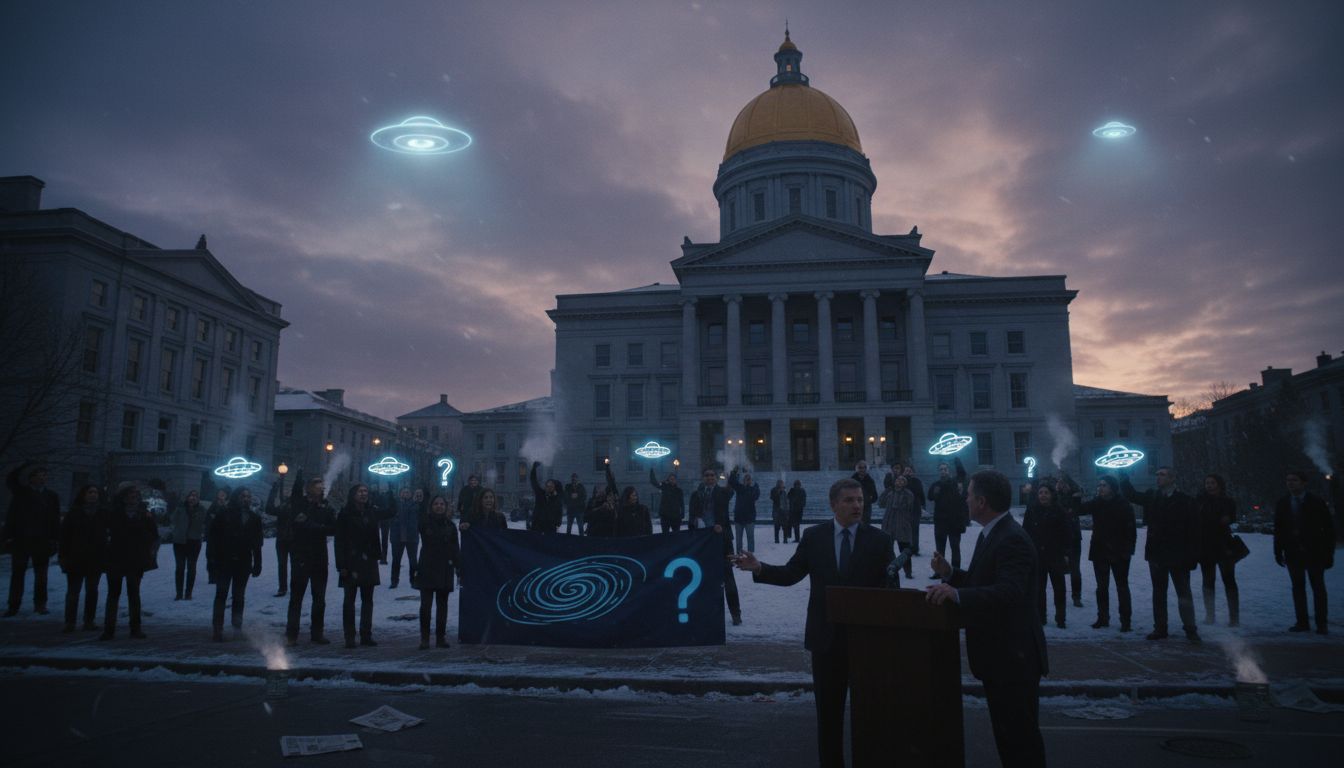
Vermont’s legislature is moving to create a statewide Unidentified Aerial Phenomena (UAP) task force after a noticeable uptick in civilian reports has sparked anxiety across the Green Mountain State. Lawmakers say the surge—spanning from late 2024 through early 2026—has overwhelmed local authorities, who lack a unified protocol for gathering and analyzing sightings. The proposed task force would centralise data collection, liaise with federal agencies such as the Department of Defense’s UAP office, and provide regular public briefings to counter misinformation and calm “UFO panic,” as described by state officials.
Key Details of the Proposal
The bipartisan bill, introduced by Rep. Megan Collins (D‑Bennington) and Sen. James Whitaker (R‑Rutland), outlines a three‑tier structure:
- Data Hub – a secure repository for reports from residents, pilots, and law‑enforcement agencies, staffed by a team of scientists and former military analysts.
- Analysis Panel – composed of experts from the University of Vermont’s atmospheric physics department, the Vermont Air National Guard, and the National Institute of Standards and Technology, tasked with filtering out conventional explanations (e.g., drones, weather balloons).
- Public Outreach Unit – responsible for weekly updates, a dedicated hotline, and an online dashboard that will display de‑identified case statistics.
Funding is projected at $1.2 million for the first fiscal year, sourced from the state’s emergency management budget and a federal grant that the U.S. Office of the Director of National Intelligence recently opened for “state‑level UAP research.”
Context and Historical Background
Vermont is not the first state to formalise its response to unexplained aerial observations. In 2022, Colorado launched a similar task force after a series of high‑altitude lights prompted media attention. At the federal level, the Pentagon’s All‑Domain Anomaly Resolution Office (AARO) released an annual report in late 2025, noting an increase of 27 % in civilian UAP submissions nationwide. Vermont’s own records, obtained through a Freedom of Information Act request, show over 180 documented incidents between 2018 and 2025, a figure that has more than doubled in the past twelve months alone.
Reactions from Officials and the Public
State Representative Collins emphasized the need for “transparent, science‑based communication” to dispel rumors that have been circulating on social media. “Our constituents deserve factual information, not speculation,” she said at a press conference on Jan. 20. Senator Whitaker, a former Air Force pilot, added, “By partnering with the AARO and leveraging local expertise, we can determine whether these sightings represent a genuine security concern or a benign technological phenomenon.”
Local law‑enforcement leaders, including Chief Daniel Ortega of the Burlington Police Department, welcomed the move, noting that officers have been fielding “increasingly frantic calls” that divert resources from routine policing. Conversely, a small group of civil‑rights advocates expressed caution, urging safeguards to protect whistle‑blower anonymity and to prevent the task force from becoming a tool for unwarranted surveillance.
Outlook and Next Steps
The bill is slated for committee review next week, with a vote expected before the end of the legislative session in March. If passed, the task force would be operational by July 2026, aligning with the scheduled release of the next federal UAP report. Analysts from the Center for Strategic and International Studies note that Vermont’s initiative could serve as a model for other New England states, potentially leading to a regional consortium that shares data and best practices.
In the meantime, the state’s emergency management agency has launched a public education campaign, distributing brochures that outline how to safely report sightings and differentiate between common aerial objects and truly anomalous phenomena. As the debate unfolds, Vermont’s approach underscores a growing trend: governments are shifting from outright denial toward structured, evidence‑driven inquiry into the skies above.


