Overview
Manitoba‑based ufologist Chris Rutkowski, founder of the research group Ufology Research, says artificial‑intelligence‑driven tracking systems could finally give scientists a reliable way to separate genuine unidentified aerial phenomena (UAP) from misidentified aircraft, birds or hoaxes. Rutkowski, who has spent decades cataloguing sightings across Canada, highlighted the growing public interest – a recent poll found that 1 in 10 Canadians believe they have witnessed a UFO – and argued that AI offers the “sophisticated detection” needed to move the field from anecdote to data‑driven science.
AI‑Powered Detection
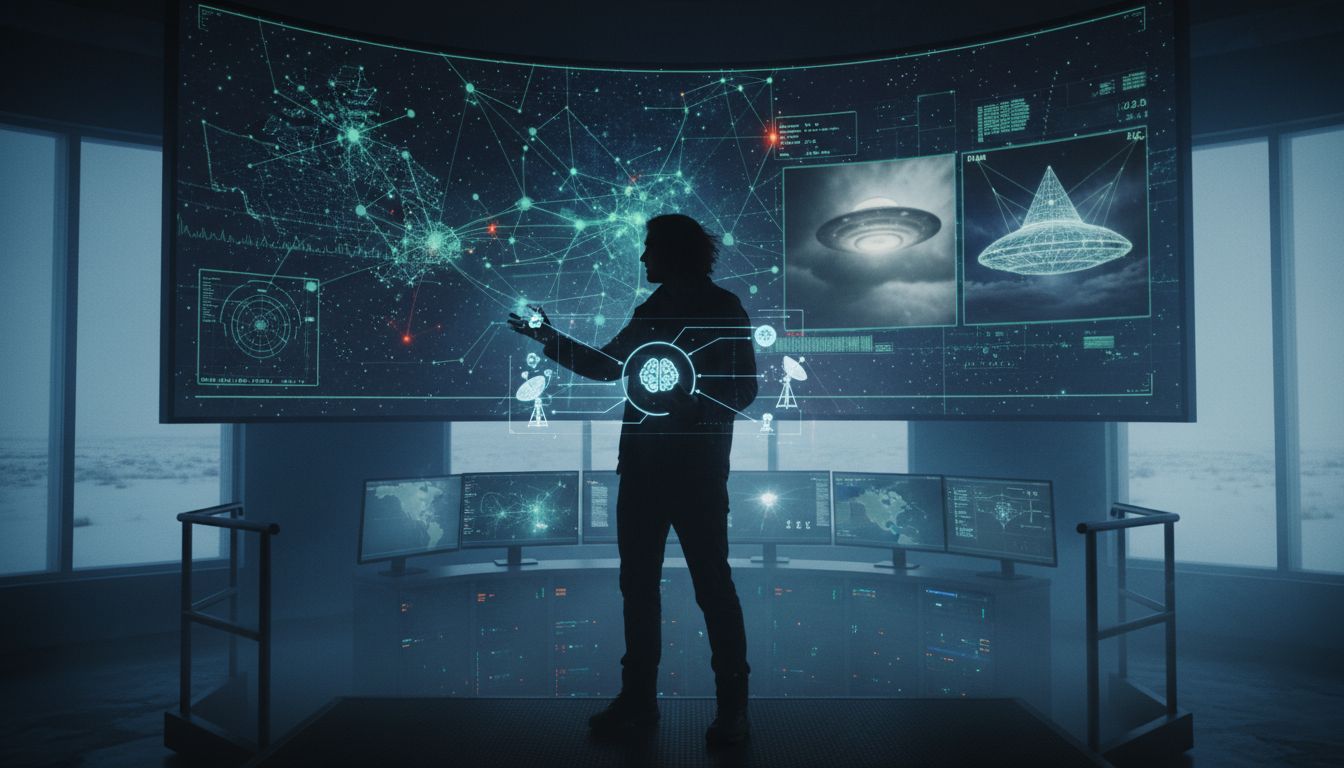
Rutkowski explained that volunteer observation stations, which have been set up by hobbyists and local groups, now feed video and radar feeds into machine‑learning models trained to recognize known objects. “Some are training artificial intelligence to be able to distinguish a bird, an aircraft or a satellite from something unknown,” he said. The approach mirrors work being done by the Harvard‑based Galileo Project, which operates high‑resolution telescopes and cameras at multiple sites and uses neural networks to classify every flash of light in the sky. By automating pattern recognition, researchers hope to flag anomalous events in real time, reducing the reliance on manual reports that can be ambiguous or deliberately fabricated.
Recent Data and Findings
Ufology Research’s 2025 annual report, released this week, compiled 1,052 UFO sightings reported across Canada in the previous year. The data were gathered from government channels, private organizations and social‑media platforms, then cross‑checked against the AI‑filtered observations from the volunteer network. Rutkowski emphasized that the organization’s definition of a UFO is strictly “an object seen in the sky which its observer cannot identify,” deliberately avoiding speculative language about extraterrestrials. The AI system flagged roughly 12 % of the total reports as “unexplained after initial classification,” a figure that researchers intend to investigate further with higher‑resolution imaging and spectroscopic analysis.
Expert Commentary
When asked about the implications of AI for the broader scientific community, Rutkowski was cautious but optimistic: “Using AI to find patterns is going to help us uncover what’s really going on, whether that turns out to be a new atmospheric phenomenon, a classified aircraft, or something we truly cannot explain.” He noted that the technology also serves a secondary purpose—filtering out hoaxes and misidentifications, which have long plagued UFO research and made it difficult for mainstream scientists to engage. By providing a transparent, reproducible methodology, AI could bridge the gap between citizen‑science enthusiasts and academic institutions.
Outlook and Next Steps
The next phase for Ufology Research involves expanding the sensor network to cover the sparsely populated northern territories, where sightings have historically been under‑reported. Partnerships are being explored with Canadian aerospace agencies to integrate radar data, and with universities to refine the machine‑learning algorithms. While AI will not instantly answer the question of whether any sightings represent extraterrestrial technology, it promises a more rigorous, evidence‑based framework for evaluating them. As Rutkowski concluded, “If we can reliably separate the known from the unknown, we finally have a foundation on which serious scientific inquiry can be built.”