Overview
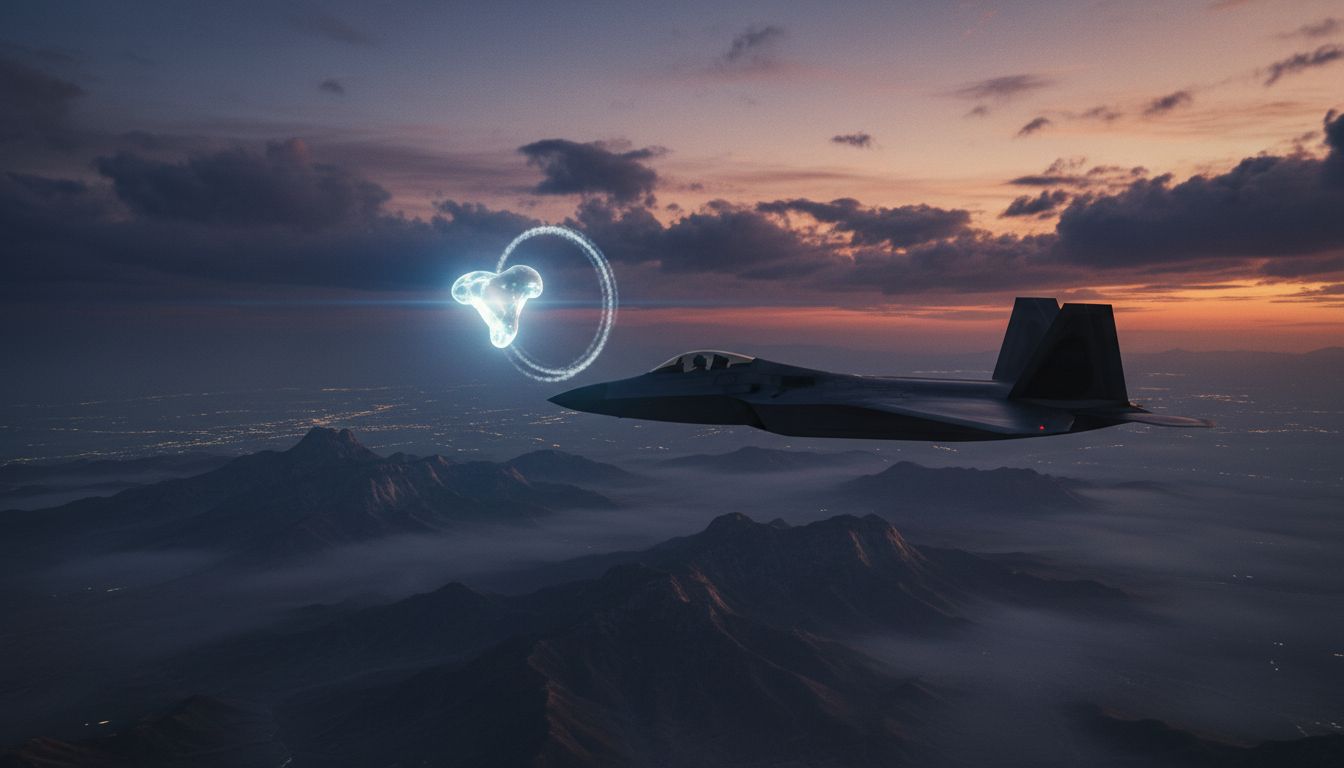
On February 27, 2026, a group of experienced U.S. Air Force pilots reported observing a high‑altitude object that performed maneuvers far beyond the limits of known aerospace technology. The sighting, captured during a routine training sortie over U.S. airspace, has reignited public and congressional interest in unidentified aerial phenomena (UAP). In a separate statement released the same day, the Pentagon acknowledged that a growing number of similar incidents remain unexplained after systematic analysis, underscoring a shift in how the Department of Defense (DoD) addresses these reports.
Incident Details
According to the pilots’ debrief, the object was first detected at approximately 65,000 feet—well above the operational ceiling of most conventional aircraft. Radar returns showed a compact, rapidly accelerating target that executed abrupt changes in direction without apparent aerodynamic drag. One pilot, who asked to remain anonymous for security reasons, described the maneuver as “a sudden 90‑degree turn in under two seconds, maintaining speed and altitude as if defying known physics.” The crew recorded both visual and infrared footage, which is now under review by the DoD’s Advanced Aerospace Threat Identification Program (AATIP) successor, the All‑Domain Anomaly Resolution Office (AARO).
Pentagon Confirmation
In a brief press release, Pentagon spokesperson Lt. Gen. Daniel Karbler stated, “Our analysis of multiple UAP incidents, including the February 27 event, indicates that the observed phenomena cannot be readily explained by current aerospace capabilities or known atmospheric effects.” The statement referenced a recent internal audit that identified more than 200 unexplained cases since the 2023 congressional mandate for UAP reporting. While the Pentagon stopped short of labeling the objects as extraterrestrial, it emphasized the need for rigorous data collection and inter‑agency collaboration to assess any potential national security implications.
Expert Analysis
Aerospace analyst Dr. Maya Patel, senior fellow at the Center for Strategic and International Studies, cautioned against jumping to sensational conclusions. “Historically, many UAP reports have been resolved as sensor anomalies or classified test flights,” she said. “However, the consistency of high‑altitude, high‑maneuverability sightings across different services suggests we are dealing with a genuine data gap.” Dr. Patel noted that the DoD’s recent policy changes—mandating real‑time reporting and the establishment of a centralized database—could provide the scientific community with the transparent evidence needed to evaluate these events objectively.
Next Steps
The Department of Defense has announced plans to expand AARO’s resources, including the deployment of additional sensor platforms on training aircraft and the integration of civilian reporting channels. A congressional oversight committee is scheduled to hold a hearing in the coming weeks to examine the Pentagon’s findings and to consider legislation that would further standardize UAP reporting across all branches of the military. Until more data is released, officials stress that the primary concern remains national security, not speculation. As the investigation proceeds, the focus will be on gathering verifiable evidence that can either demystify these encounters or confirm the existence of technology that remains beyond our current understanding.


