Overview
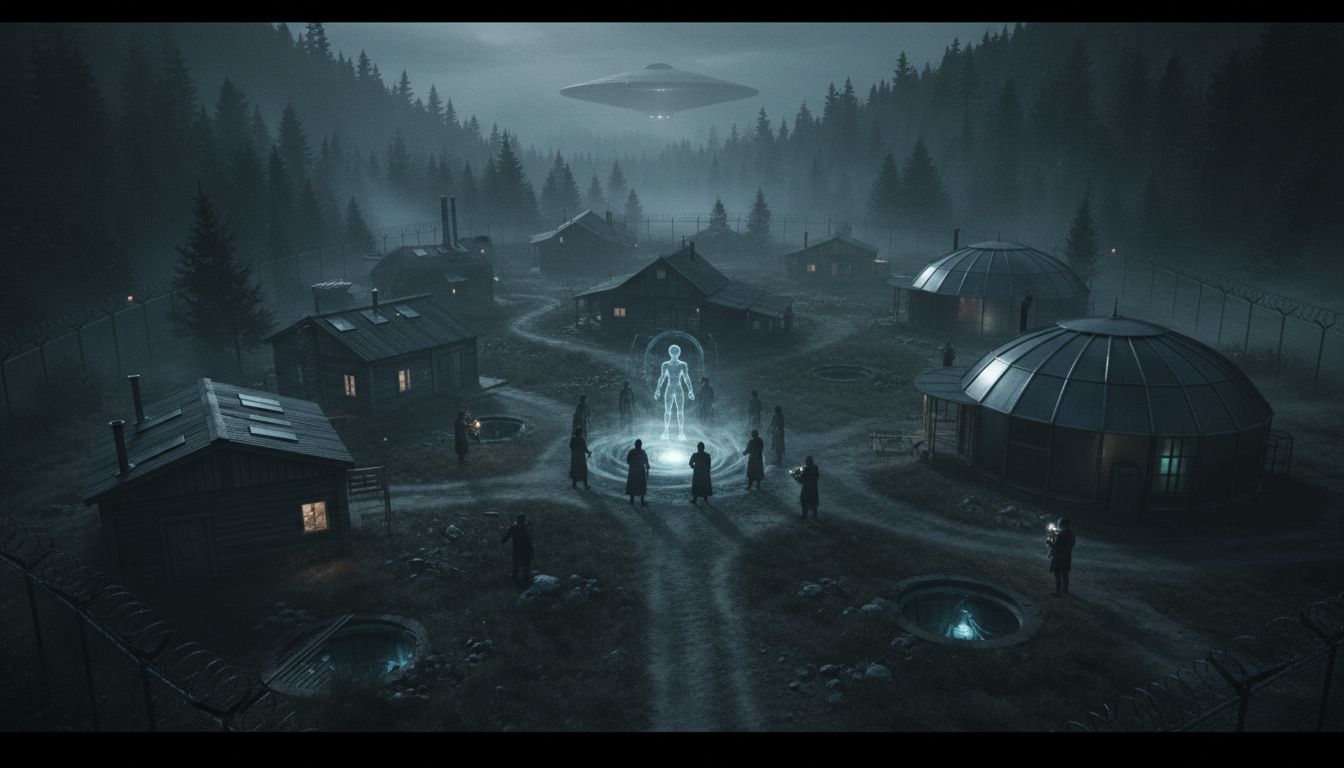
Nestled in the foothills of northern Italy, the community known as Damanhur has attracted worldwide attention for its unconventional spiritual practices and self‑described “underground temples.” Founded in the 1970s, the eco‑village now houses several hundred residents who live in what they call “nuclear families” and pursue a range of activities that blend art, ecology, and what they describe as contact with extraterrestrial beings. While members speak openly about “communicating with alien siblings” and conducting experiments they label “space‑related,” the group has also been the subject of scrutiny by scholars, former members, and local authorities who question its governance and the veracity of its claims.
History and Organization
The settlement traces its origins to Falco Tarassaco—born Oberto Airaudi—a former insurance broker who positioned himself as an alchemist and charismatic leader. In the early 1970s he gathered a small cohort of seekers in the village of Vidracco and gradually transformed the area into a sprawling, self‑sufficient commune. Over the decades Damanhur expanded to include multiple “eco‑villages,” each featuring distinctive architecture such as illuminated pyramids and subterranean chambers that serve as ritual spaces. Residents adopt new identities drawn from animals, plants, or minerals, a practice the group says helps them “conquer” limiting habits and align with what they consider a universal consciousness.
Beliefs and Practices
Central to Damanhur’s worldview is the notion that the human soul originated in deep space and that alien entities are long‑lost siblings of humanity. According to the community’s literature, members engage in daily meditation, plant communication, and structured rites—such as the “Rite of Spring Equinox”—designed to attune participants to these extraterrestrial connections. The underground temples host what participants describe as “secret space experiments,” ranging from synchronized breathing sessions to the use of light and sound installations intended to facilitate contact. A spokesperson for the group told local media, “Our work is about expanding consciousness, not proving a theory to outsiders; the experience is personal and transformative.”
External Perspectives and Controversy
Critics have labeled Damanhur a cult, pointing to its hierarchical leadership, the requirement for members to relinquish birth names, and the secrecy surrounding its rituals. Former resident Luca Bianchi, who left the community in 2022, said, “The promise of cosmic connection was a powerful lure, but the daily reality involved strict control over personal choices and finances.” Academic sociologist Dr. Elena Marini of the University of Turin notes that while Damanhur’s artistic achievements and environmental initiatives are notable, “the group’s unverified claims of alien communication and covert experiments fall outside the scope of conventional religious or scientific study.” Local authorities have conducted periodic inspections to ensure compliance with building codes and health regulations, but no formal legal actions have been reported.
Outlook
As Damanhur approaches its 55th anniversary, the community continues to attract new adherents drawn by its blend of spirituality, artistic expression, and the allure of a “cosmic family.” The group maintains that its practices are voluntary and that members experience measurable benefits in wellbeing and creativity. Nonetheless, the tension between the community’s self‑presentation and external skepticism persists, underscoring the broader challenge of evaluating fringe spiritual movements that operate on the edge of mainstream belief systems. Whether Damanhur’s underground temples will ever provide empirical evidence of extraterrestrial contact remains uncertain, but the settlement’s impact on contemporary alternative spirituality is undeniable.


