Overview
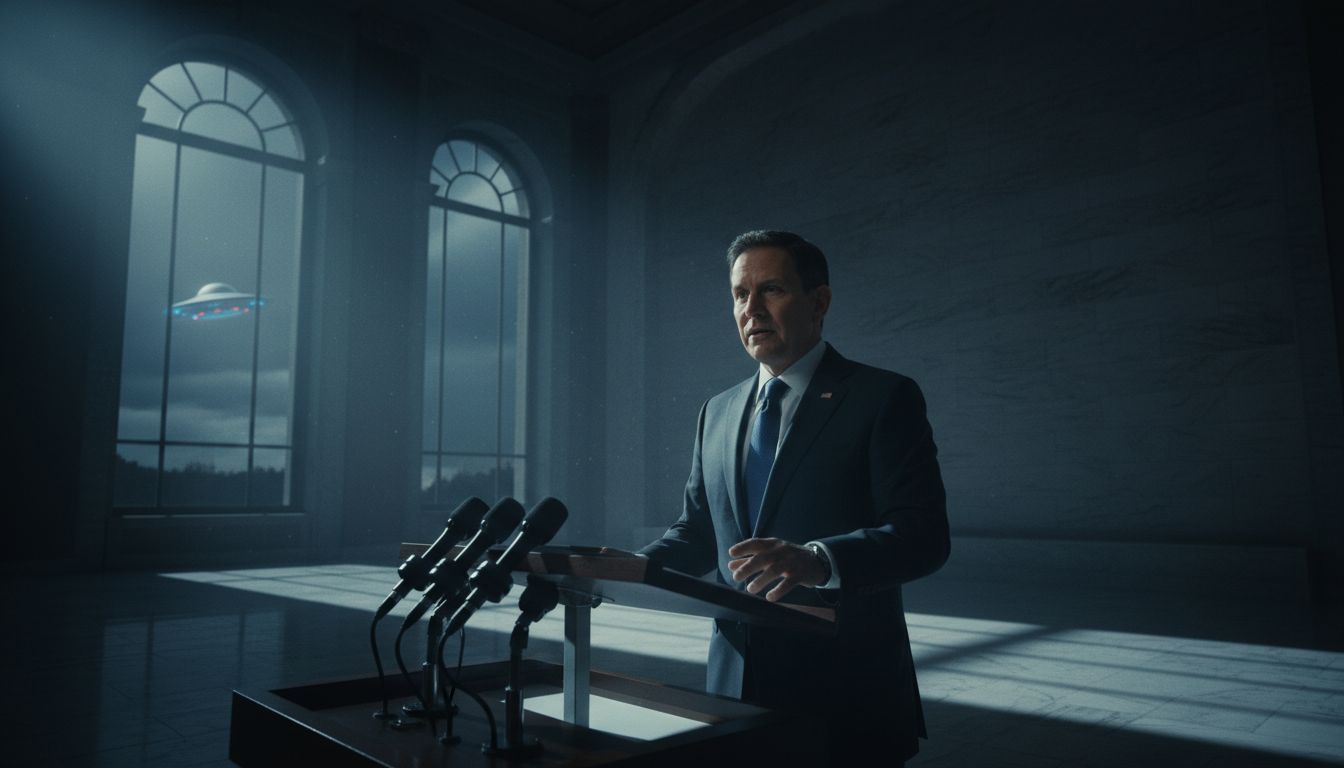
Senator Marco Rubio (R‑FL) urged the U.S. Congress on Saturday to launch a “serious, transparent” investigation into recent whistle‑blower allegations concerning unidentified aerial phenomena (UAP). Speaking at a press briefing in Washington, the senior Republican on the Senate Intelligence Committee said the claims merit the same level of scrutiny applied to other national‑security matters and called for dedicated funding to support a comprehensive inquiry.
Recent Whistle‑Blower Claims
The latest allegations stem from a series of anonymous disclosures that surfaced in early November, alleging that senior Department of Defense officials have suppressed data on unexplained aerial sightings. The whistle‑blower, whose identity remains protected under federal law, claimed that internal reports of “high‑speed, maneuverable objects” have been repeatedly downgraded or classified without sufficient justification. While the Pentagon has previously released limited UAP footage and established the All‑Domain Anomaly Resolution Office (AARO) in 2023, the new revelations suggest possible gaps in record‑keeping and inter‑agency communication.
Rubio’s Call for Action
Rubio emphasized that “if there are credible indications that our intelligence community is withholding information that could affect national security, the American people deserve answers.” He urged the House and Senate to allocate specific resources for a joint congressional‑executive task force, recommending a budget line item of at least $50 million for the first fiscal year to cover data analysis, expert testimony, and public reporting. The senator also highlighted the need for an “independent oversight mechanism” to ensure that any findings are not subject to political or bureaucratic filtering.
Legislative Context
Rubio’s request arrives amid a broader bipartisan push to formalize UAP oversight. In 2022, the Senate passed the Intelligence Authorization Act, which mandated the creation of an annual report on UAPs—a requirement that led to the 2023 unclassified “Preliminary Assessment.” More recently, the House Committee on Armed Services introduced H.R. 8422, the UAP Transparency and Accountability Act, which would expand the scope of reporting to include civilian and commercial aviation data. Rubio’s proposal aligns with these efforts, but he stresses that “a piecemeal approach will not suffice; we need a coordinated, well‑funded investigation that can cut through the layers of classification.”
Next Steps and Outlook
The Senate Intelligence Committee is expected to hold a closed‑door briefing later this month, where classified briefings from the Office of the Director of National Intelligence and the Department of Defense will be reviewed. If Rubio’s funding request gains traction, it could be incorporated into the upcoming FY 2026 defense appropriations bill. Critics caution that allocating substantial resources without clear evidence could set a precedent for other speculative investigations, but supporters argue that the potential security implications justify the expense. As the debate unfolds, the emphasis remains on transparency, accountability, and ensuring that any credible data on UAPs is examined with the rigor applied to other national‑security threats.