Overview
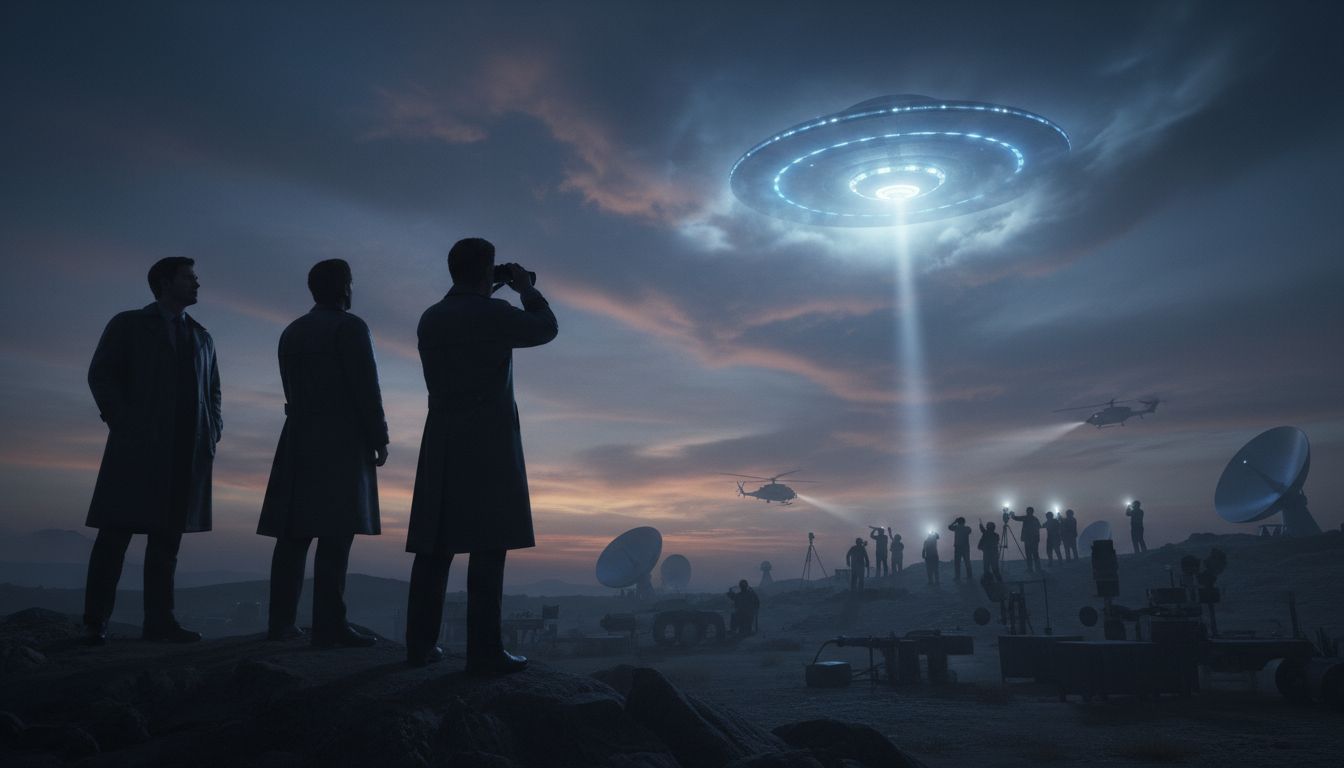
Public fascination with unidentified aerial phenomena (UAP) and the prospect of extraterrestrial life shows no signs of waning. Recent reports of bright lights over major cities, coupled with a surge in documentary releases and social‑media discussions, have placed UFOs back in the mainstream news cycle. Analysts at Anadolu Ajansı note that the renewed attention is “driven by a combination of credible sightings, declassified government documents and a growing appetite for scientific explanation.” While the topic often attracts sensational headlines, the current discourse is increasingly anchored in documented observations and formal inquiries.
Recent Sightings
In the past three months, multiple pilots and civilian witnesses have filed reports of objects performing maneuvers that defy conventional aeronautical explanations. The Federal Aviation Administration (FAA) logged 27 new incidents in the United States, a 15 % increase compared with the same period last year. Similar spikes have been recorded in Europe, where the European Space Agency (ESA) confirmed that several radar‑tracked objects were observed over French airspace without identifiable signatures. In Turkey, the Ministry of Transport released a brief statement acknowledging “unexplained aerial observations” near Ankara, urging local authorities to cooperate with scientific teams. Though none of these events have been conclusively linked to extraterrestrial activity, they have reignited public debate.
Scientific and Government Response
Governments worldwide are moving from dismissal to systematic study. The U.S. Office of the Director of National Intelligence (ODNI) published its annual UAP assessment in June, concluding that “most incidents remain unexplained” and recommending the establishment of a permanent inter‑agency task force. Dr. Michael S. Graham, a senior researcher at the Smithsonian’s National Air and Space Museum, emphasized that “rigorous data collection and transparent analysis are essential if we are to differentiate between advanced terrestrial technology and truly anomalous phenomena.” Meanwhile, the scientific community remains divided. Some astrophysicists, such as Prof. Lila Ahmed of the University of Cambridge, argue that the lack of verifiable evidence keeps the subject in the realm of speculation, whereas others, like Dr. Carlos Mendes of Brazil’s National Institute for Space Research, call for dedicated funding to equip observatories with high‑resolution sensors capable of capturing UAP events in real time.
Public Interest and Media Coverage
Media outlets have responded with a blend of investigative reporting and feature storytelling. Streaming platforms have released series that combine eyewitness interviews with expert commentary, while traditional newspapers have dedicated weekend supplements to the “UFO resurgence.” Social‑media analytics indicate a 40 % rise in hashtag usage related to #UFOs and #Aliens since early September, reflecting a broader cultural curiosity. Survey data from the Pew Research Center shows that 62 % of respondents in the United States now consider the existence of intelligent life beyond Earth “somewhat likely” or “very likely,” up from 48 % five years ago.
Looking Ahead
The convergence of increased sightings, governmental transparency, and heightened public engagement suggests that the UFO conversation will remain a fixture in both policy circles and popular culture. Experts caution against jumping to conclusions, urging that “any credible claim must be supported by reproducible data and peer‑reviewed analysis,” as Dr. Graham reiterated. As nations allocate resources toward dedicated UAP research programs, the next year could yield the first scientifically validated explanations—or at the very least, a clearer understanding of the atmospheric and technological phenomena that have long captured the human imagination.


