Overview
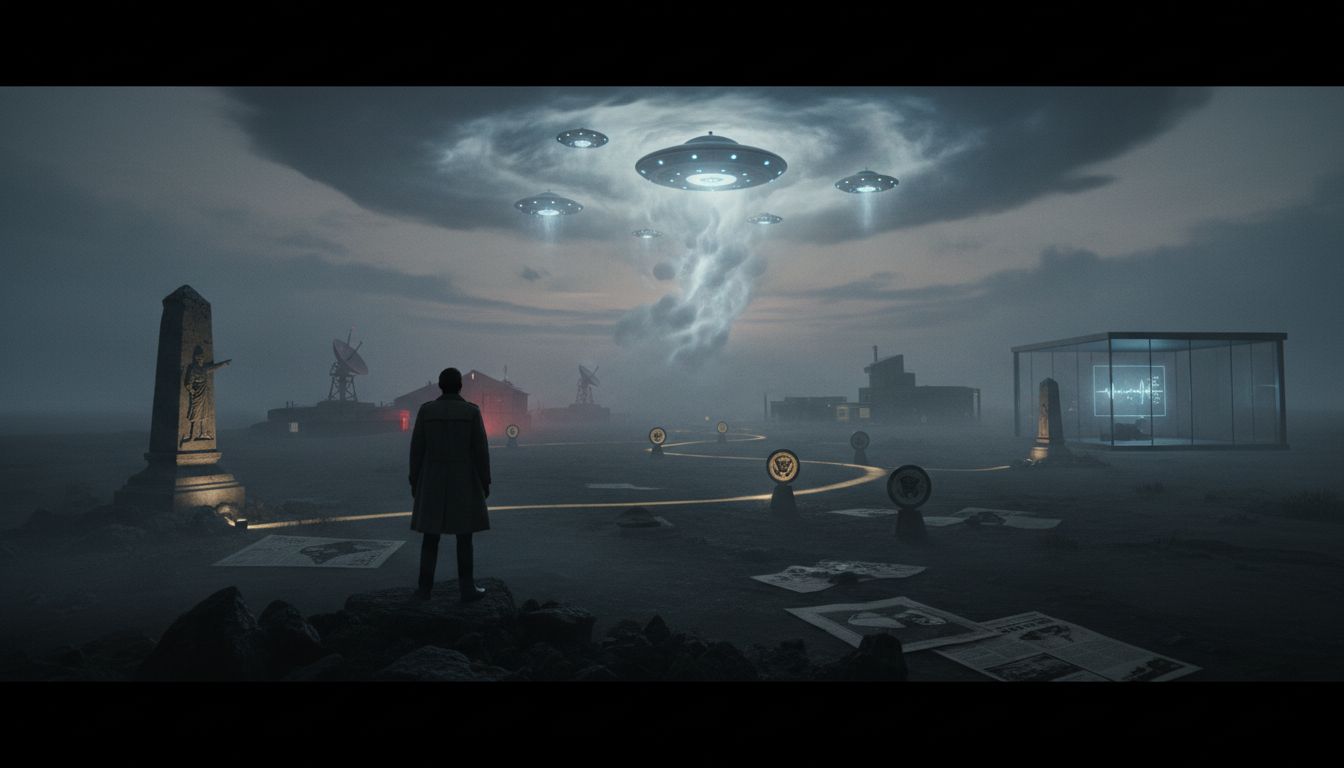
A new feature article on OregonLive chronicles two centuries of UFO and UAP (Unidentified Aerial Phenomena) sightings that intersected with the offices of U.S. presidents. Beginning with early 19th‑century reports of strange lights over the frontier, the piece traces how each successive administration has navigated the tension between public curiosity, national security, and the instinct to keep certain observations classified. The narrative argues that while the technology and geopolitical context have evolved—from horse‑drawn caravans to Cold‑War radar stations—the pattern of measured disclosure and covert investigation remains remarkably consistent.
Early Encounters and the Jefferson Era
The earliest documented presidential‑linked sighting dates to 1801, when a farmer in what is now Ohio reported a “flying saucer‑shaped fireball” that hovered above his fields for several minutes. Jefferson’s Secretary of State, James Madison, noted the incident in a private memorandum, describing it as “an extraordinary phenomenon that may merit further observation.” Historians such as Dr. Evelyn Hart of the University of Oregon note that the young republic lacked a formal mechanism for investigating aerial anomalies, leaving such reports to be filed sporadically with local newspapers and the fledgling scientific societies of the era.
Civil War, World Wars, and the Cold‑War Surge
The Civil War period saw a spike in sightings, most famously the “Battle of the Sky” over the Tennessee River in 1863, where Union troops claimed to have observed “bright, disc‑shaped objects” moving against the wind. By the time World War II erupted, the U.S. Army Air Forces began cataloguing unexplained aerial events, a practice that accelerated after the infamous 1947 Roswell incident. President Harry S. Truman, who authorized the establishment of Project Sign in 1948, reportedly told his staff that “the sky is no longer a blank canvas; we must understand what is out there, both for science and for security.”
During the Cold War, the phenomenon took on a strategic dimension. The 1952 Washington, D.C., radar blips that triggered a massive scramble of fighter jets were investigated by the newly formed Air Force Office of Special Investigations. President Dwight D. Eisenhower’s administration classified the incident as “potential foreign aircraft,” a designation that effectively sealed the file for decades. Declassified documents released in the 1990s reveal that subsequent presidents—John F. Kennedy, Lyndon B. Johnson, and Richard Nixon—received regular briefings on “UAP activity” but were instructed to keep the content off the public record to avoid panic and to protect intelligence methods.
Modern Transparency and the 2020s Briefings
The most recent chapter described by OregonLive centers on the Pentagon’s 2022 release of the “Preliminary Assessment” on UAPs, a document that acknowledged 144 sightings by military pilots since 2004, with 18 cases remaining “unexplained.” President Joe Biden’s administration has continued the policy of limited disclosure, authorizing a classified briefing to senior national‑security officials in early 2024. “We have a responsibility to our service members and to the American people to understand these phenomena,” said Lt. Gen. James McCullough, director of the All‑Domain Anomaly Resolution Office, during a congressional hearing. The article notes that the briefing emphasized data collection, sensor fusion, and the need for a unified inter‑agency response rather than speculation about extraterrestrial origins.
Calls for Greater Openness
The OregonLive analysis concludes with a growing chorus of lawmakers, scientists, and former intelligence officers urging greater transparency. Senate Majority Leader Chuck Schumer (D‑NY) is quoted as stating, “The American public deserves to know what our own agencies are seeing in our skies, and why.” Meanwhile, former NASA astronaut Dr. Mae Jemison cautioned that “the stigma attached to UAP research hampers legitimate scientific inquiry.” As more archival material surfaces through Freedom of Information Act requests, the article suggests that future presidents may face increasing pressure to balance national‑security concerns with the democratic principle of an informed citizenry.
What Lies Ahead
While the historical record shows a consistent pattern of secretive investigation paired with cautious public messaging, the article posits that the current era—characterized by unprecedented satellite coverage, advanced radar, and a more skeptical public—could reshape that balance. The author notes that upcoming legislation, such as the “UAP Transparency Act” pending in Congress, may mandate regular public reporting of unexplained incidents. Whether this will finally lift the veil on the two‑century‑old mystery remains uncertain, but the trajectory suggests that future administrations will be judged not only on how they protect national security, but also on how openly they address the enduring question of what—and who—might be navigating our airspace.


