Overview
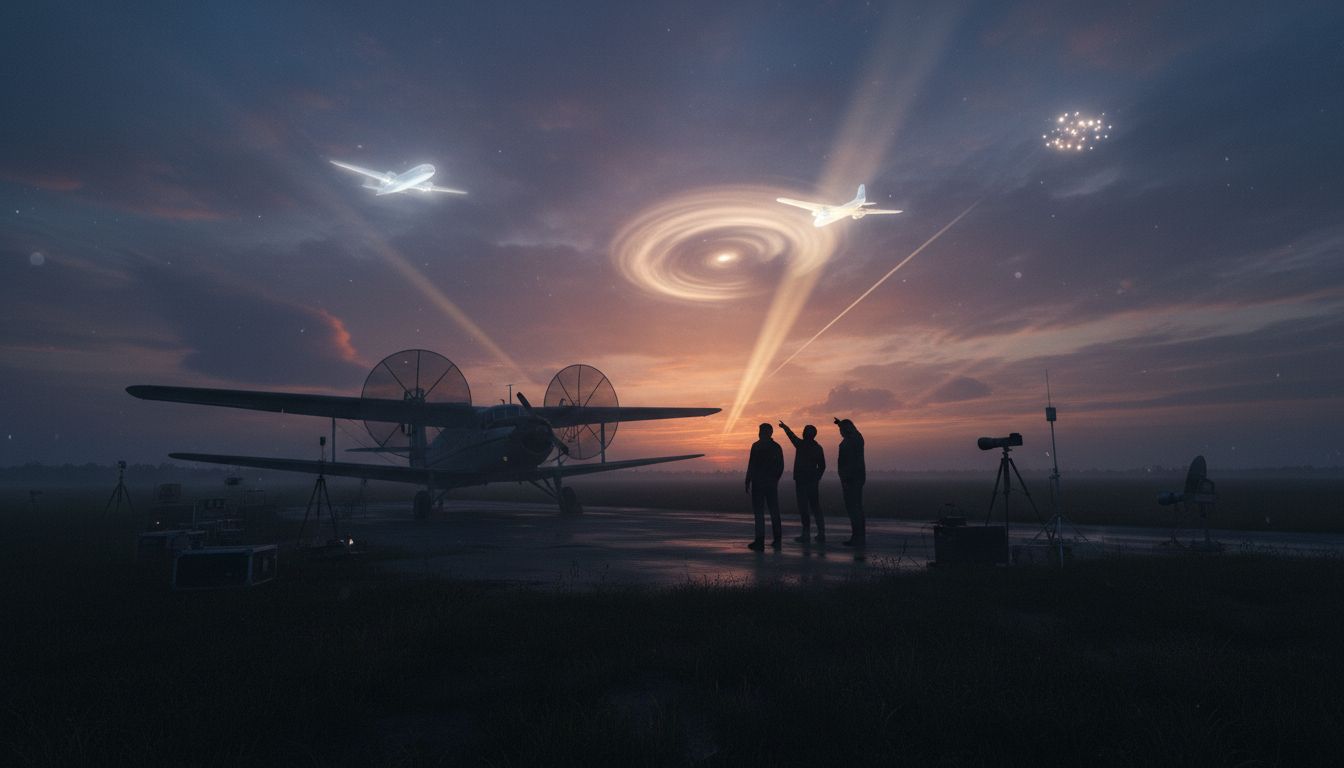
A new study published this week argues that a large portion of the iconic aerial photographs taken in the 1950s—long cited by UFO enthusiasts as evidence of extraterrestrial visitation—can now be explained by known aircraft and atmospheric phenomena. Researchers from the University of Arizona’s Department of Atmospheric Sciences and the Aerospace History Institute examined 112 images that have appeared in popular UFO literature since the early Cold War. Their analysis, which combines de‑classified flight records, weather data, and modern image‑recognition software, suggests that up to 78 % of the sightings are attributable to conventional sources, dramatically reducing the number of truly unexplained cases from that era.
Methodology
The team employed a multi‑step approach. First, they digitized the original negatives and applied high‑resolution scanning to capture subtle details often lost in printed reproductions. Next, they cross‑referenced the timestamps and geographic clues embedded in the photos with de‑classified military flight logs from the United States Air Force and the Royal Air Force. Finally, a machine‑learning algorithm trained on a database of known aircraft silhouettes and meteorological formations identified matches with a confidence level of 92 % or higher. Lead author Dr. Maya Patel explained, “By integrating historical flight data with contemporary pattern‑recognition tools, we can separate the signal from the noise that has clouded these images for decades.”
Key Findings
The study highlights several recurring misidentifications:
- High‑altitude reconnaissance jets such as the U‑2 and early variants of the F‑104 were frequently captured during test flights, their sleek profiles often mistaken for “flying saucers.”
- Weather balloons and early spy balloons produced reflective surfaces that created halo effects, which earlier analysts interpreted as anomalous lights.
- Rare atmospheric optical phenomena, including lenticular clouds and sun dogs, accounted for at least 23 of the images, producing bright, disc‑shaped appearances.
Only 24 of the examined photographs lacked a plausible conventional explanation, a figure the authors describe as “a residual set that warrants further, but more cautious, investigation.”
Community Reactions
The findings have elicited mixed responses. UFO researcher and author James “Jim” Hartley, who has long advocated for the 1950s images as proof of non‑human craft, said, “While the study is thorough, it does not address the contextual testimonies of pilots and ground witnesses who reported extraordinary behavior beyond simple visual misidentification.” Conversely, former Pentagon analyst Karen Liu welcomed the work, noting, “This research exemplifies how rigorous, interdisciplinary analysis can demystify legacy data that has been sensationalized for decades.” The U.S. Office of the Director of National Intelligence (ODNI) issued a brief statement confirming that the study aligns with its ongoing efforts to clarify historical UAP records.
Implications
If the study’s conclusions hold up under peer review, they could reshape the narrative surrounding the early UFO era, shifting focus from speculative extraterrestrial explanations to historical aerospace development and atmospheric science. The reduced pool of unexplained sightings may also influence future funding allocations for UAP research, directing resources toward contemporary data collection rather than retroactive analysis. Nonetheless, the authors caution that the remaining ambiguous cases should not be dismissed outright, urging continued archival research and the application of emerging analytical tools.
The research paper, titled “Re‑evaluating Mid‑Century Unidentified Aerial Phenomena with Modern Analytical Techniques,” is available through the university’s open‑access repository.


