Overview
The United States has moved unidentified aerial phenomena (UAP) from the fringe of public curiosity to a matter of national‑security concern. In February 2026, President Donald Trump ordered the Pentagon and related agencies to begin declassifying files on UAPs, a step prompted by years of congressional pressure, whistleblower testimony, and public demand for transparency. The shift follows the 2022 National Defense Authorization Act, which formally mandated a government‑wide UAP investigation, and it now places the All‑Domain Anomaly Resolution Office (ADARO) at the center of a growing docket of more than 2,000 reports that span back to 1945, according to Defense Secretary Pete Hegseth.
Government Action
ADARO’s caseload, confirmed earlier this year by Secretary Hegseth, includes sightings from pilots, military personnel, and civilian government employees who reported objects that could not be identified as conventional aircraft or weather. The United States is not alone; Japan, France, Brazil and Canada each operate their own formal UAP programs, reflecting a broader, multinational acknowledgement that these phenomena merit systematic study. The Pentagon’s briefings, now regularly scheduled for senior officials, focus on three core questions: the provenance of the objects, any potential threat to flight safety, and whether they represent advanced foreign technology.
Academic Landscape
Despite the heightened official focus, research universities remain largely silent on the subject. No major institution has launched a dedicated UAP research center, no federal science agency offers competitive grants for such work, and there are no doctoral programs that train scholars in UAP methodology. As journalist Darrell Evans notes, “Designing that framework meant making methodological decisions without community standards, without institutional funding, and without the professional infrastructure many researchers in established fields take for granted.” Evans’ own temporal aerospace correlation tool—intended to match civilian sighting reports with Cape Canaveral launch data—is currently under peer review at Limina: The Journal of UAP Studies, illustrating the solitary nature of most scholarly efforts.
Measurable Stigma
A 2023 national survey conducted by Marissa Yingling, Charlton Yingling, and Bethany Bell, published in Humanities and Social Sciences Communications, quantifies the reluctance among academics. The study sampled 1,460 faculty across 14 disciplines at 144 U.S. research universities. While most respondents regarded UAP research as important and nearly 20 % reported personal encounters with unidentified aerial events, fewer than 1 % had ever pursued UAP‑related research. The authors concluded that the gap is less about intellectual dismissal and more about career risk: faculty cited fear of professional marginalisation, loss of funding, and damage to reputation as primary deterrents.
Looking Forward
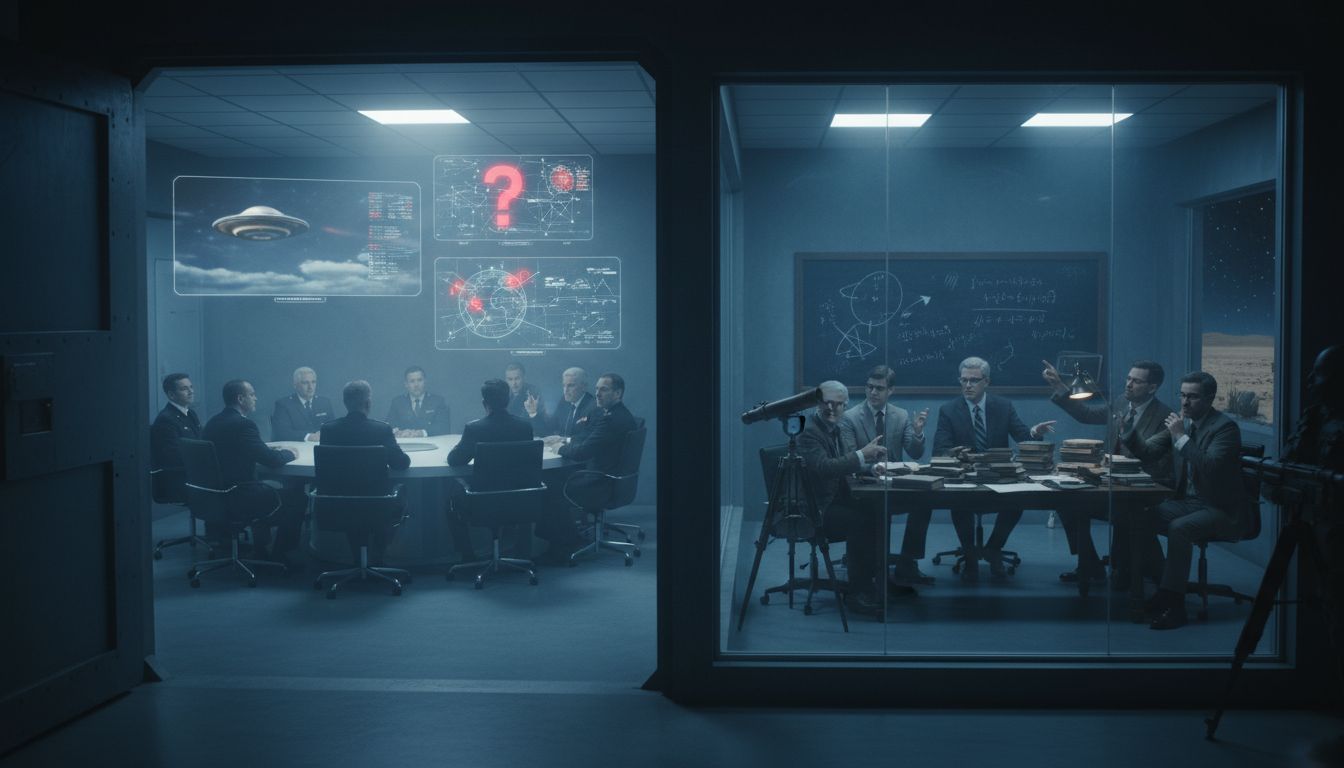
The juxtaposition of a government that now treats UAPs as a legitimate security issue and an academic community that remains hesitant underscores a persistent cultural divide. Proponents argue that the absence of standardized research frameworks and funding streams hampers the transition from anecdotal reports to rigorous science. Critics caution that premature legitimisation without robust peer‑reviewed evidence could politicise the topic. As the Pentagon continues to release data and as international partners share findings, the pressure mounts for the scientific establishment to develop clear methodological guidelines and secure dedicated resources. Whether universities will finally bridge the gap—or continue to sideline the field—remains an open question, but the stakes are rising for both national security and the pursuit of empirical understanding.


