Borland Interview Revives Questions About Disclosure
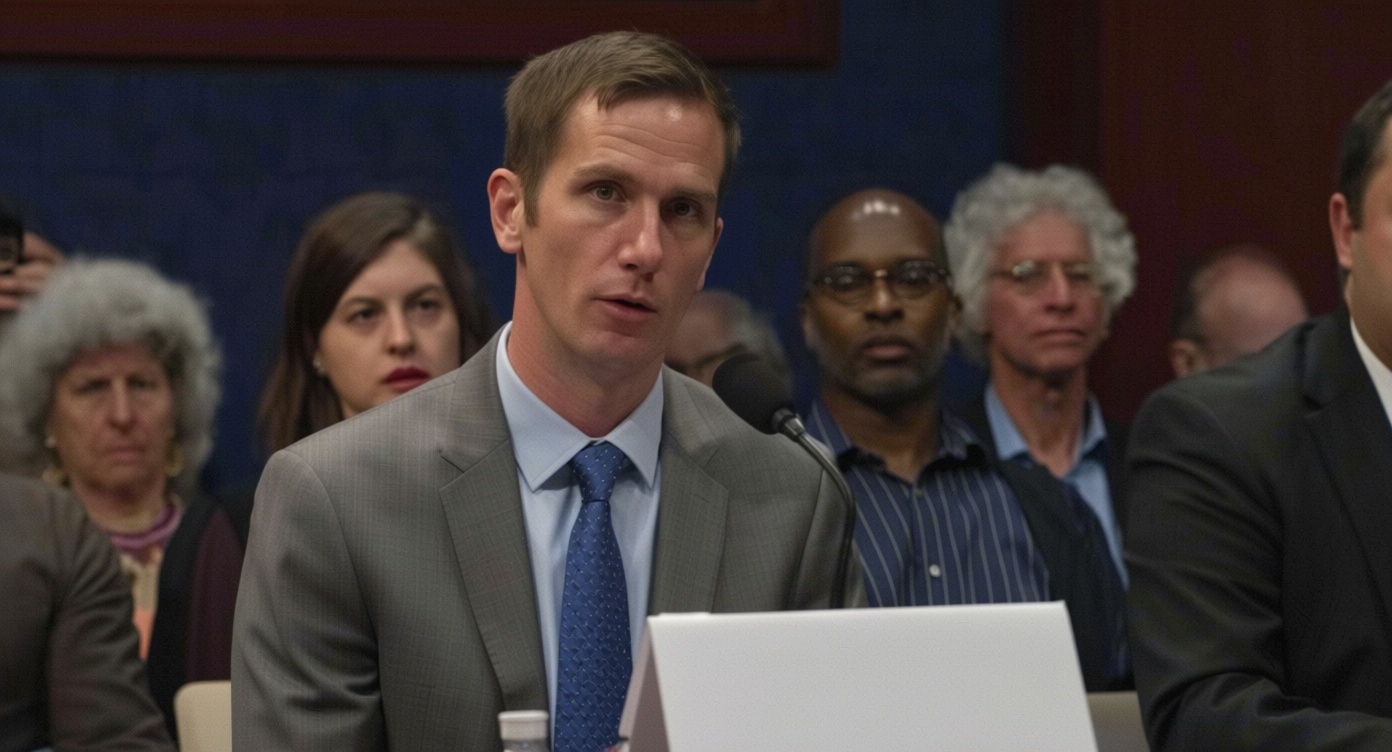
Recent UFO/UAP commentary has centered on claims that the U.S. government possesses recovered nonhuman craft—and on the more speculative question of whether human institutions fully control the disclosure process. In a Sept. 24, 2026, appearance on Fox News host Sean Hannity’s program, former U.S. Air Force geospatial intelligence specialist Dylan Borland said the government has recovered craft. Asked directly whether such vehicles are in government possession, Borland replied, “Yes, they do,” according to the interview account.
Borland appeared with UAP researcher and television host Ben Hansen. He also referred to a conversation with the Intelligence Community Inspector General, saying, “something else is kind of running the show right now.” The remark was not accompanied by publicly verifiable evidence identifying what he meant. Borland has said that legal restrictions prevent him from disclosing all the information he claims to possess, leaving his allegations dependent largely on his testimony and interpretation.
The claims remain disputed. The Pentagon’s All-domain Anomaly Resolution Office has reported that it has found no empirical evidence that the U.S. government or private companies have recovered extraterrestrial craft or reverse-engineered nonhuman technology. No physical evidence supporting Borland’s statements has been made public.
Parallels With Whitley Strieber’s “Transformation”
Borland’s suggestion that another force may influence the pace or direction of disclosure echoes an argument developed over decades by author Whitley Strieber. In his 2023 book Them, Strieber argued that entities he calls the “Visitors” may have helped orchestrate secrecy around their presence, with governments acting as participants rather than sole decision-makers.
That theme is also examined in the 2026 edition of Strieber’s Transformation. The interpretation remains speculative and has not been independently established, but it illustrates a recurring divide in UAP discussions: whether secrecy is primarily the result of conventional national-security policies, bureaucratic dysfunction and compartmentalization—or whether alleged nonhuman actors are influencing events.
Wider Media and Research Developments
The latest commentary also includes criticism from author and investigator Jason Colavito, who has questioned the way some media organizations present extraordinary UAP claims. His broader criticism focuses on the risk that repetition, dramatic framing and insufficiently tested testimony can make allegations appear more substantiated than the available evidence supports. That concern is particularly relevant as whistleblower accounts receive increasing exposure through mainstream television and online platforms.
Separately, a reported object seen during a SpaceX livestream prompted renewed online discussion. As with many livestream sightings, the available description alone does not establish whether the object was an aircraft, satellite, imaging artifact or something genuinely unexplained. A sighting being unresolved is not, by itself, evidence of nonhuman technology.
International and Technical Claims
The Society for UAP Studies also participated in a colloquium at France’s National Assembly, reflecting the expanding international and institutional interest in the subject. Such forums can provide opportunities for researchers, officials and lawmakers to discuss reporting standards, aviation safety and transparency without treating unverified claims as established fact.
Meanwhile, an Economic Times article examined long-running claims about the alleged TR-3B “Black Manta” aircraft and purported anti-gravity technology. The aircraft is frequently described in UFO circles as a secret triangular aerospace platform, but publicly available evidence confirming its existence or an operational anti-gravity propulsion system remains absent. Taken together, these developments show a UAP debate increasingly shaped by public interviews, international discussion and online speculation—while the central question of verifiable evidence remains unresolved.