Overview
On January 7, 2026, physicist and UAP‑research specialist Dr. Kevin Knuth appeared on WAMC’s “Strange Universe” program to discuss the most recent developments in the scientific study of unidentified aerial phenomena (UAP). The interview came amid heightened public and governmental interest following the 2023 Pentagon UAP report and NASA’s newly launched UAP research office. Dr. Knuth, a professor of physics at the University of California, Irvine, emphasized that the field is moving from anecdotal cataloguing toward a rigorous, data‑driven approach that can be evaluated by the broader scientific community.
Key Findings
During the conversation, Dr. Knuth highlighted three notable trends emerging from the latest data sets compiled by the All‑Domain Anomaly Resolution Office (AARO) and independent civilian networks. First, high‑resolution radar and infrared recordings now show consistent kinematic signatures—rapid acceleration, abrupt direction changes, and hypersonic speeds—that challenge conventional aircraft performance envelopes. Second, a subset of sightings includes multispectral emissions (visible, ultraviolet, and radio frequencies) that suggest novel propulsion mechanisms rather than simple sensor artifacts. Finally, statistical analysis of over 4,000 vetted reports indicates a non‑random geographic clustering along major aerospace corridors, hinting at possible interaction with existing air‑traffic infrastructure. “When you strip away the noise, the residual signal is compelling enough to merit serious investigation,” Dr. Knuth told the host.
Methodology and Rigor
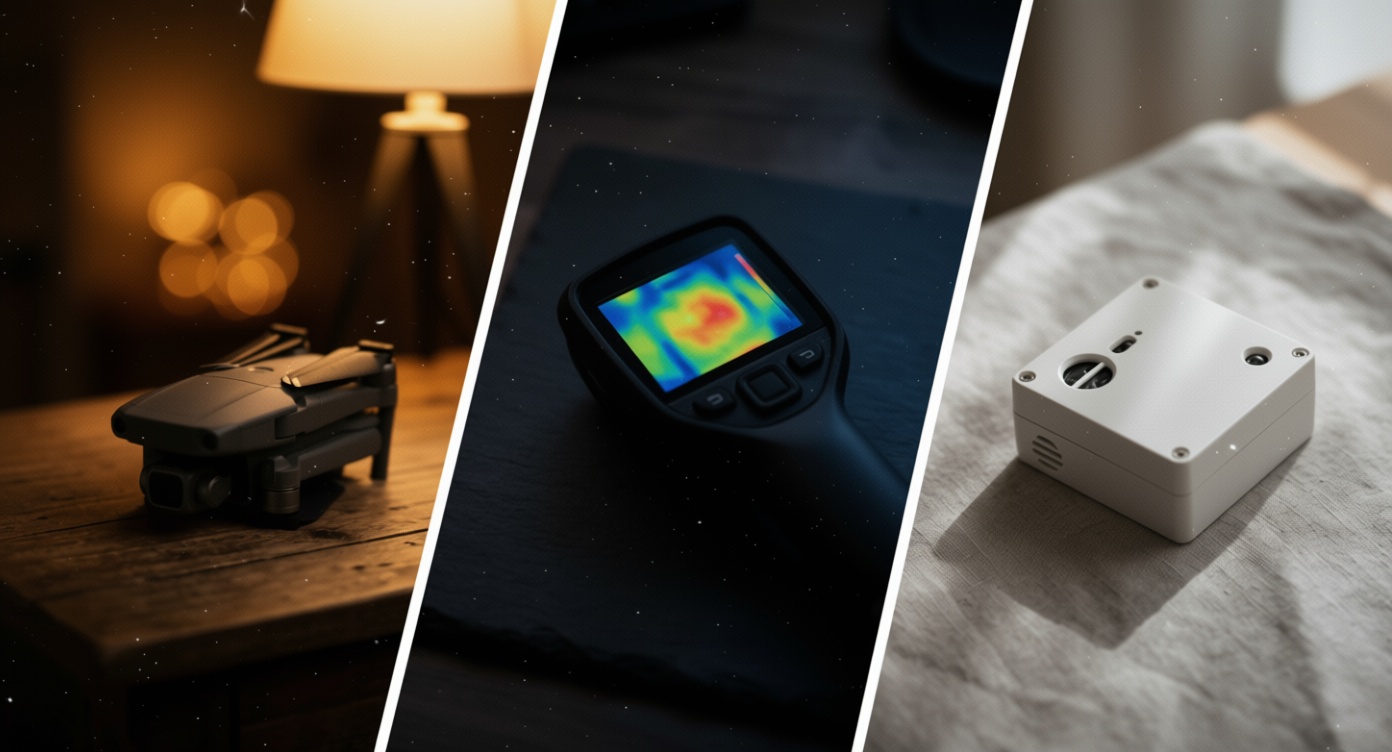
The interview underscored the importance of standardized data collection and transparent peer review. Dr. Knuth described a newly released protocol developed jointly by AARO, the National Institute of Standards and Technology (NIST), and several university labs. The protocol mandates calibrated sensor suites, synchronized timestamps, and mandatory metadata (weather, air‑traffic density, electromagnetic background). “We are treating UAP observations the same way we treat any anomalous scientific data—by demanding reproducibility, error quantification, and open‑access archives,” he said. He also noted that machine‑learning algorithms are being employed to flag outliers and to correlate multi‑sensor inputs across disparate reporting platforms, reducing human bias in the early stages of analysis.
Interdisciplinary Collaboration
A recurring theme was the need for cross‑disciplinary teams that blend expertise from physics, aerospace engineering, atmospheric science, and data analytics. Dr. Knuth cited a pilot‑led consortium that now works alongside radar engineers and astronomers to validate sightings in real time. He also mentioned ongoing partnerships with the Department of Defense’s Advanced Aerospace Threat Identification Program (AATIP) alumni, who are sharing classified sensor logs under controlled conditions. “The complexity of these phenomena exceeds the scope of any single field,” Dr. Knuth explained. “Only by pooling resources and perspectives can we hope to construct a coherent explanatory framework.”
Outlook and Implications
Looking ahead, Dr. Knuth expressed cautious optimism. He pointed to a forthcoming peer‑reviewed special issue in Physical Review Letters that will publish the first statistically robust analyses of UAP kinematics. He also warned that public expectations must be managed: “Scientific progress is incremental. We may uncover new physics, or we may find mundane explanations for many cases. Either outcome advances our knowledge.” The interview concluded with a call for continued transparent funding and legislative support, noting that sustained investment is essential for maintaining the momentum generated by recent declassifications. As the conversation wrapped, Dr. Knuth reiterated his belief that the era of “UFO folklore” is giving way to a legitimate scientific frontier, one that could reshape our understanding of aerial technology and, perhaps, the broader universe.