Overview
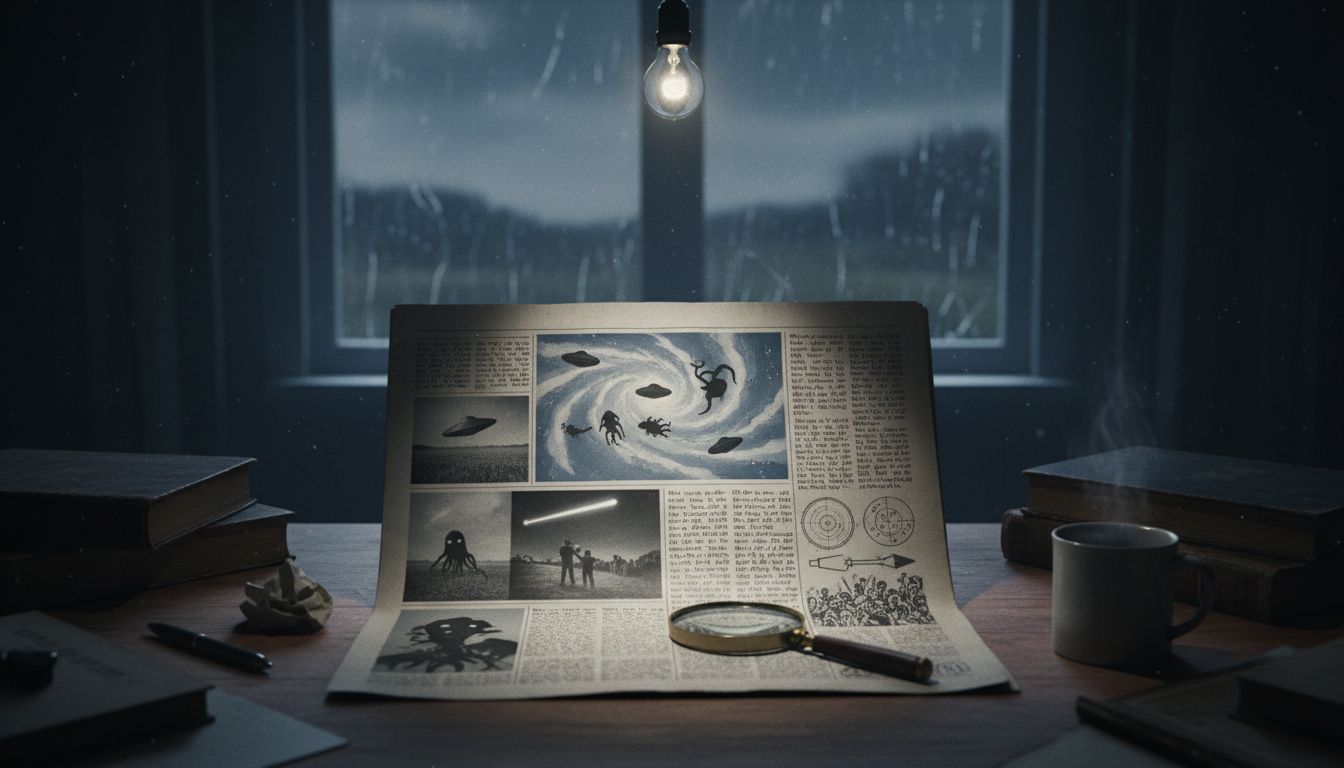
Britain has recorded hundreds of UFO sightings each year, a pattern that stretches back more than eight decades. A recent compilation by The Mirror highlights the most puzzling of these reports, ranging from classic “flying saucers” to phenomena that defy easy description. While many incidents remain unexplained, the catalogue underscores a persistent thread of curiosity and unease among the public, as well as an evolving relationship between civilian witnesses and official bodies tasked with investigating aerial anomalies.
Notable Cases
Among the sightings featured, three stand out for their frequency in media and eyewitness testimony. In 1976, residents of the Yorkshire coast reported a cluster of bright, disc‑shaped lights performing synchronized maneuvers over the North Sea, an event later referenced in a Royal Air Force (RAF) logbook entry. The 1980 Rendlesham Forest incident—though technically in Suffolk, England—continues to be cited by British UFO researchers as a benchmark for “high‑confidence” encounters, with multiple servicemen describing a metallic craft that emitted a low‑frequency hum before vanishing. More recently, a 2023 report from a farmer in Cumbria detailed a silent, triangular formation that hovered for several minutes before accelerating upward at a speed that outran conventional aircraft, prompting the Ministry of Defence (MoD) to issue a brief statement acknowledging the radar detection.
Government Inquiries
The UK government’s approach to unidentified aerial phenomena has shifted from outright denial to measured transparency. The MoD’s UFO Desk, operational from the 1950s until its closure in 2009, archived over 12,000 reports, many of which were later declassified. In a 2024 parliamentary hearing, former MoD intelligence officer Sir Michael Hargreaves remarked, “While the majority of cases can be attributed to atmospheric effects or misidentified technology, a small subset remains genuinely unexplained and warrants further scientific scrutiny.” The recent establishment of a cross‑departmental task force—combining the MoD, the Civil Aviation Authority, and academic partners—signals an intent to apply modern sensor data and analytical tools to the lingering mysteries.
Public Reaction
Public response to the Mirror’s list reflects a blend of fascination and skepticism. A poll conducted by the UK’s Office for National Statistics in late 2024 found that 38 % of respondents believed that some UFO reports could represent advanced technology from foreign powers, while 22 % entertained the possibility of extraterrestrial origins. Social media discussions often echo the sentiment expressed by UFO researcher Dr. Emily Cartwright, who told The Mirror: “These sightings are not proof of anything, but they do highlight gaps in our understanding of the skies and the need for open data sharing.” Community groups in areas like Cornwall and the Scottish Highlands have organized “sky‑watch” events, encouraging locals to log observations using standardized apps.
Continuing Interest
The enduring allure of UFOs in Britain is rooted in both cultural imagination and the genuine desire for answers. As the new task force begins to analyze historic files alongside contemporary sensor feeds, experts caution against sensationalism, urging the public to distinguish between anecdotal reports and rigorously vetted data. Nevertheless, the Mirror’s compilation serves as a reminder that, after decades of sightings, the question of “what’s out there?” remains as compelling as ever—prompting scientists, policymakers, and ordinary citizens to keep looking up.


