Overview
The Loch Ness Experience has launched its annual “quest” to locate the legendary creature known as Nessie, kicking off the week with a blend of community participation and cutting‑edge technology. Organized by the tourism body that runs the popular visitor centre at Urquhart Castle, the event invites the public to join a surface watch on Saturday while a specialised underwater drone conducts a detailed survey of the loch’s most frequently reported hotspot, Urquhart Bay. The initiative reflects a growing trend among cryptozoology enthusiasts to combine traditional eyewitness efforts with modern scientific tools.
Underwater Mapping with “Micro Millie”
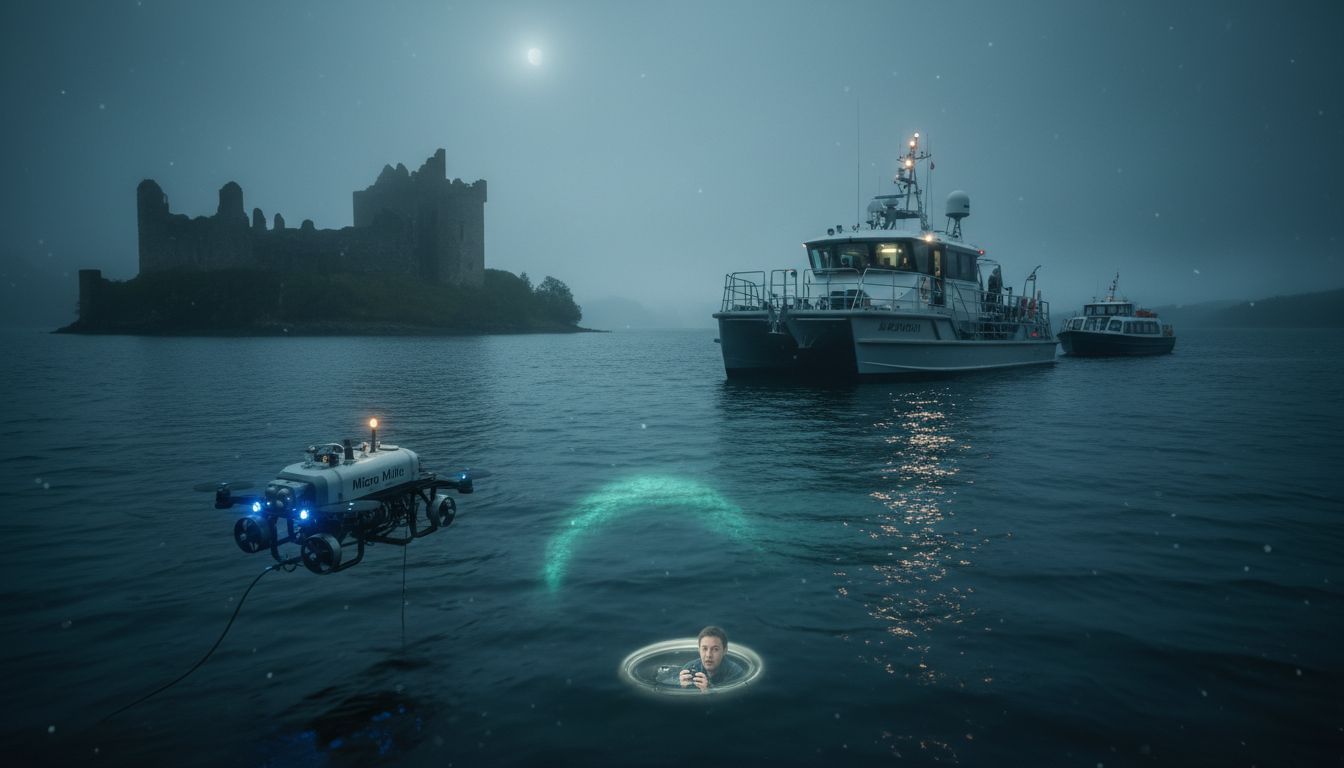
Deep Sea Vision, a marine‑technology firm based in Aberdeen, deployed its autonomous underwater vehicle Micro Millie on Thursday and Friday to scan the loch’s floor. The compact drone, roughly the size of a large suitcase, is equipped with high‑resolution sonar, side‑scan imaging and a suite of environmental sensors. “Micro Millie will give us the most detailed topographical map of Urquhart Bay ever produced,” said Nagina Ishaq, general manager of the Loch Ness Experience, during a brief press briefing. The data collected will be processed in real time, producing three‑dimensional models that can highlight unusual structures or movement patterns that might otherwise go unnoticed in conventional visual surveys.
Surface Watch and Public Involvement
On Saturday, organizers expect hundreds of onlookers to line the loch’s shoreline, binoculars in hand, scanning the 23‑mile expanse for any anomalous surface activity. The “surface watch” is a long‑standing feature of the quest, offering participants a direct role in the search while fostering a festive atmosphere around the historic Urquhart Castle. Volunteers are equipped with spotting sheets and a mobile app that logs the time, location and description of any unusual sightings, ensuring that reports are captured systematically rather than anecdotally.
Fifth Official 2026 Sighting Logged
During the early days of the quest, a tourist’s handheld video, posted on a popular social‑media platform, showed a brief, unexplained ripple and a faint, elongated silhouette near the loch’s surface. The clip was reviewed by the Official Loch Ness Monster Sightings Register, an independent body that catalogues and verifies reports. After cross‑checking the timestamp, GPS data and environmental conditions, the register classified the incident as the fifth official sighting of 2026. While the footage does not provide conclusive evidence of a creature, register spokesperson Dr. Alistair McLeod noted, “Each logged sighting adds a data point that helps us understand where and when anomalous activity occurs, guiding future investigative efforts.”
Looking Ahead
The combination of public observation and autonomous sonar mapping marks a significant evolution in the hunt for Nessie. Previous expeditions have relied largely on surface patrols and occasional sonar sweeps, often yielding limited resolution. By contrast, Micro Millie’s continuous, high‑definition scans could reveal submerged features—such as collapsed rock formations or trapped air pockets—that might generate misleading surface ripples. Researchers plan to release the mapped data to academic institutions later this year, inviting independent analysis. Whether the quest will finally uncover a biological explanation for the loch’s mysteries remains uncertain, but the methodical approach underscores a commitment to rigorous, evidence‑based investigation rather than sensational speculation.