Overview
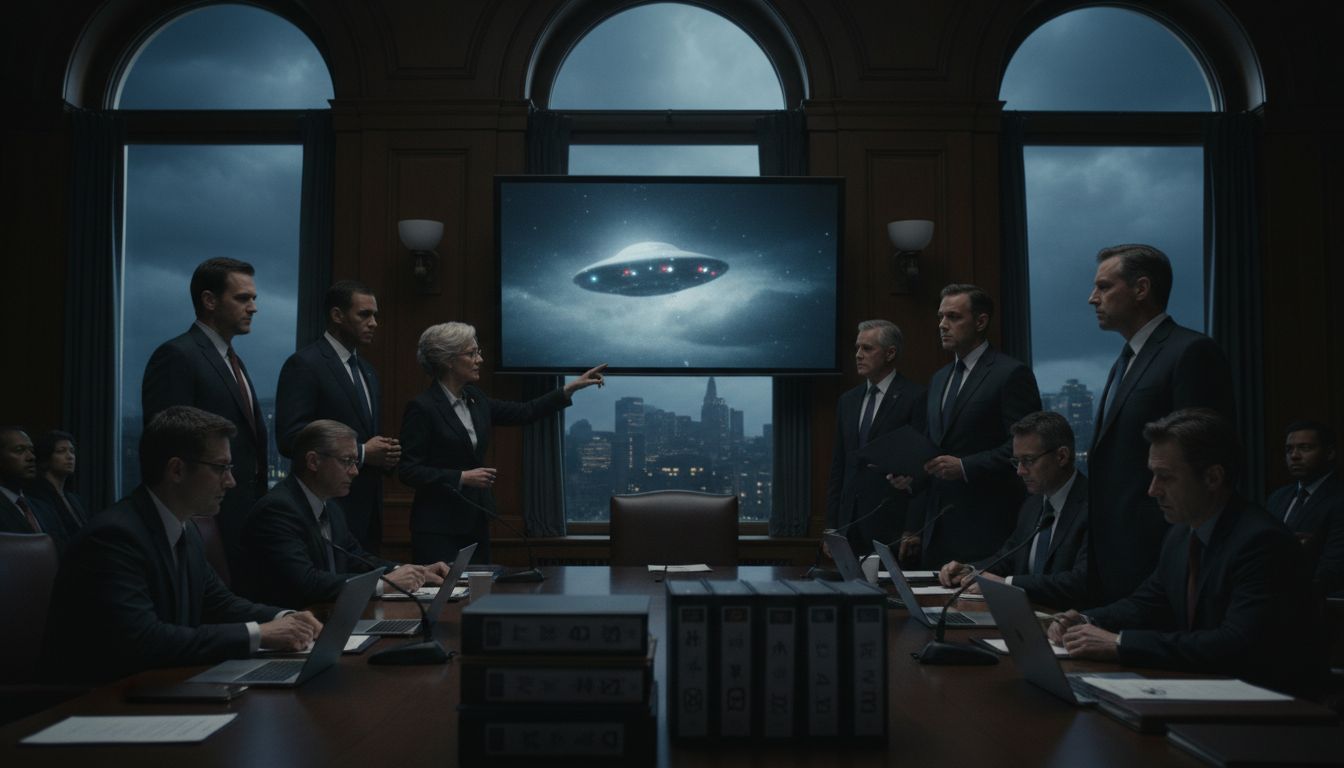
U.S. members of Congress are intensifying calls for formal investigations into recent unidentified aerial phenomena (UAP) sightings, arguing that the incidents pose a potential national‑security risk. The demand follows the Pentagon’s 2023 public acknowledgment of UAP encounters and the establishment of the All‑Domain Anomaly Resolution Office (AARO). On the Fox News “Special Report,” chief political anchor Bret Baier highlighted the growing bipartisan pressure to bring the matter under legislative oversight.
Congressional Push
In a series of statements released this week, several lawmakers urged the Defense Department and intelligence agencies to provide a comprehensive, classified briefing on UAP activity. Representative Tim Burchett (R‑TN), a senior member of the House Armed Services Committee, said, “Our service members are reporting objects that defy our current understanding of physics. We owe it to them—and to the American public—to get to the bottom of this.”
Senator Marco Rubio (R‑FL) echoed the sentiment, adding that “the lack of transparent data hampers our ability to assess whether these phenomena represent a technological advantage held by a foreign adversary.” A bipartisan group of 15 legislators, including Rep. Andre Carson (D‑IN) and Sen. Catherine Cortez Masto (D‑NV), submitted a joint letter to the Department of Defense on November 27, requesting that the AARO release an unredacted summary of its findings and that a dedicated congressional committee be formed to oversee future investigations.
Pentagon Response
The Department of Defense, through a spokesperson for the AARO, confirmed that it is cooperating with congressional inquiries and will provide a briefing to the House and Senate Armed Services Committees in early December. The agency pointed to the June 2023 preliminary assessment, which documented 144 UAP reports from 2004‑2022, 18 of which remained “unexplained” after analysis. While the report stopped short of attributing any sightings to foreign technology, it emphasized the need for standardized data collection and inter‑agency collaboration.
Defense officials also noted that the AARO has expanded its scope to include maritime, subterranean, and trans‑medium anomalies, reflecting a broader “all‑domain” approach to unknown threats. “We are committed to scientific rigor and national‑security imperatives,” the spokesperson said, adding that the office is working with the Office of the Director of National Intelligence to integrate civilian and military reports.
Historical Context
UAP investigations are not new. The U.S. government has maintained secretive programs dating back to the Project Blue Book era of the 1950s and 60s, and declassified documents reveal that several presidents—including Ronald Reagan and Bill Clinton—were briefed on “unexplained encounters.” Baier’s segment traced this lineage, noting that the 2017 establishment of the Unidentified Aerial Phenomena Task Force marked a shift toward greater transparency, a trend that culminated in the 2023 Pentagon report.
Experts such as Dr. David Griffiths, a former AARO analyst now with the National Institute for Aerospace Studies, caution that “the historical secrecy has hampered scientific analysis. Opening the data to peer review could either demystify these events or highlight genuine gaps in our detection capabilities.”
Next Steps
The forthcoming congressional hearings are expected to focus on three core issues: data integrity, potential adversary exploitation, and resource allocation for research. Lawmakers have proposed legislation that would mandate annual reporting to Congress on UAP activity and allocate $50 million for advanced sensor development.
As the debate moves from the halls of Capitol Hill to the public arena, observers stress that rigorous, evidence‑based inquiry—rather than speculation—will be essential to maintaining both national security and public trust. The outcome of these investigations could shape policy for years to come, determining whether UAPs remain an enigmatic footnote or become a defined component of America’s defense strategy.