Overview
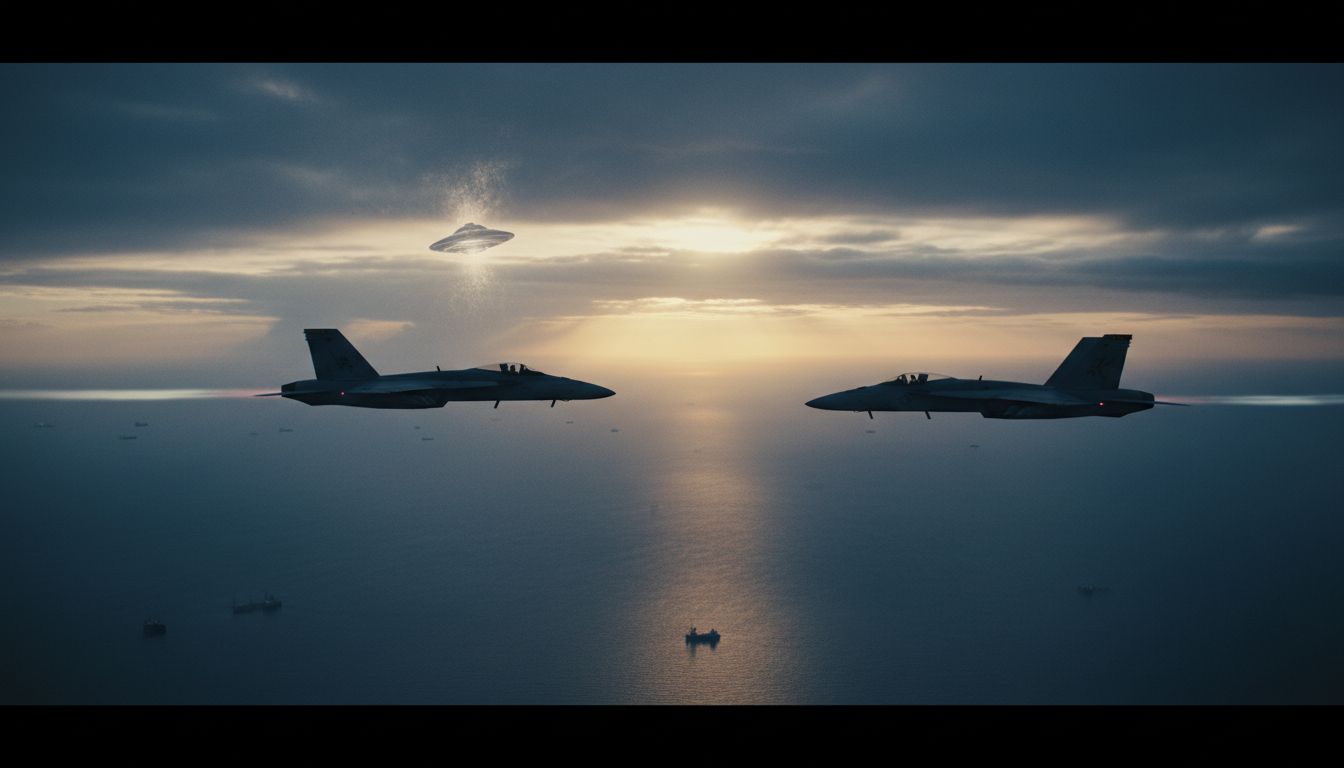
The U.S. Navy dispatched two fighter jets over the Gulf of Venezuela on Thursday, a maneuver the Pentagon described as a routine training exercise. While officials emphasized the operation’s standard nature, the sortie’s timing has drawn attention from regional analysts and observers of recent unidentified aerial phenomenon (UAP) reports. The flight, conducted by a pair of F/A‑18 Super Hornets from the carrier USS Gerald R. Ford, lasted roughly 45 minutes and concluded without incident.
Background
The Gulf of Venezuela, a narrow waterway that separates Venezuela’s northern coast from the Caribbean island of Aruba, has long been a flashpoint in South American geopolitics. The area is rich in oil reserves and sits near the disputed maritime border claimed by both Venezuela and Trinidad and Tobago. In recent months, U.S. naval presence in the western Atlantic has increased, reflecting heightened concerns over energy security and the potential for illicit trafficking. Simultaneously, the Defense Department’s UAP Task Force has released several briefings on unexplained aerial sightings near the region, fueling speculation about the strategic motives behind the latest flight.
Details of the Sortie
According to a spokesperson for U.S. Naval Forces Southern Command, the two Super Hornets took off from the carrier strike group stationed in the Caribbean Sea and performed a series of standard maneuvers, including low‑altitude over‑flight, radar calibration, and air‑to‑air weapons drills. “The flight was part of a scheduled training exercise consistent with our ongoing operational readiness program,” the spokesperson said in a statement to the press. No foreign aircraft were intercepted, and the jets returned to the carrier without any reported technical issues. The operation was logged under the Navy’s “Freedom of Navigation” training schedule, a routine that routinely includes over‑flights of international waters.
Strategic Context
Experts caution against reading too much into a single training event, but the strategic significance of the Gulf cannot be ignored. Dr. Elena Martínez, a senior fellow at the Center for Strategic and International Studies, noted that “the Gulf of Venezuela sits at the crossroads of critical oil shipping lanes and contested maritime claims. Even routine U.S. flights in the area serve as a signal of continued interest and capability.” The timing coincides with a recent uptick in UAP sightings reported by both civilian pilots and military radar operators, a phenomenon that the Pentagon’s UAP Task Force has been monitoring since 2023. While the task force has not linked the sightings to any adversarial activity, the concurrence of the two developments has prompted analysts to question whether the Navy’s training could also be gathering data on anomalous aerial objects.
Reactions and Analysis
Venezuelan officials responded with a measured rebuke, accusing the United States of “unnecessary provocation” and calling for a diplomatic dialogue to resolve “unwarranted military posturing.” In a brief press conference, Venezuela’s Foreign Ministry spokesperson, Carlos Pérez, said, “We urge the United States to respect our sovereign airspace and to refrain from actions that could destabilize the region.” The United States, for its part, reiterated that the flight remained within international airspace and complied with all relevant treaties. Defense analyst Robert “Bob” Haines of the Atlantic Institute added, “While the U.S. has a right to conduct training, the optics matter. In a climate of heightened tension, even routine activities can be interpreted as strategic messaging.”
Outlook
As both nations navigate a complex diplomatic landscape, the incident underscores the delicate balance between routine military readiness and regional perception. The U.S. Navy is expected to continue its scheduled training cycles, while the Pentagon’s UAP task force will likely maintain heightened surveillance in the Gulf, given the recent reports of unexplained aerial activity. Observers will be watching for any further developments—whether additional flights, diplomatic engagements, or new intelligence on UAPs—that could clarify the broader strategic intentions behind the November sortie.


