Overview
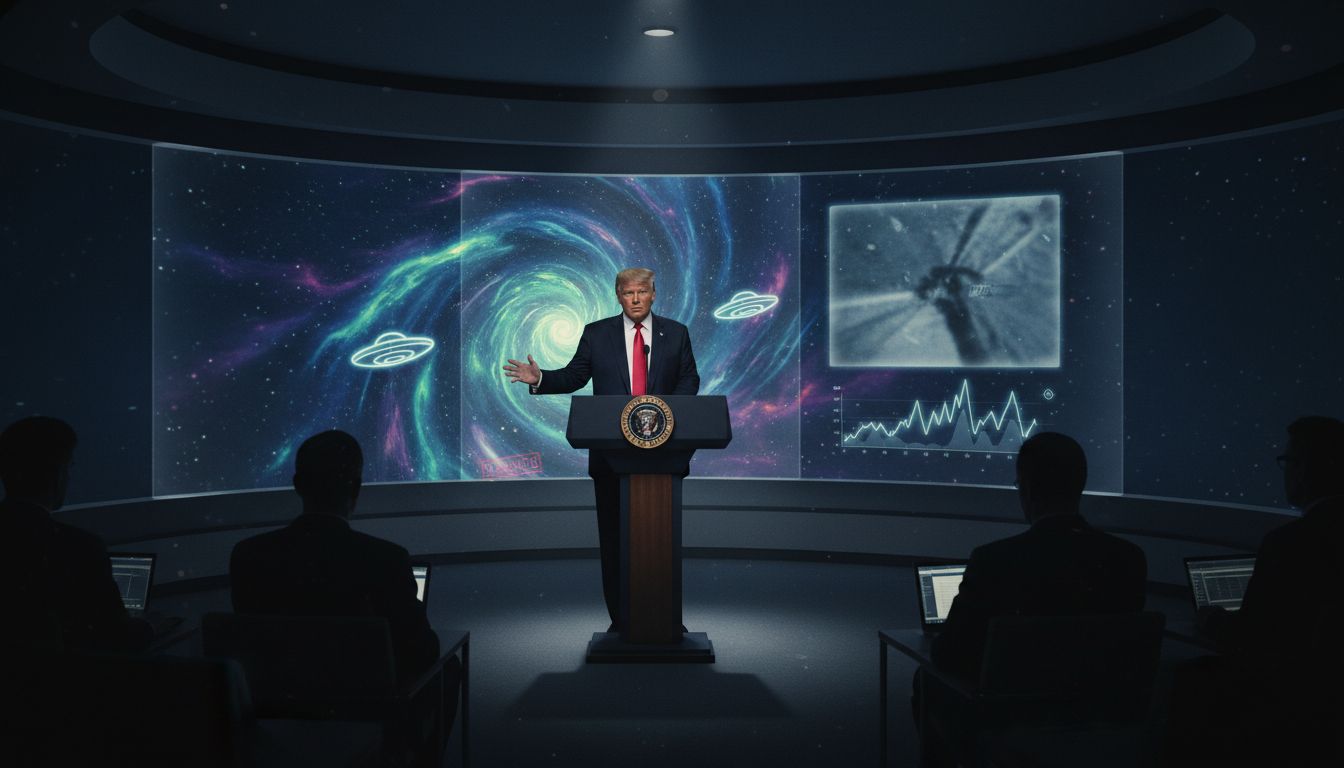
President Donald J. Trump told reporters on Thursday that the United States government will soon make its collection of UFO—now more formally referred to as Unidentified Aerial Phenomena (UAP)—files available to the public. The announcement comes after months of mounting pressure from lawmakers, advocacy groups, and the media for greater transparency on a subject that has moved from fringe speculation to a matter of national security. While Trump did not specify a release date, he indicated that the administration is “working quickly” to compile the documents for public distribution.
Recent Momentum
The push for disclosure accelerated in 2022 when the Pentagon’s Unidentified Aerial Phenomena Task Force released a preliminary report acknowledging 144 sightings that could not be readily explained. That document, followed by the establishment of the All‑Domain Anomaly Resolution Office (AARO) earlier this year, signaled an institutional shift toward systematic investigation of anomalous aerial events. In parallel, several congressional committees—most notably the Senate Intelligence Committee and the House Armed Services Committee—held open hearings that featured testimonies from former military pilots and intelligence officials describing encounters with objects that displayed flight characteristics beyond known technology.
Congressional and Public Pressure
Lawmakers have repeatedly urged the executive branch to provide a fuller accounting of the data. In a bipartisan letter dated March 15, members of the Senate Armed Services Committee requested “a comprehensive release of all declassified UAP material, including sensor data, analysis, and any associated risk assessments.” Advocacy organizations such as the National UFO Reporting Center and the To The Stars Academy have also campaigned for openness, arguing that public scrutiny could help identify potential threats or scientific opportunities. Public interest surged after the release of the 2023 “UAP Report” that highlighted 13 incidents involving “advanced flight capabilities” such as hypersonic speeds and instantaneous acceleration.
Trump’s Announcement
During a press briefing at the White House, Trump said, “We have a lot of files that the American people deserve to see. I’m directing the appropriate agencies to get those out as soon as they can.” He added that the release would be “done in a responsible way” to protect national security while still providing “the transparency the public has been asking for.” The president’s statement aligns with a broader administration pledge to “modernize the handling of UAP data” and to integrate the AARO’s findings into the annual intelligence community assessments.
Next Steps and Implications
The administration has not disclosed which agency will lead the declassification effort, but officials familiar with the process suggest that the Office of the Director of National Intelligence (ODNI) and the Department of Defense will coordinate the review. Analysts expect the first batch of documents to include radar logs, pilot testimonies, and analysis from the AARO, with sensitive technical details redacted. Experts caution that while the release may satisfy public curiosity, it is unlikely to resolve the core scientific questions surrounding UAPs. Nonetheless, the move is being hailed by some members of Congress as a step toward “greater accountability and oversight” of a phenomenon that could have implications for air safety, intelligence gathering, and even aerospace research.
The forthcoming disclosure will be closely monitored by both the defense community and civilian researchers. As the files become public, they may spur renewed calls for legislative action, funding for dedicated research, and perhaps a clearer definition of how UAPs fit into the United States’ broader security framework. For now, the promise of an imminent release marks a notable shift in the government’s stance on one of the most enigmatic topics in modern aviation.


